
Architecture at a Glance | What You'll Learn | Program Details | Career Outcomes | FAQ
Design a Career That Builds Communities
As an architect, you shape the spaces where people live, work and gather. In Belmont’s Bachelor of Architecture, you build the design skill and technical knowledge to create functional, beautiful buildings, and you do it on a direct path to becoming a licensed architect.
Belmont’s B.Arch. is the only NAAB-accredited architecture program in Middle Tennessee. That accreditation, earned in 2026, means your degree meets national standards and opens the door to licensure in all 54 U.S. jurisdictions. You graduate ready to enter the profession at the highest level.
You learn in a fast-growing design and construction market. Nashville is home to more than 60 architecture firms, and your studio projects connect directly to the city and the communities around it. The results show: 17 of the 18 graduates in Belmont’s first architecture class secured positions at architecture firms.

Architecture Students Partner with Danny Gokey to Design Nonprofit Village
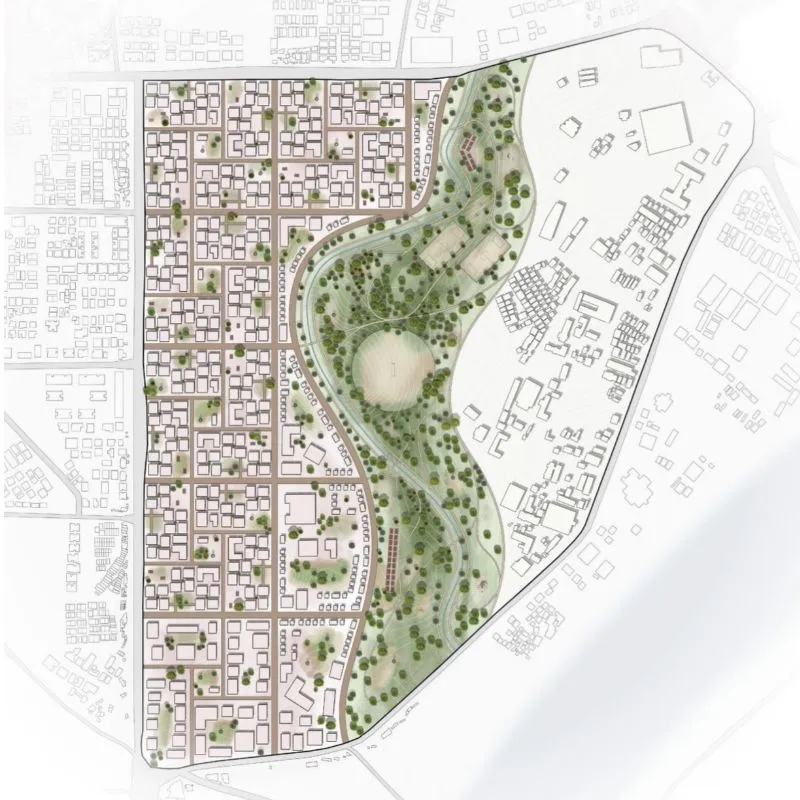
O'More College of Architecture & Design students partnered with singer and philanthropist Danny Gokey to design Hope Hill — a master-planned village in Antioch, Tennessee, conceived as a campus for nonprofits and the people who serve them.
Your Studio, and the City Beyond It
Nashville is one of the fastest-growing cities in the country, so new construction and innovative design are all around you. You study architecture where the work is happening, with more than 60 firms nearby for internships and mentorship. Your studio projects reach into real neighborhoods, from urban design along Nolensville Pike to master-planned community concepts like Hope Hill.
Request Information
Learn by Designing Real Projects
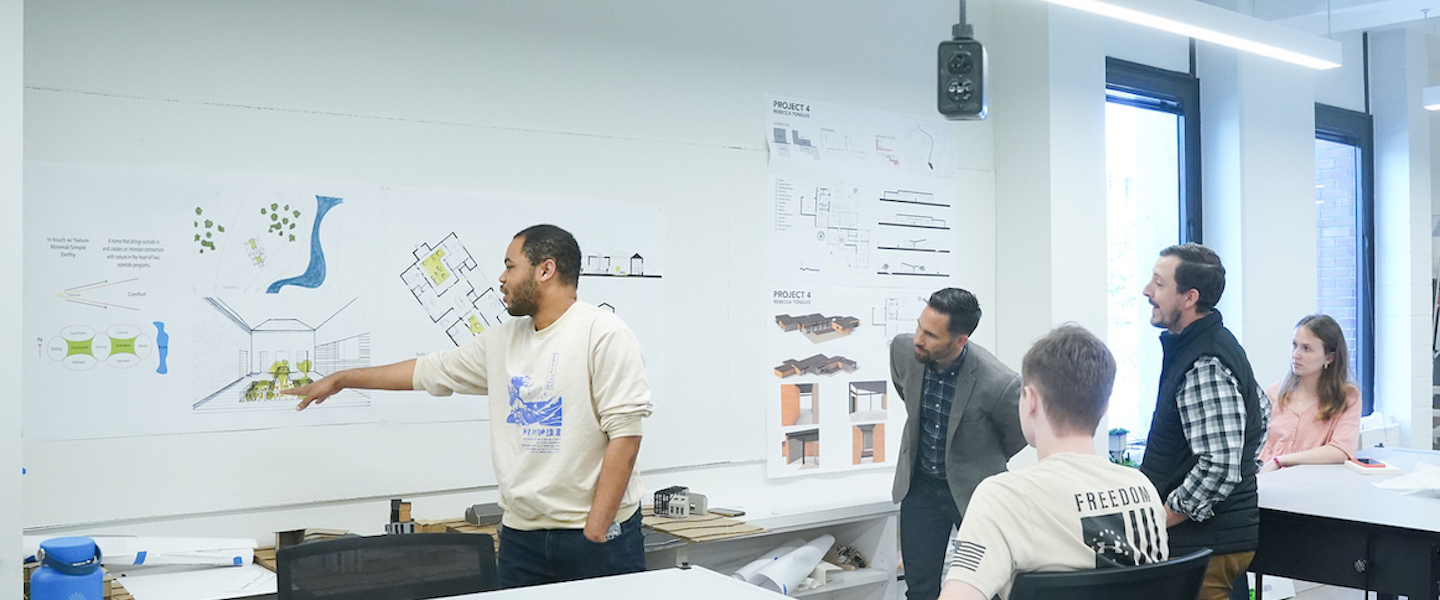
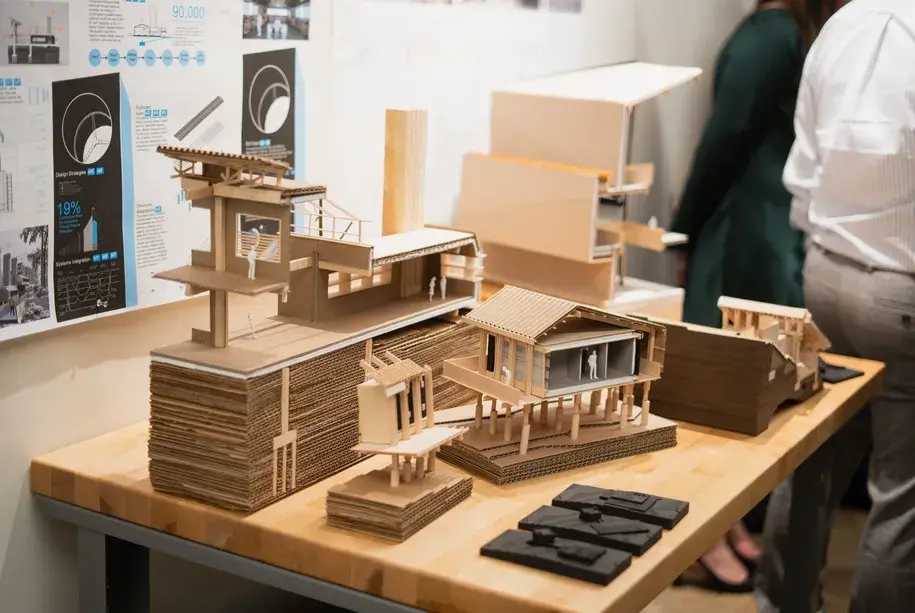
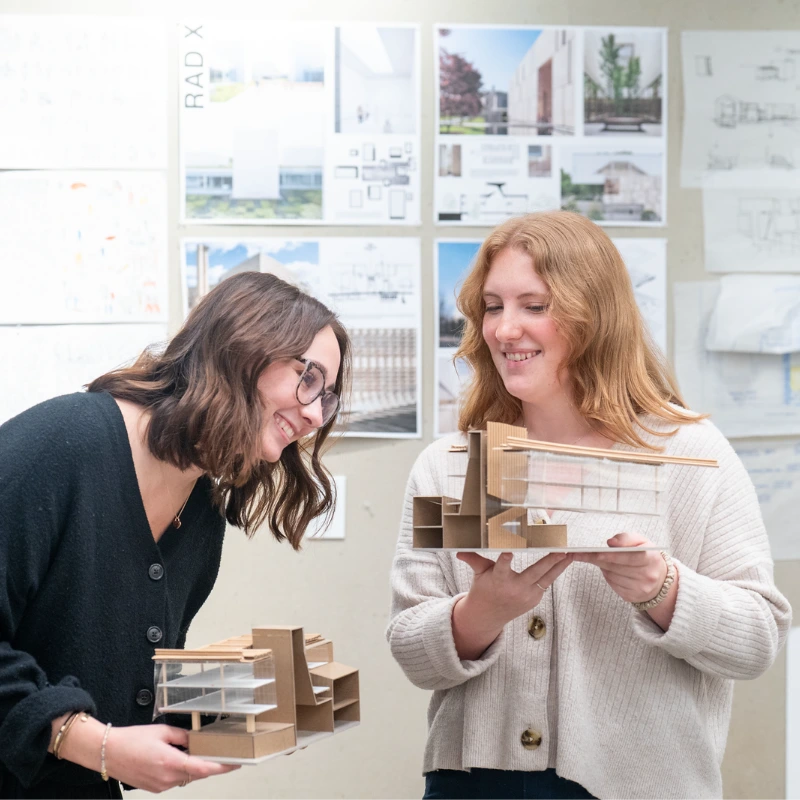
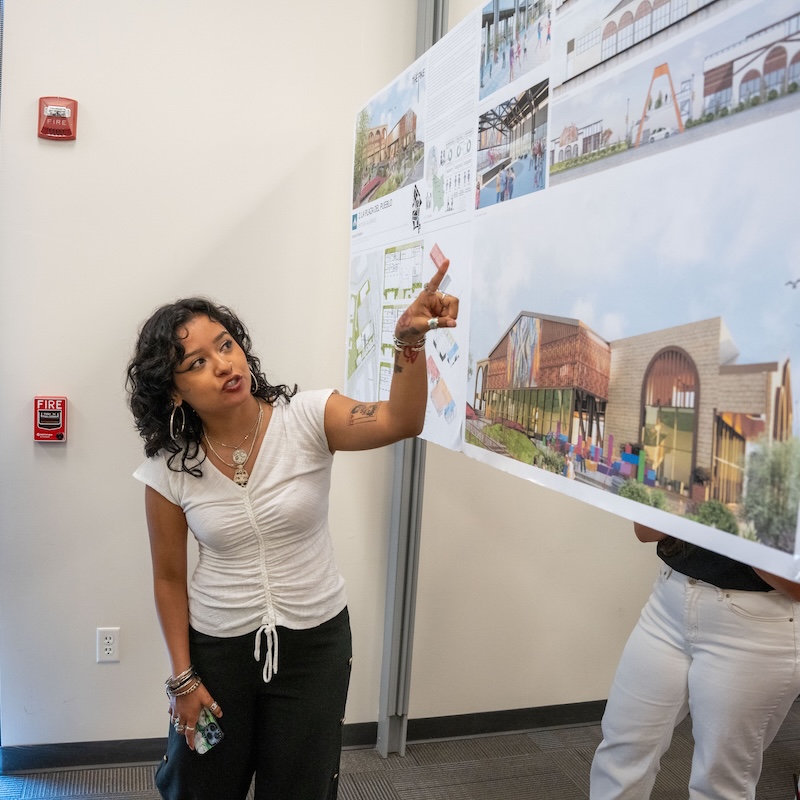
You spend your time in the studio, the heart of an architecture education, working through real design problems from concept to presentation. Belmont students have designed urban-renewal visions for Nolensville Pike, reimagined historic landmarks and built installations for events like the Civic Design Center’s PARK-ing Day. You leave with a portfolio of work grounded in real communities.
A Direct Path to Licensure
Most states require a professional degree from a NAAB-accredited program, along with the Architectural Experience Program and the Architect Registration Examination, to become a licensed architect. Belmont’s accredited B.Arch. is one of the most direct routes to meeting the education requirement, recognized in all 54 U.S. jurisdictions.

Is Architecture Right for You?
This program fits several kinds of students:
- The maker who thinks visually, works with their hands and wants to see their ideas built.
- The problem-solver drawn to how design shapes daily life, from a single home to a whole neighborhood.
- The community-minded student who wants their work to serve real people and places.
Architecture is demanding, studio-intensive work, and it rewards students who are curious, collaborative and willing to revise. If that sounds like you, this is a program where you can grow fast.
From First Sketch to Licensure-Ready
In Belmont’s Bachelor of Architecture, you learn to:
- Design buildings and spaces through iterative studio work, from concept to presentation
- Apply building technology, structures and environmental systems to real design problems
- Draft and model by hand and with digital tools
- Analyze architectural history and precedent to inform your own work
- Present and defend design decisions to faculty, peers and community partners
The B.Arch. is a five-year, 155-credit-hour professional degree. You start with foundational studios and drafting, then move into increasingly complex design problems, technical coursework and community-based projects that prepare you for professional practice.
Curious about your coursework? View requirements for this degree in the course catalog.
This five-year professional degree is built around a sequence of eight design studios.
- Studios: Architectural Design Methods, Integrated Design, Collaborative Design, Urban Design and Comprehensive Design
- Building science: Materials and Methods, Structures I and II and Environmental Systems
- History and theory: History of Architecture and Theories of Architecture and the Environment
- Professional practice: Professional Practice, Regulations in the Built Environment and Digital Fluency I and II
- Finish with: Architecture Studio VIII: Signature Studio and a senior capstone
For complete course descriptions, see the current catalog.
Go beyond the classroom and experience architecture for yourself. In Nashville and around the world, you’ll find opportunities to learn and grow.
- Experience hands-on architecture work. Nashville has a thriving architecture industry, giving you access to more than 60 firms and the nationally recognized Nashville Civic Design Center.
- Explore the world. Experience other cultures and visit iconic structures in India, Greece, Italy, the United Kingdom and beyond.
- Join a student organization. Participating in groups like AIAS (American Institute of Architecture Students) is a great way to meet people and explore your interests.
Each year, the O’More College awards a number of scholarships to incoming fall undergraduates majoring in one of its academic programs. These awards are renewable for four years (five for B.Arch. majors), provided the recipient maintains all required academic and citizenship expectations. To qualify, you must submit your Belmont application by Dec. 1. O’More departmental scholarships are need-based only, so students must also file the FAFSA to be considered.
Architecture Admissions and Placement
A major in architecture is declared by the individual student during the application and admission process to the University. If a student meets the admission criteria of the University, they are accepted for advising in their architecture major.
The Architecture Department does not require a specific portfolio or interview process for admission, but may initiate either of them to determine whether transfer credit or advanced standing in the architecture department curriculum map is a consideration during advising.
Any Advanced Placement (AP) or other transfer course credits are first evaluated by the Office of the Registrar. They are available to advisors after the student is admitted to the University. Courses given specific course credit are designated once the Registrar evaluates official transcripts submitted for each student applicant; the remainder of transferred course credits are considered electives at Belmont.
The Architecture Department Chair and other academic advisors assist the student in preparation for course registration and address specific major curricular requirements in keeping with the following information on the website regarding accreditation standards for the program described here.
National Architectural Accrediting Board (NAAB) Accreditation
In the United States, most registration boards require a degree from an accredited professional degree program as a prerequisite for licensure. The National Architectural Accrediting Board (NAAB), which is the sole agency authorized to accredit professional degree programs in architecture offered by institutions with U.S. regional accreditation, recognizes three types of degrees: the Bachelor of Architecture, the Master of Architecture and the Doctor of Architecture. A program may be granted an eight-year, eight-year with conditions, or two-year term of continuing accreditation, or a three-year term of initial accreditation, depending on the extent of its conformance with established educational standards.
Read Full NAAB Accreditation Information
Transfer Credit Policy
Determination of eligibility for general education transfer credit will be determined by the Office of the Registrar.
2025-2026 Architecture Additional Program Costs
Below are program-specific items and estimated costs to the student in addition to the University’s cost estimator.
It is our general policy to provide basic tools and supplies needed for instruction within our departmental budget line. This includes some supplies for students such as plotter ink and paper for large format printing, along with other media available for use in-class. Students provide supplies and materials used for their individual projects based on assignment parameters and personal preferences.
One-time purchase estimates:
- Laptop Computer: $1,600-2,400
- We recommend a PC laptop running Windows 11 (64-bit), with at least an Intel Core i7/i9 or AMD Ryzen 7/9 processor at 2.5GHz or faster, 32 GB of RAM, and a dedicated graphics card such as the NVIDIA RTX 4060 (or higher) with 8 GB VRAM or the AMD equivalent;
- A 1 TB SSD or larger provides enough storage, while a 15-inch or larger screen with 1920X1080 resolution makes design work more comfortable;
- Wi-Fi, an integrated webcam and microphone, and a three-button mouse are also important.
All costs listed below are estimates per semester in addition to the University Cost Estimator:
- Textbooks: $330*
- About $110 per course
- Digital versions of textbooks can cost up to 50% less
- Drawing/Modeling Supplies: $40*
- Project Supplies/Printing: $295*
- Travel Costs: $55*
*Variable Expense
- Laptop Computer: $1,600-2,400
- We recommend a PC laptop running Windows 11 (64-bit), with at least an Intel Core i7/i9 or AMD Ryzen 7/9 processor at 2.5GHz or faster, 32 GB of RAM, and a dedicated graphics card such as the NVIDIA RTX 4060 (or higher) with 8 GB VRAM or the AMD equivalent;
- A 1 TB SSD or larger provides enough storage, while a 15-inch or larger screen with 1920X1080 resolution makes design work more comfortable;
- Wi-Fi, an integrated webcam and microphone, and a three-button mouse are also important.
All costs listed below are estimates per semester in addition to the University Cost Estimator:
- Textbooks: $330*
- About $110 per course
- Digital versions of textbooks can cost up to 50% less
- Drawing/Modeling Supplies: $40*
- Project Supplies/Printing: $295*
- Travel Costs: $55*
*Variable Expense

The ‘Job Shadow’ of a Lifetime
Architecture student Olivia Hobbs had a front-row seat during the construction of Fisher Center.
Career Possibilities
A Bachelor of Architecture from Belmont opens the door to careers in architecture, urban design, construction and beyond, with a professional degree recognized nationwide. Nashville’s fast-growing market and Belmont’s accredited program connect you to real opportunity before and after graduation. Here are a few of the careers you will be equipped to pursue:
- Architect — design buildings and spaces and pursue licensure to practice.
- Urban Designer — shape neighborhoods, streetscapes and public spaces.
- Project Manager — lead design and construction projects from concept to completion.
- Architectural Drafter — produce the technical drawings that turn designs into buildings.
- Facilities Manager — plan and manage institutional and government building programs.
- Design Consultant — advise clients on building, planning and design decisions.
- Restoration Specialist — preserve and adapt historic buildings.
Alumni Testimonials

Emily Schiedemeyer
Architecture
Architect at ESa; returned as a research collaborator on a peer-reviewed article
"The project was so comprehensive. We were thinking about circulation, access, public space and overall quality of life all at once. It felt like a big academic challenge at the time, so it’s been interesting to see how our work still has relevance years later.”

Honor Thomas
Architecture
Architecture Graduate, Inaugural Cohort
“Professors are always willing to lend a helping hand with any class and form relationships with their students, which makes working in the studio that much more enjoyable. As part of the pioneering cohort for the architecture program at Belmont, it has been truly amazing to have such great opportunities and pave the way for future classes.”

Ryan Plowman
Architecture
Architecture Graduate, Inaugural Cohort
"Being a part of O'More's inaugural class of architecture has been an honor and fantastic experience for me. By having a firsthand influence on the growth of the program we have managed to build something that we believe to be truly special here; building on Fashion and Interior Design's examples. The level of teamwork and togetherness represented by our students and their work done in the studios is inspiring to myself as well as most everyone that is involved with the program in some way. Building relationships amongst fellow students and the faculty that work in Hitch has allowed us to become a strong new force of design in the Nashville community."
Learn from Expert Faculty
Your professors are practicing architects, designers and published scholars who bring real projects and current practice into the studio. O’More College is led by Dean Rick Archer, a founding principal with decades of professional experience.
Nekpen Aihie

Jhennifer Amundson
Email: jhennifer.amundson@belmont.edu
Office Location: Gabhart 201

Reid Cimala

Dennis Daniels

Brent Hunter

Amanda Iglesias
Office Location: Gabhart 204

Layla Iskandar
Email: layla.iskandar@belmont.edu
Office Location: Hitch 206B

Katherine Kennon
Email: katherine.kennon@belmont.edu
Office Location: Hitch 206C

Fernando Lima
Email: fernando.lima@belmont.edu
Office Location: Hitch 209

Florencia Lopez Fontela

Thomas Lowing
Email: thomas.lowing@belmont.edu
Office Location: Hitch 206A

Anthony Monica
Email: anthony.monica@belmont.edu
Office Location: Gabhart 202

Steve Powell

Jacob Seiler
Office Location: Gabhart 200

Hannah Terry

Caleb Walder
Email: caleb.walder@belmont.edu
Office Location: Gabhart 204
FAQ
A Bachelor of Architecture is a professional undergraduate degree that prepares you for a career in architecture. The program combines design studios, architectural history, building technology and environmental systems so you develop the creative and technical skills to design buildings and communities. At Belmont, it is a five-year, NAAB-accredited degree.
Yes. Belmont’s Bachelor of Architecture earned accreditation from the National Architectural Accrediting Board (NAAB) in 2026, making O’More College the only nationally accredited architecture program in Middle Tennessee. NAAB is the sole agency authorized to accredit professional architecture degrees in the United States, and the accreditation positions you to pursue licensure in all 54 U.S. jurisdictions.
The Bachelor of Architecture is a five-year professional degree of 155 credit hours. During that time you complete intensive design studios, technical coursework and hands-on projects that prepare you for professional practice and licensure.
With a B.Arch., you can pursue careers in architecture firms, urban design, construction management, government agencies and design consulting. Many graduates go on to complete the requirements for licensure and become practicing architects. In Belmont’s inaugural class, 17 of 18 graduates secured positions at architecture firms.
In most states, yes. Most registration boards require a professional degree from a NAAB-accredited program, completion of the Architectural Experience Program and a passing score on the Architect Registration Examination. Belmont’s accredited B.Arch. is one of the most direct paths to meeting the education requirement.
Nashville is one of the fastest-growing cities in the country, which makes it an exciting place to study architecture. You benefit from exposure to new construction, innovative design projects and internships with the more than 60 architecture firms in the region. Your studio work connects directly to real Nashville neighborhoods.
You declare the architecture major during your application to the University, and you are accepted for advising in the major once you meet Belmont’s admission criteria. The program does not require a portfolio or interview to be admitted, though either may be requested to evaluate transfer credit or advanced standing.
Related Stories


Spring & Summer Enrollment
If you are considering applying for a spring or summer entry term, please contact your admissions coordinator Sarah Augustyn to discuss your academic plans before you apply.
Contact Us
O'More College of Architecture & Design
Sarah Augustyn
Admissions Coordinator
615.460.5329
Email Sarah
Plan Your Visit
There's no better way to experience Belmont than by visiting campus. Whether you attend an admissions event, take a student-led campus tour or explore Nashville while you're here, a visit helps you picture yourself as part of the Belmont community.