

Students study 'Young Washington' as an exemplar of character in storytelling course, "The Power of Story to Transform Your Life"
What can a 24-year-old George Washington teach today's college students about character?
That's the question Belmont students explored this spring in Rick Rekedal's course, “The Power of Story to Transform Your Life.” Through the story of America's first president, students examined how narratives shape identity, reveal our values and invite us into the ongoing work of character formation.
For Dr. Nathan Webb, vice president of whole person formation and leadership development within Belmont’s Formation Collaborative, this process of self-reflection is what makes storytelling an integral part of a character-focused education. “As we study exemplars of character within stories, we learn about what we value, which in turn shapes how we live,” he said.
Learning the Science of Storytelling
Each year, students in Rekedal’s course explore both the mechanics of storytelling and the ways stories shape individuals and cultures. As part of that work, the class selects an exemplar of character whose life serves as a lens for reflection and discussion.
This spring, in conjunction with America’s 250the anniversary, the class selected the well-storied life of George Washington.
“We learn from characters who resonate with our deepest felt needs; it doesn’t do us any good if all we’re doing is learning historical facts,” explained Rekedal, who spent two decades crafting stories at DreamWorks and now serves as Belmont’s AWC Chair for Hope-Inspired Storytelling. "When students began to see Young Washington as a 24-year-old with fears and ambitions like their own, his story became personal.”
For Rekedal, that connection, paired with an understanding of the mechanics of how stories work, helps students recognize the power of story to educate, inspire and transform lives.
Bringing History to the Screen
Ahead of the release of the new film “Young Washington,” and with grant support from the National Endowment for the Arts, the class welcomed a trio of guests to investigate the lesser-known chapters of Washington’s life.
Diederik Hoogstraten, co-writer of the film, shared his experience bringing Washington’s story to screen, while Webb and Dr. Mary Ellen Pethel, professor and historian, explored the historical and moral dimensions that continue to make Washington’s story relevant today.
The conversation unfolded in a three-part lecture series giving students a chance to interact with a historical figure they thought they already knew in an entirely new way.
The Man Behind the Monument
“So much of the story of George Washington is really more deified legend,” said Rekedal. “We see him as this untouchable general. Someone who cannot tell a lie. Is that really who he was?”
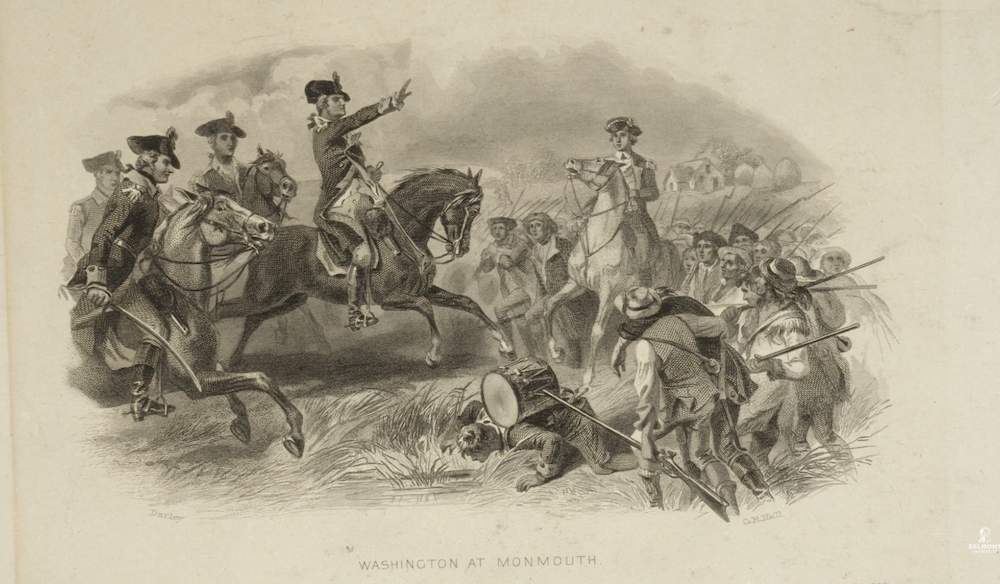
For Pethel, this kind of oversimplification can make us miss the most interesting parts of the story. “When we really look at the early life of Washington, we see a young man who was curious, but also deeply insecure,” she said. “He failed early and often.”
As a visual storyteller, Hoogstraten was eager to uncover the humanity of Washington, an attribute that gets lost in our modern understanding of his life. “My hope is that when people watch the film, they see that this epic figure in American history started out as a kid, just like them,” he said.
Telling the Story for Themselves
Before attending an early screening of Young Washington at the Fisher Center for the Performing Arts, students were challenged to apply what they had learned by developing their own interpretation of Washington's story.
Working in teams, they reimagined how Washington's life might be adapted for contemporary audiences, considering which moments, challenges and character traits would resonate most with viewers today.
The exercise pushed students beyond dates and historical facts to wrestle with a core storytelling question: What makes a character's journey meaningful?
By focusing on Washington's fears, ambitions and failures rather than his legacy alone, students discovered the same lesson that guided the course throughout the semester: stories become transformative when we find ourselves within them.
Finding Yourself in the Story
As students examined Washington's early struggles and successes, they did more than learn new facts about a founding father. They encountered a reminder that character is formed over time through choices, challenges and growth.
For Webb, that is ultimately the value of studying stories and the people within them.
"When we notice virtuous behaviors and familiar fears in leaders like Washington, we are invited to see ourselves as part of the story," he said. "Character formation is an ongoing process, and stories can help us imagine who we are becoming."
Through experiences like these, Belmont's Formation Collaborative is helping students develop the habits, values and self-awareness needed to become competent, character-driven leaders prepared to make a difference in the world.
Learn More
Learn more about storytelling and formation at Belmont