

DreamWorks Veteran Delivers TEDx Talk Ahead of New Storytelling Course at Belmont
When Rick Rekedal, Chief Creative Officer and Chair of Faith, Hope & Culture in Cinematic Arts, stepped onto the TEDx stage in March, he stood at the culmination of a life lived in service to storytelling. Over the next 12 minutes he unfolded insights from a 20+ year career in storytelling, narrative experiences that shaped the person he's become and what the future of the craft might hold in the post information age of AI.
As he spoke with the practiced calm and careful pacing of a master orator, Rekedal treated the audience to a condensed version of his upcoming class — “The Power of Story to Transform Your Life.” His appointment as the inaugural Chair of Faith, Hope & Culture in Cinematic Arts is endowed by the AWC Family Foundation Gift and marks a decisive new chapter in Belmont's Hope-Inspired Storytelling Initiative.
Learning Through Experience
 As a young man fresh out of college, Rekedal took a job in the toy industry. It seemed at first like simple, lighthearted work but, as he would soon find out, child’s play mirrors the serious work of finding one’s role in life through ways he couldn’t have expected.
“If we look at the play patterns of children working out situations on the bedroom floor, we can actually discover a lot about the stories that they're figuring out and adopting as coping mechanisms,” he said. “I realized that I could be a part of shaping the stories that inform how children play, and in doing so, give their families tools for guiding them on the path to maturity.”
For Rekedal, the toy industry was a classroom in which to learn valuable lessons about the way people internalize stories, and the weight of a storyteller’s responsibility. Over time, he came to develop the concept of “empowerment currency,” which he describes as “the element in a story which encourages the listener to figure out who they are.”
Ever curious, Rekedal was eager to apply what he’d been discovering beyond the toy industry. When the opportunity to join a small animation startup came along, he leapt at the opportunity and joined the team in California.
That’s how he found himself at DreamWorks Animation, a studio he called home for over 20 years and where he held titles such as Global Head of Interactive and Online, Chief Creative of Global Franchises and more. As an executive, Rekedal had to learn what it meant to lead teams of storytellers while keeping in mind the global impact of a studio like DreamWorks. This on-the-job training in the business side of story was instrumental in forming the teacher and creative that he is today.
“We live in a story economy where the story you’re telling must connect with audiences, or they are going to go find one that does,” he said. “Each of us is born with universal questions, and sharing our stories is the most proven way to change culture. Finding those points of common connection with stories crosses generational, technological and economic divides.”
Shaping Influences
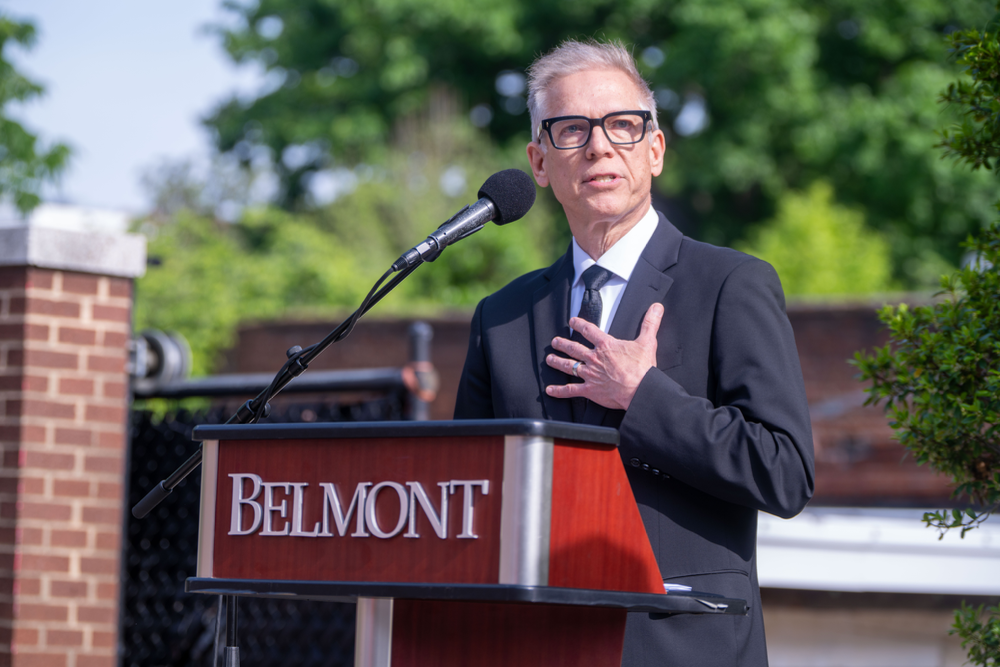 Rekedal’s life first collided with the transformative power of story when he was seven years old, during a break in his parents’ marriage. “Our family broke up for a couple of years and as a dutiful first son, I took on a heavy mental responsibility,” he shared.
In this season, another adult stepped into his life to give him a copy of “The Lion, the Witch, and the Wardrobe” — the first book in C.S. Lewis’ “Narnia” series. In the story, Rekedal encountered a powerful moment in which the misfit character Edmund finds restoration with the protagonists he’d betrayed.
“Reading that scene was one of my first moments of finding a story that felt like me, and it gave me a real glimpse of hope in that time,” he reflected. “Allowing others to sit in the ‘messiness gap’ between what we wanted and what really happened leads us to the strongest points of connection when sharing our stories.”
The balm that this moment in “Narnia” provided became a powerful, shaping influence for Rekedal, who sees arc of his career and purpose as a storyteller through the lens of this experience.
“My focus now is helping Belmont create ways to unleash hope-inspired storytelling, not just for a few hundred students in the film school, but for all undergrad and graduate students who walk this campus and, when they graduate, become agents of hope.”
The Power of Story to Transform Your Life
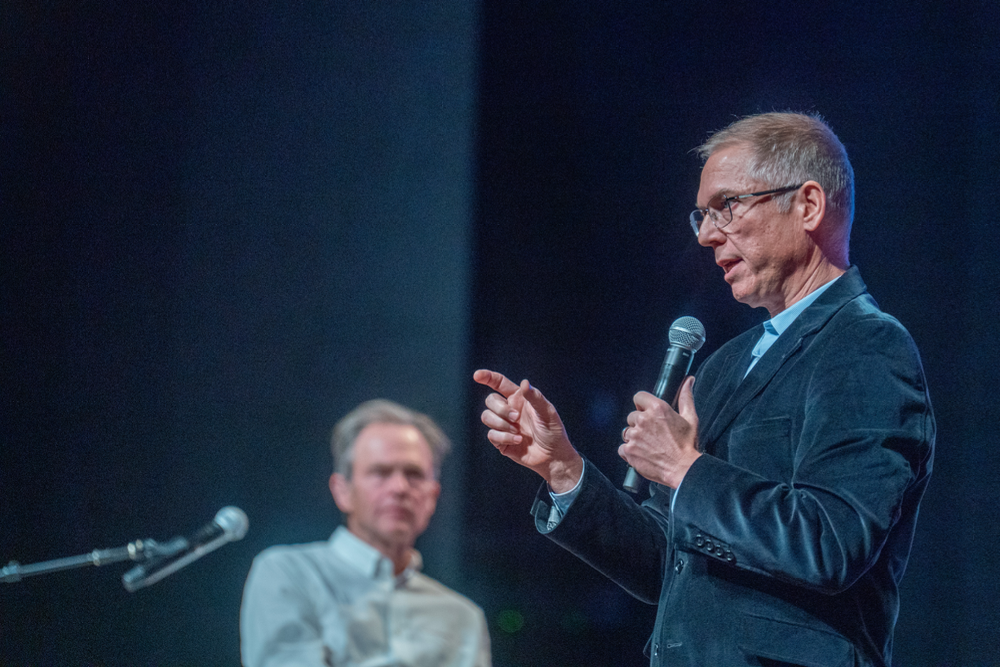 The sweeping scope of Rekedal’s vision for campus starts in the classroom, and is taking shape with his new course “The Power of Story to Change Your Life.” The class is open to students of all majors, with the goal to make tools of storytelling available to everyone.
“No matter your discipline — if you're a businessperson looking for funding, someone who runs a nonprofit or an artist trying to make it in the industry — you can achieve your goals through unlocking the mechanics of good storytelling,” he said.
Rekedal empowers his students by listening as much as he speaks. “To me, creating an atmosphere of trust starts with proving that, in this room, you're going to be heard. When any one of us feels heard, instead of just talked at or graded, the dynamic changes.”
As with his storytelling efforts, this approach is rooted in a desire for genuine connection between individuals. “What I've found time and again is that this kind of trust fosters a true sense of community. We'll get to the material, but if someone doesn’t feel heard then they’ll just be learning it for a test,” he explained. “I want to see them making it their own.”
The Nashville Edge
Rekedal left the entertainment business of southern California and moved to Nashville for a reason. “As much as creative industries are suffering in other cities, they’re exploding in Nashville,” he said. “With more and more large companies moving here every day, I see Nashville’s growth accelerating in the near future.”
For him, this optimism grows mainly out of his experience with the University. “What Belmont affords is not only the ability to be able to speak across disciplines, but also to invite other whole industries into our storytelling efforts.”
Following the recent groundbreaking of the CORD at the Historic Powerhouse, a space that will house interdisciplinary creative endeavors such as the upcoming Animation and Media Arts program, Rekedal reflected on the impact of combining narrative with visual creativity.
“The CORD is where we are developing the new story lab and digital animation center — and that goes so far beyond just traditional storytelling,” he said. “Industries like architecture harness animation for pre-visualizing buildings, the NFL for broadcast graphics, healthcare for rendering data and more. So, we at Belmont have put a lot of thought into how we can train anybody who wants to work in visual mediums, not just narrative storytellers.”
Looking Forward
As Rekedal makes his mark on Belmont, he remains guided by a core ethos.
“Fundamentally, what I hope students take from "The Power of Story to Change Your Life” is that nobody tells your story like you do,” he said. “At the end of the day we’re humans trying to figure out what we're doing here, who we fit in with and how we can make a difference. That's what I stand for, and that's why I'm so excited about the future of storytelling at Belmont.”
For a deeper dive, Rekedal’s TEDx talk can be viewed here.
Learn More
Discover storytelling at Belmont