
Belmont University and the Tennessee Higher Education Initiative mark their second graduation ceremony at Turney Center and expand opportunities for incarcerated students
Every year before the ceremony begins, there is a huddle among graduates, faculty and staff. As everyone gathers, Laura Ferguson Mimms, president and CEO of the Tennessee Higher Education Initiative, asks them to slow down and take in what's about to happen. Then the students speak.
"There were a couple of men who were already crying before it was even their turn," said Kim Powell, director of Belmont's Office of Adult Degree Programs and Veteran Success. "One gentleman was sobbing. Once he gathered himself, he described how, where he grew up, college was not an option for anyone. It wasn't something he ever saw in his future. And he said, 'I will walk out of here in a month as a college graduate, and I will return to my community with something I can give back.'"
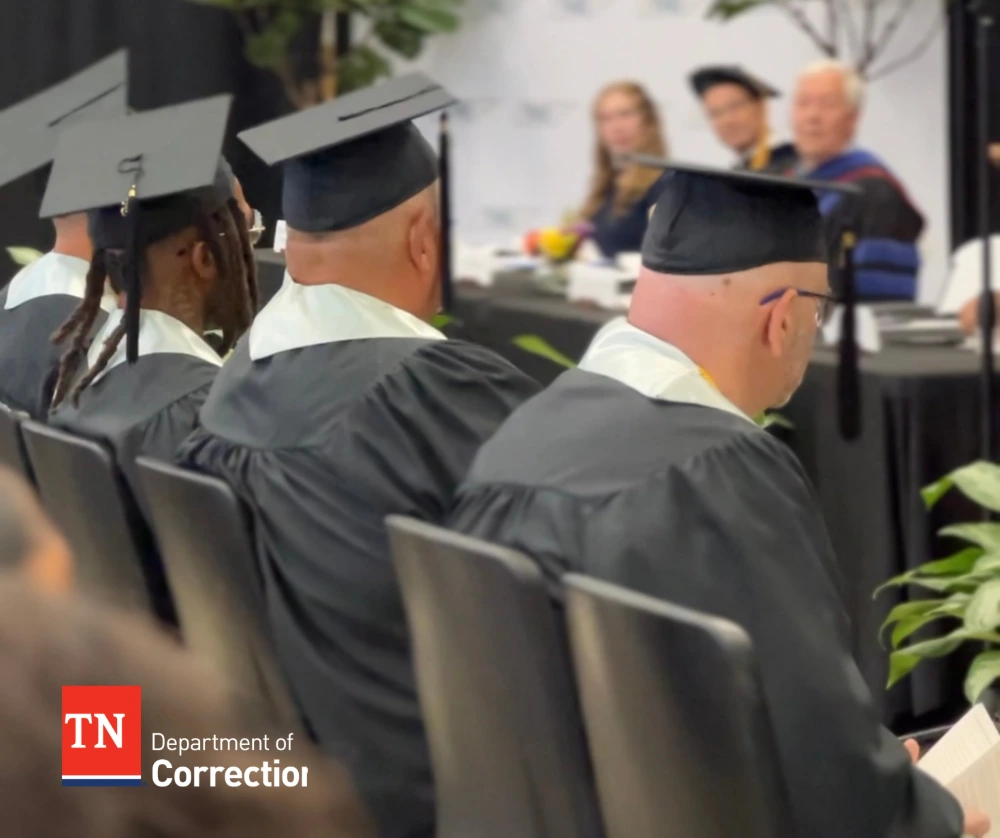 The scene played out earlier this month inside Turney Center Industrial Complex, where Belmont University marked five years of the program with its second graduation ceremony for incarcerated students.
Launched in partnership with THEI, the program provides students the opportunity to earn a Bachelor of Business Administration while completing coursework inside Turney Center. Since the first cohort began in 2021, the initiative has grown across multiple cohorts, supported students transitioning to campus after release and evolved into a reflection of Belmont's broader commitment to serving nontraditional learners.
"We started our first cohort with 20 men," Powell said. "To now be at a point where we've held two graduation ceremonies and are preparing to expand academic offerings within the program is incredibly meaningful."
The stakes behind the work are significant. Powell noted that 95% of incarcerated individuals will eventually return to their communities. Nationally, 62% of those released will be reincarcerated within three years. For those who complete a bachelor's degree, that figure drops below 5%. THEI and its partners have recorded a 0% recidivism rate among program graduates.
"What is happening is such a powerful tool," Powell said. "It gives them purpose and hope, something they felt they had lost. And this opportunity really gives them that sense of renewed direction."
Program Impact
- 95% of incarcerated individuals will eventually return to their communities.
- Nationally, 62% of those released will be reincarcerated within three years.
- For those who complete a bachelor's degree, that figure drops below 5%.
THEI and its partners have recorded a 0% recidivism rate among program graduates.
Beginning with the next cohort, students will also have the option to pursue a liberal studies degree, supported through a grant from the Mellon Foundation. Powell said this expansion is significant.
"Not everybody thinks the same way or learns the same way," Powell said. "Having an additional option will be really impactful for the students."
For Hannah Malkofsky-Berger, senior coordinator of education programs at THEI, some of the most meaningful progress is visible in students' day-to-day confidence.
"I've seen students who did not know how to work a computer before starting their associate's degree, who are now taking almost fully online classes," Malkofsky-Berger said. "There have been students who began the program unsure if they could excel, and now excitedly show me the A's on their transcripts."
Many of those students, she added, become leaders on the compound, encouraging others to not only apply for college, but to see themselves as scholars. "Their success creates a culture of viewing themselves as more than their circumstances, which empowers them to create, advocate and support others in new ways," Malkofsky-Berger said.
Clemente Bell graduated this spring after completing part of his Belmont coursework inside Turney Center and continuing his education on campus following his release. He came into the classroom unsure what to expect, learning alongside students decades younger and navigating a vastly different educational path. What he found surprised him.
"The thing that stood out to me was that, aside from my background and age difference, they were just like me: students with goals and dreams," Bell said. "I saw them struggle with subjects and doubt themselves. But I also saw determination, resolve and a willingness to help their fellow classmates. We were all students working toward the same goal."
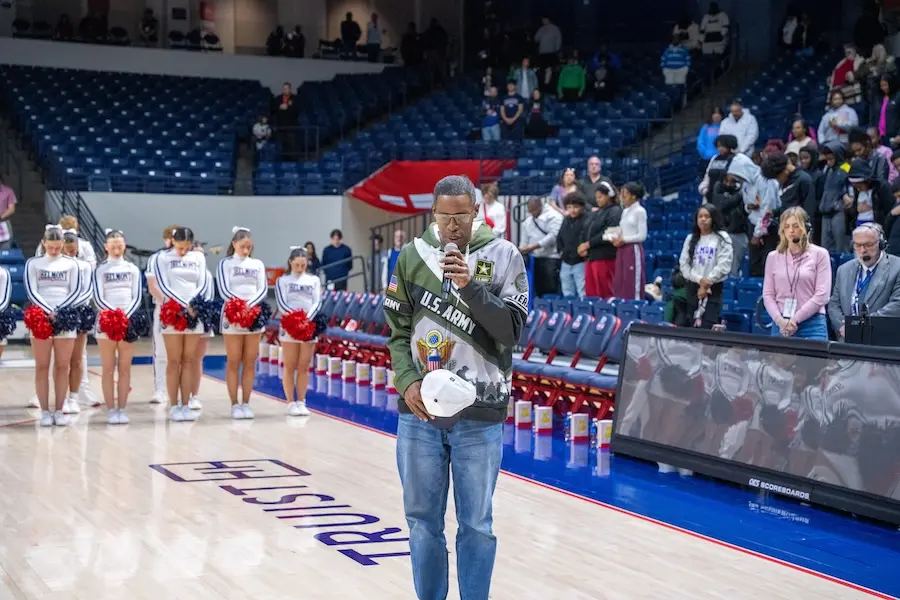
That sense of belonging extended beyond the classroom. Bell, a military veteran, was asked to deliver the pregame prayer at a Belmont Women's Basketball game during Community Night, a moment he said has left a lasting impression. In April, he spoke about his journey at a 1,200-person national conference on education in prison systems.
"He said, 'Ms. Kim, I can't wait to send this [recording] to my mom. She is going to be so proud,. That is not something I ever dreamed I would do,'" Powell recalled.
The transition from Turney Center to campus was supported at every step. THEI staff, including some who had been incarcerated themselves, helped Bell secure housing, identification and transportation. At Belmont, he was connected with academic advisor Katie Rockey, whose ongoing guidance he described as central to his success, along with access to the Lila D. Bunch Library and the Veterans Office.
"Those relationships made all the difference," Bell said.
Bell has since secured employment at Lipscomb University as he continues building his career following graduation.
The graduation ceremony at Turney Center mirrors Belmont's traditional commencement in nearly every detail, down to the regalia, the ceremonial basin and towel, remarks from university leadership and even a catered meal for graduates and their families. This year, Gov. Bill Lee attended and spoke about his own experience volunteering in a men's prison 25 years ago and about why he believed education is essential to what happens when people return home.
For Powell, the program ultimately reflects something central to Belmont's identity. "From a Christ-centered perspective, that's what we're supposed to do," she said. "Christ looked at every population and helped lift them up. For Belmont to really wrap its arms around students whose journeys haven't followed a traditional path, to help support them all the way to that goal, is a wonderful testimony to what this university is."
Bell put it more simply. "My graduation was only made possible because of the faith that both THEI and Belmont had in me," he said. "I will be eternally grateful."
Learn More
Programs mentioned in this story