
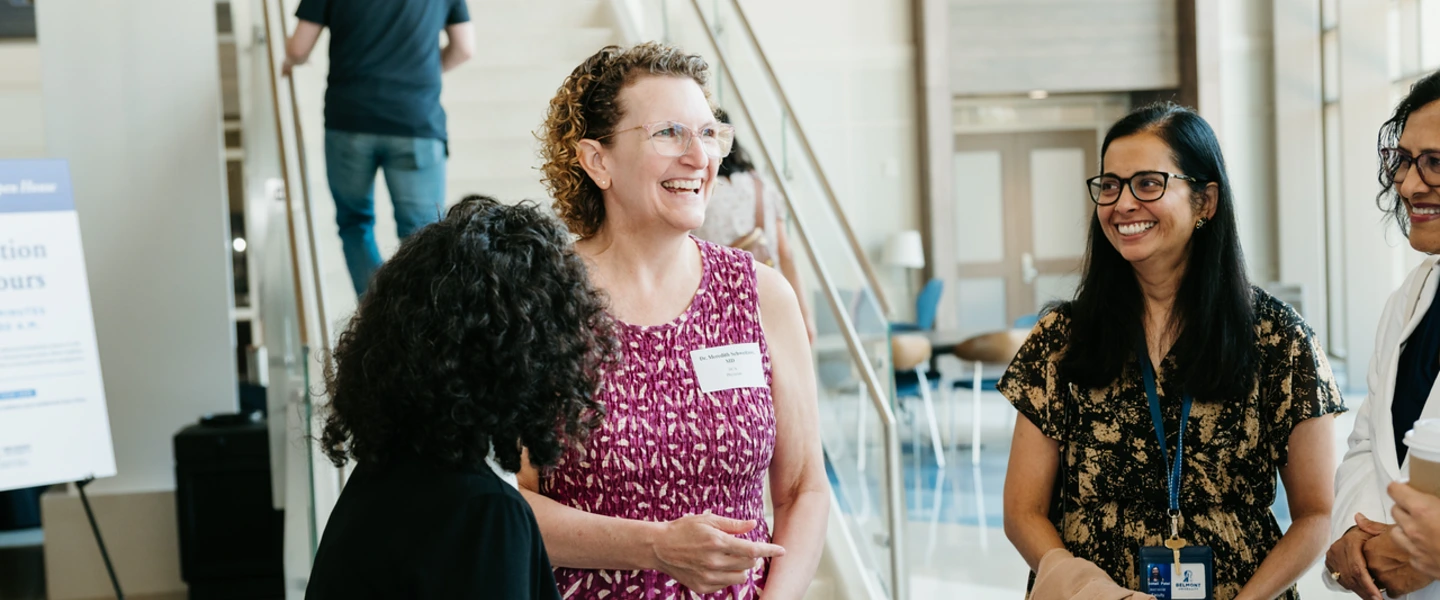
Clinical faculty toured the spaces where Belmont medical students learn, practice and prepare to care for patients
The Thomas F. Frist, Jr. College of Medicine recently opened its doors to medical professionals and their families across Nashville for a Clinical Faculty Open House. The event highlighted the vital role clinical faculty play in mentoring students and helping educate the next generation of physicians. 
Clinical faculty — practicing doctors and health care professionals who teach students during their rotations — toured the facility, met the team and learned more about how to get involved with the College’s innovative work.
With the help of students, faculty, staff and a guest appearance by Belmont’s mascot, Bruiser, the medical school highlighted the critical role of partners in providing hands-on educational experiences and developing the future of healthcare.
Following light bites and an address from Dean Anderson Spickard, clinical faculty toured the building with current medical students. Some of the elements showcased included student-only spaces on the 5th and 6th floors, where the medical school library, student society rooms (called “Frist Houses”) and individual and collaborative study spaces are located.
Beyond student-specific spaces, the tours also showcased the anatomy lab and the bright, airy design of the building, with bold views of the city's skyline. Guests were impressed by the cutting-edge simulation experiences, resources and facilities provided to the medical students.
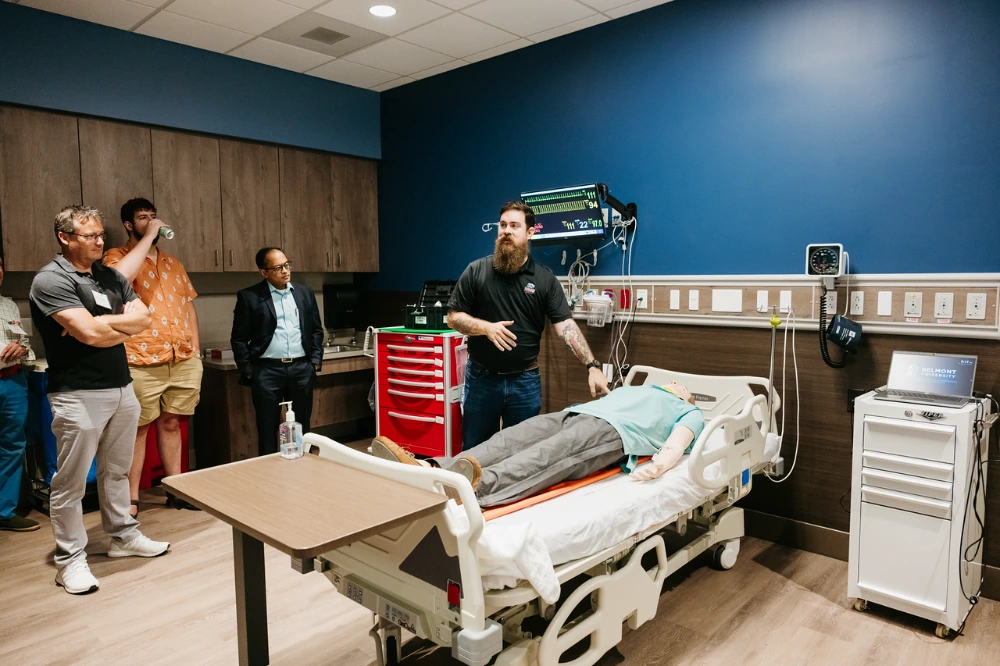 Matthew Needler, director of operations at the Center for Interprofessional Engagement & Simulation, showed attendees around the two-story simulation lab, where students are exposed to replicas of real clinical environments.
In the simulation lab, students practice administering IVs, reading vital signs and treating manikins with life-like symptoms. The high-tech manikins can bleed, sweat, foam at the mouth and even deliver babies. Each manikin can be modified to include a variety of real-life scenarios, such as different ages, genders, body shapes and clothing, providing students with experiences that prepare them for their future careers.
Also found within the simulation center is a space where staff members create and mold prosthetic skin, blood and wounds to fit manikins and mimic a variety of conditions. Simulations are integrated into the curriculum and take students through a variety of clinical scenarios, followed by intentional debriefs to help students process and learn from their experiences.
 Simulation in the lab extends beyond manikins to live actors, as people are integrated into the simulation experience in exam rooms where students gain practical experience with patients. With interdisciplinary collaboration across the healthcare ecosystem, the simulation facilities in the medical school are also used by students at Belmont’s Gordon E. Inman College of Nursing, the College of Pharmacy & Health Sciences and even the O’More College of Architecture & Design. By exposing multiple facets of the healthcare ecosystem, students from all fields enter their practices with excellence.
The Clinical Faculty Open House not only opened the doors of the Thomas F. Frist, Jr. College of Medicine to medical professionals; it also opened the door to community relationships that will allow for improved collaboration in Nashville, the health care capital of the nation.
From fun activities in the Kids’ Room to discussions around faculty success, this event demonstrated Belmont University’s desire to partner with its neighbors to imagine a creative educational experience. The day showed what is possible when partners come together to invest in students and shape the future of health care — by Nashville, for Nashville and for all of Tennessee. 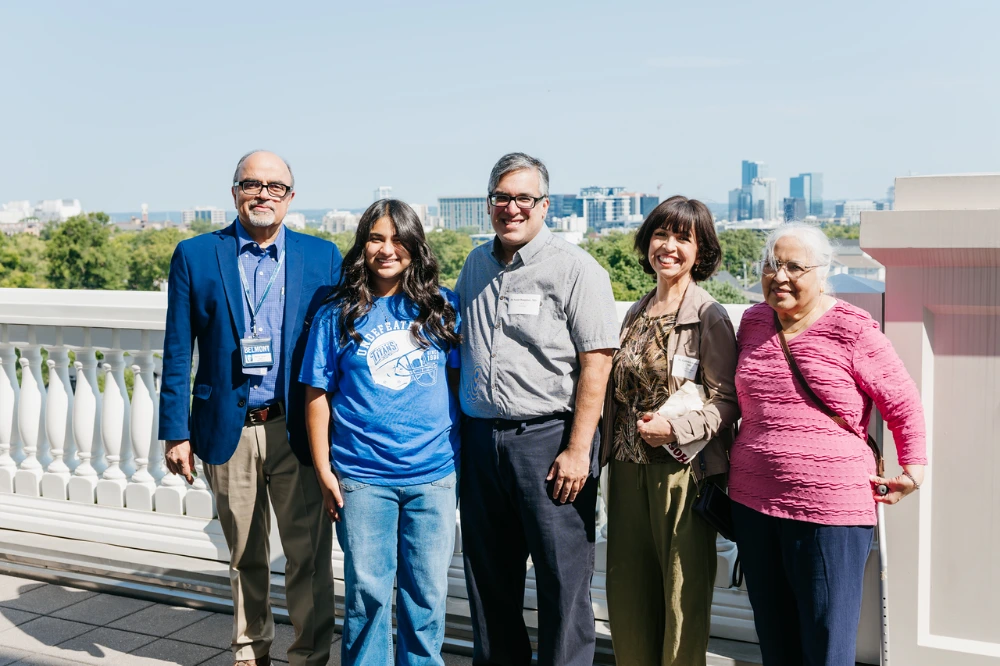
To learn how you can partner with the Thomas F. Frist, Jr. College of Medicine — whether through a clinical faculty partnership, program support or philanthropy — contact us at hopetransforms@belmont.edu today.
Learn more about the Thomas F. Frist, Jr. College of Medicine