
Honors students help preserve the legacy of Joyce and Walter Searcy through documentary filmmaking
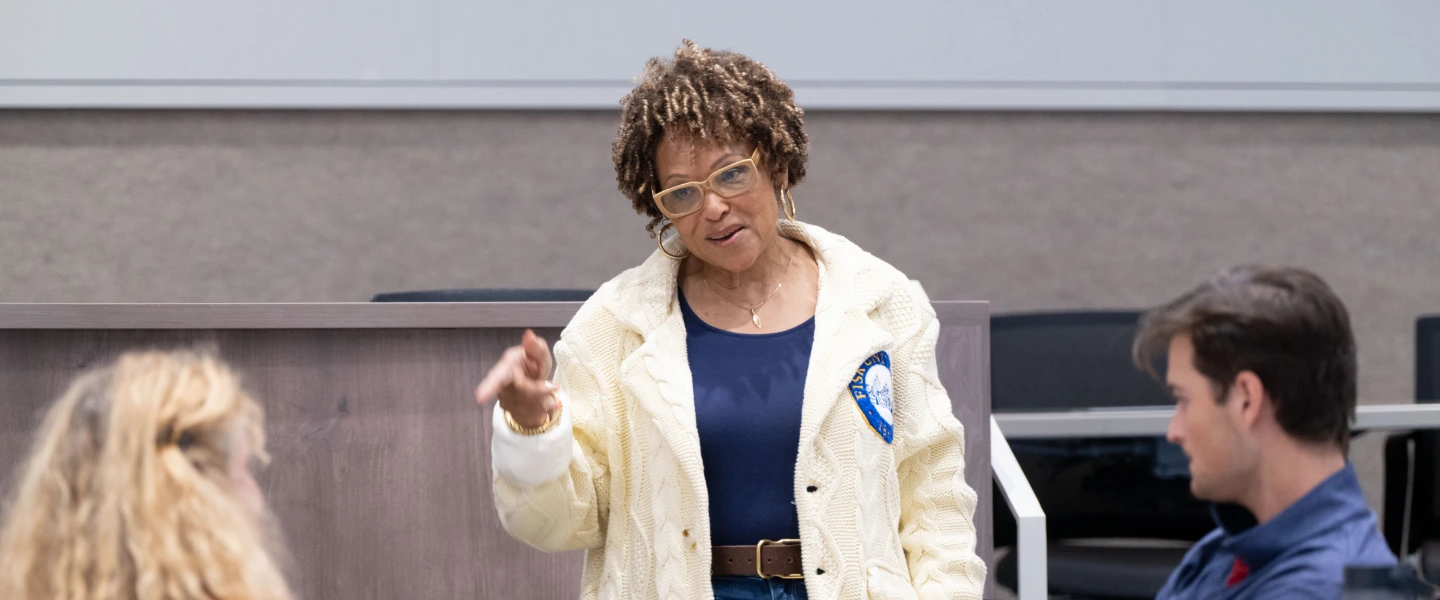
In partnership with the Fisk-Belmont Social Justice Collaboration, an interdisciplinary group of Belmont students from the Global Honors program spent the past academic year researching, archiving and conducting interviews. Their work culminated in “Steadfast & True,” a documentary chronicling the lives and contributions of Walter Searcy and Joyce Espy Searcy, a prolific yet under acknowledged couple.
Combining historical research, storytelling and documentary filmmaking while giving students firsthand experience in preserving local history, the ambitious project highlighted the Searcys’ tremendous collective impact in Nashville.
The documentary was born from a simple realization: the Searcys’ story deserved to be told.
“We were all having lunch together near the end of Peace Summit and Richard English from Queens University Belfast said, ‘You guys really have a story,’” recalled Canesha Conger, project specialist in the Office of External Engagement who initiated the project. The sentiment echoed other conversations that emerged during the 2025 Peace Summit and eventually developed into the documentary effort.
A Legacy Worth Sharing
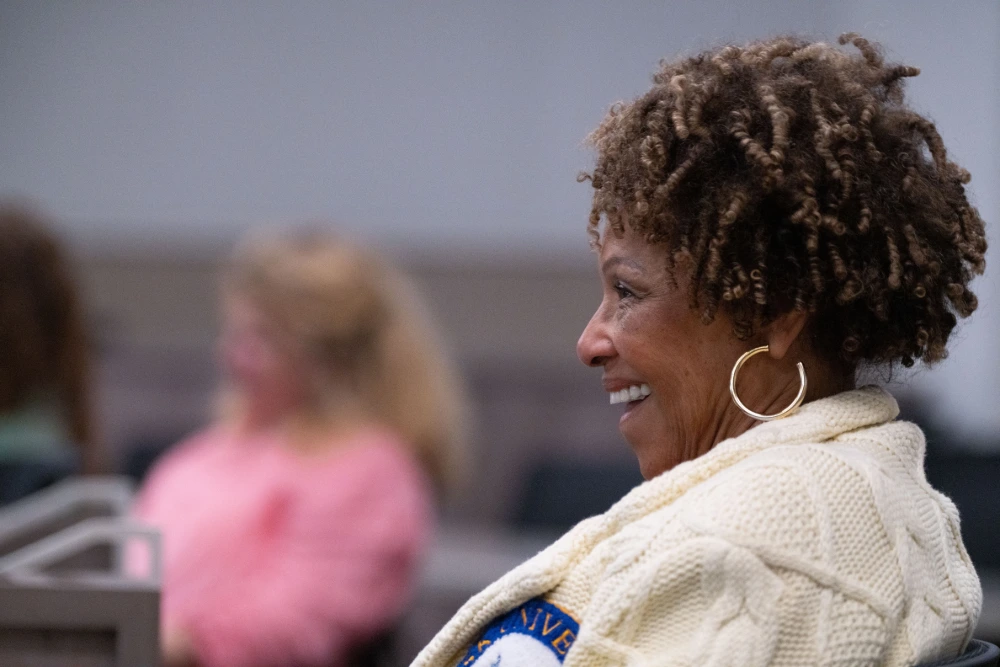 For more than five decades, the Searcys have dedicated themselves to service, advocacy and community-building across Nashville. Their impact can be seen in classrooms, churches, civic organizations and generations of students and community leaders whose lives they have touched.
At Belmont, Joyce serves as director of Community Relations, cultivating meaningful partnerships between the University and the historic Edgehill community that borders campus. Beyond her role at the University, she has served on numerous local and national boards, earning a reputation as a trusted leader, connector and advocate for community progress.
Walter, a founding member of Nashville Organized for Action and Hope (NOAH), civil rights veteran and transit equity leader, has dedicated his life to advancing racial justice and community betterment. From his early days as a student activist at Fisk University during the Civil Rights era to his decades of leadership in Nashville, he has remained a steadfast voice for dignity, access and collective action, helping shape conversations around transportation, justice reform and community empowerment.
The Searcys’ legacy is evident not only in the programs, organizations and initiatives they have supported, but also in the stronger, more connected communities they have helped cultivate throughout the city.
Telling the Searcys’ Story
The documentary project drew Global Honors students from a wide range of disciplines who chose where they would contribute their time and expertise to the project.
Music composition majors worked on the score, audio engineering students handled recording and sound production, journalism students explored documentary storytelling, legal studies students conducted research and archival work and video production students led filming and editing efforts.
The students worked under the supervision of the Global Honors staff and faculty including Leigh Hitchcock, Dr. Mary Ellen Pethel and course advisor Carolyn Spellings in addition to filmmaker Barbara J. Hall.
According to project organizers, the deeper students got to know Joyce and Walter, the more they discovered the breadth of their impact across Nashville's civic and social justice landscape.
As research began, students quickly learned they were not simply making a film. They were becoming stewards of a living archive.
"I care deeply about film and the power it holds,” shared Global Honors student Chris Smith. “I wanted to make it clear that our documentary was not meant to point fingers or disrespect the people who shaped the state I’ve lived in my whole life. Instead, it should honor the past, including its mistakes, while encouraging meaningful conversations that lead to growth and change.”
Smith played a role in the filming and editing process of the documentary and reflected on how fortunate he felt to work closely with the filmmaker, editors, the archive group and cinematographer of the project.
“Like in any film production, every role was essential,” he said. “This class taught me a great deal about documentary filmmaking, from licensing to how different the shooting and editing processes are compared to narrative film. It deepened my understanding of the importance of local history and the people who work to shape the world we live in.”
Throughout the year, students examined historical documents, created timelines, conducted archival research and digitized decades of photographs, newspaper clippings and personal materials shared by the Searcys.
"Selfless."
"Inspiring."
"Bonding."
"Persistence."
Those were just a few of the words students used to describe the experience during a reflection session held before a screening of the documentary's rough cut this summer.
The 48-minute film weaves conversational dialogue into an overarching historical narrative of the Searcys. Key state and community leaders speak about the Searcys’ personal, civil and community impact, including former Tennessee Governor Phil Bredesen, Mayor Freddie O’Connell, Senator Charlane Oliver, Bishop Joseph W. Walker III of Mt. Zion Baptist Church, Dr. Leothra Williams Jr., Dwight Lewis and Betsy Phillips, to name a few.
For many students, the project became much more than an academic assignment. Public policy junior Sheeva Chourazghi-Azad described being inspired by both the Searcys' example and the opportunity to witness the documentary process firsthand.
“This experience made me realize just how transformational storytelling can be, and how much the Searcys were able to give back to me,” said Chourazghi-Azad. “This course has been one of the most fulfilling experiences during my time at Belmont. Having the privilege to hear about Walter and Joyce’s life left me with something even greater than skills or learning. It showed me a moral code to live by: you should fight for your community and do the right thing even when no one is watching.”
Music business and finance student Jackson Harshbarger shared how learning about Nashville's civil rights history deepened his interest in advocacy and public service.
“When I learned about the documentary, its mission and the people at its focus, I thought of my time working at a civil rights law firm and how satisfying it was to assist those who needed it the most and I wanted in,” Harshbarger said. “Championing civil rights causes, such as racial equality, requires a commitment that goes beyond professional vocation, crossing over into a way of living. This realization was invaluable in informing my personal career aspirations and also motivated me to pour more into the work this project carried forth.”
A Trip to the Promised Land
The project's most memorable experience came during a field trip to the Promise Land, a historic Black settlement in Tennessee where formerly enslaved residents established a thriving community after emancipation.
What was intended to be a routine educational excursion quickly turned into an unexpected lesson in resilience and community when transportation challenges stranded the group for hours.
Instead of becoming frustrated, students, faculty and community members rallied together.
The unexpected circumstances also created opportunities for meaningful conversations. Students gathered around Joyce and Walter, asking questions about their life experiences and learning more personal aspects of their story.
What could have been remembered as a difficult day instead became one of the defining moments of the project.
"It was just a really beautiful day, even with all the chaos," Conger said.
Those moments of connection appear to mirror the values at the heart of the documentary itself.
Throughout interviews and research, students encountered stories of perseverance, service and advocacy that continue to shape Nashville today.
Ensuring the Legacy Endures
Joyce and Walter's influence extends far beyond the public accomplishments listed in newspaper archives. Students repeatedly described discovering the quieter ways the couple has mentored others and opened doors for future leaders.
What has emerged is a testament to lives spent serving others and a reminder of the importance of preserving stories before they are lost. The documentary will be submitted to various film festivals in the coming months.
“Steadfast & True” serves as an invitation for others to seek out and learn from the people whose quiet leadership shapes communities every day.
“A project like this changes how students see themselves. When they realize that they have the opportunity and responsibility to help tell important stories, they begin to see themselves as contributors and community members,” Spelling said. “That is a powerful kind of learning.”
And through this work, a new generation is ensuring that the legacy of Joyce and Walter Searcy remains steadfast and true for years to come.
Learn More
Learn more about the program in this story