
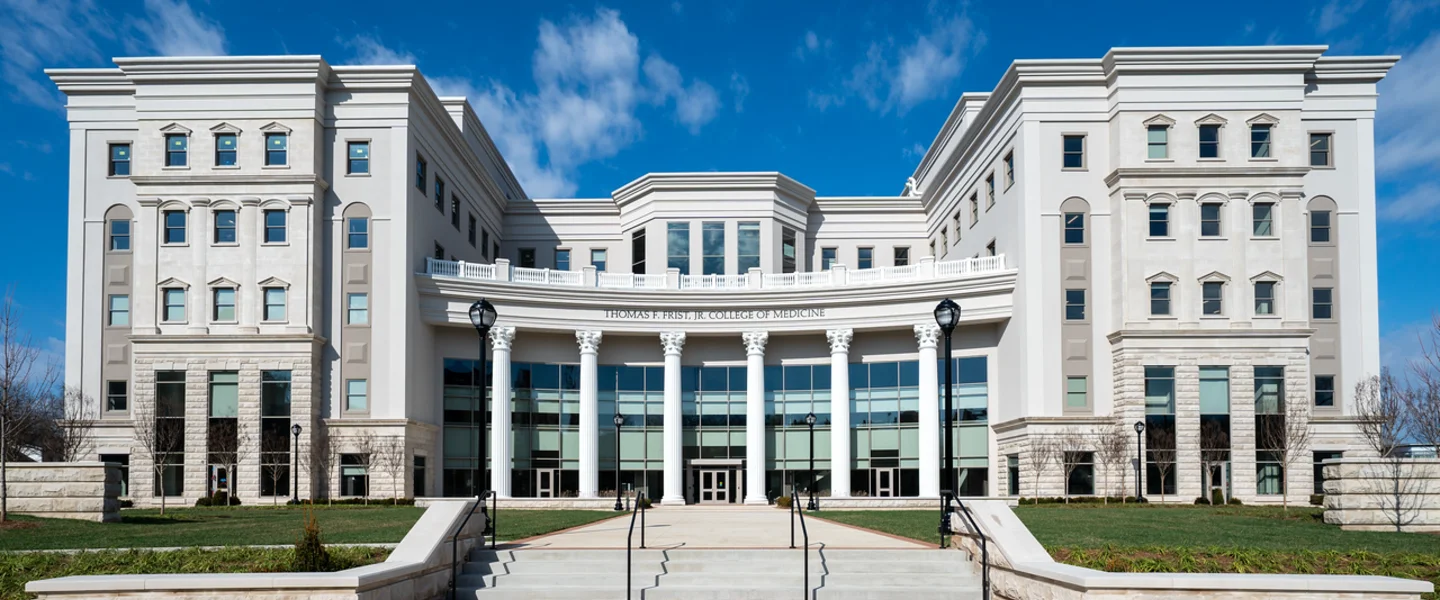
First-place honor highlights how the Thomas F. Frist, Jr. College of Medicine helps students connect personal passions with the future of health care
Belmont University medical student Sam Feudo received national recognition for his research exploring how the history of family medicine can help shape the future of health care. 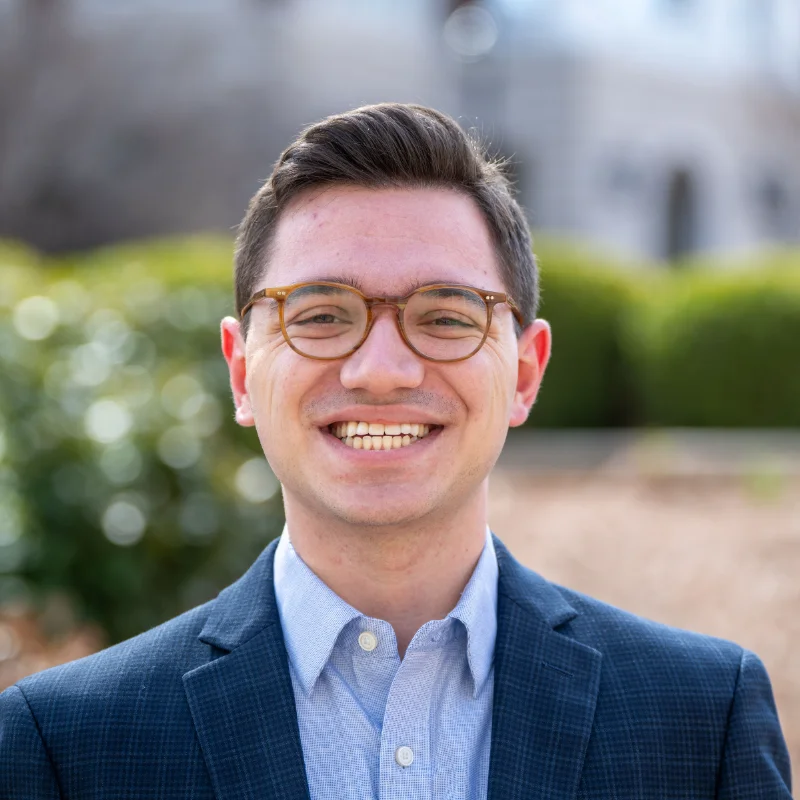
Feudo, a second-year student at the Thomas F. Frist, Jr. College of Medicine, won first place in the American Academy of Family Physicians Foundation’s 2025 Richard D. Feldman, M.D. Student and Resident Essay Contest.
His paper, “Activist Roots: How the Care of Political Refugees Forged the Identity of Family Medicine,” examines how the refugee crises of the 1970s helped define family medicine as a specialty rooted in advocacy and whole-person care — a philosophy that Feudo said closely reflects his experience studying at Belmont.
A Story Shaped by Past and Present
Originally from Cleveland, Ohio, Feudo grew up in a health care family and went on to study public policy analysis and pre-med at Ohio State University before earning a master’s in international health policy at the London School of Economics. He built additional experience through work tied to the National Institutes of Health, the U.S. Senate and the White House.
That combination of experiences shaped the questions he brought with him to medical school: How do health systems work? How does policy affect care? And how can physicians help bridge the gap between institutions and the people they serve?
When the essay contest came across his desk, he saw an opportunity to explore these questions through a topic that had long interested him: belonging, trust and the role of medicine in moments of social fracture.
His essay argues that family physicians caring for refugees in the 1970s and ’80s were forced to address the full picture of a patient’s life: trauma, housing, language barriers, employment and trust. In practice, it became an early model for whole-person, community-based medicine.
“What can we learn from our past to solve the problems of the present and help us move forward into the future?” Feudo posed. “I wanted to write about the history of family medicine, but also make it relevant to what we’re facing now.”
Whole-Person Care in Action
Before arriving in Nashville, Feudo had heard about the Thomas F. Frist, Jr. College of Medicine’s focus on whole-person care and health systems innovation. Once on campus, he said he quickly saw those values in practice.
“It seemed like the rubber was hitting the road here,” Feudo said. “A lot of places talk about whole-person care, but here it felt real.”
He pointed to early clinical experiences as one example — students begin seeing patients in Nashville communities during their first semester. The college’s interdisciplinary coursework explores not only the science of medicine but also its social, spiritual and human dimensions.
“You’re learning the science, but you’re also learning the art of medicine, how people ask questions, how they build trust and how care actually works in real communities,” he said.
Mentorship and Mission
Feudo credits faculty mentorship, particularly from Dr. Kevin Smith, with helping him stay engaged in the policy and advocacy work that first drew him to medicine. Through those opportunities, he has served on the Tennessee Medical Association’s Legislative Committee and on the governing council of the organization’s medical student section.
“Some people lose parts of what they care about along the way,” he said. “Here, I’ve been able to keep that spirit alive.”
As a member of the college’s inaugural class, Feudo also values the close-knit culture and the range of backgrounds his classmates bring.
“Everybody has their own story,” he said. “It’s a group of great people with a wide range of ages, lived experiences and backgrounds. That’s been one of the greatest parts of being here.”
Looking Ahead
While Feudo’s essay centers on history, its message looks forward. He hopes one day to practice primary care while also advising governments and health systems on how to make care more affordable, accessible and sustainable.
“I don’t want to lose sight of the individual patient in the clinic,” he said. “But I also care deeply about the millions of people you can impact on the policy side. Bridging those two is the goal.”
He hopes readers come away with a broader takeaway from his essay’s historical argument.
“I hope people see that there is a path forward,” he said. “History shows us that belonging matters, welcoming the neighbor and the stranger matters, and institutions like the family medicine clinic can be places where divides are bridged.”
For students considering the Thomas F. Frist, Jr. College of Medicine, Feudo’s advice is simple: trust the experiences that have brought you here.
“Everyone has their own path,” he said. “Trust what you’ve done to this point. We’re all experts in our own lived experience, and all of it is connected.”
Learn More
Explore the Thomas F. Frist, Jr. College of Medicine