
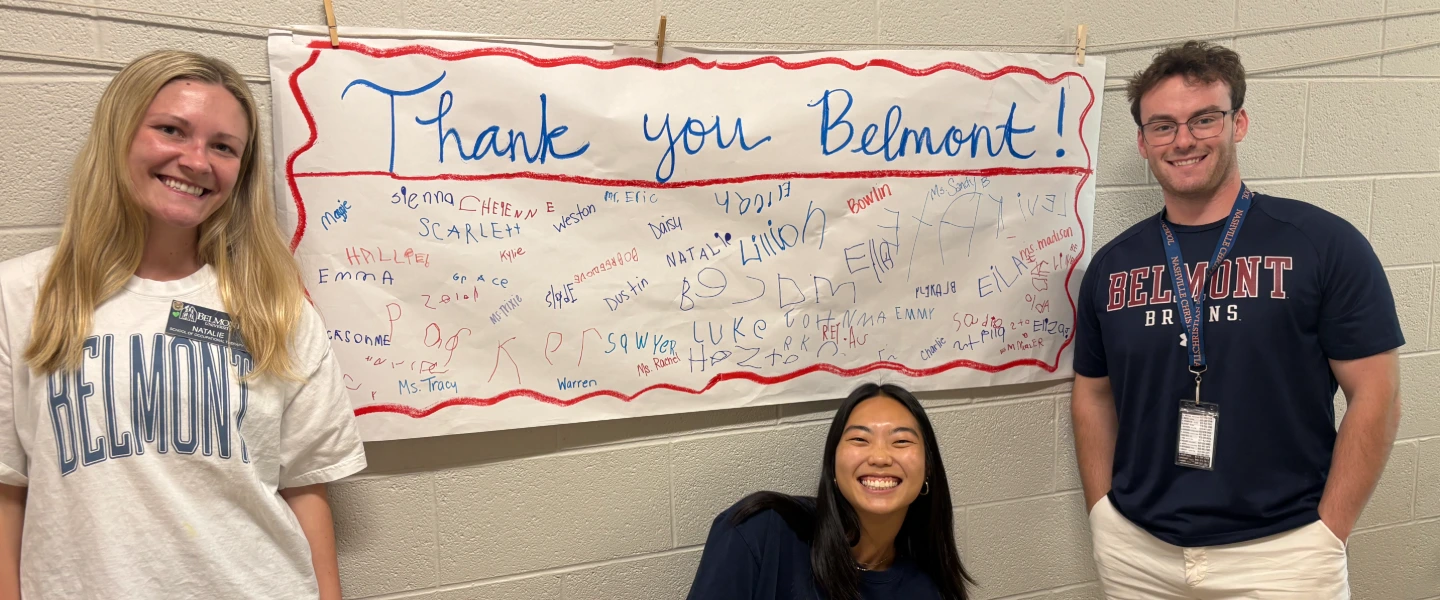
PT, OTD and MSOT students turn nontraditional field placements into foundations for professional practice
Every summer, Belmont’s physical therapy and occupational therapy students complete domestic and international field placements that operate differently than traditionally structured experiences. From a prosthetics rotation in rural Ecuador to full caseloads in a high-tech university clinic, students are challenged to apply their existing clinical skills to entirely new therapeutic environments.
Across these placements, students learn to adapt to unfamiliar settings, advocate for patients, collaborate with new partners and find creative solutions when the resources or routines they’re used to aren’t available. In the process, they’re building the confidence and perspective that they’ll carry into their future careers.
Building Something New in Nashville
Unlike traditional fieldwork experiences, where occupational therapy students join an established clinical practice, emerging placements bring students into organizations where OT services may not already exist. Students work with those organizations to identify needs, demonstrate how occupational therapy can help and build programming that can continue serving patients after the placement ends. For third-year OTD students Wesley Hopper, Antoney Labuschagne and Alisha Yoo, this challenge taught them more than they anticipated while creating a new occupational therapy program at Camp Will, a daytime program for children and young adults with special needs.
“Emerging rotations aren’t as common as traditional placements, so we really weren’t sure how we could fit into the camp environment,” Hopper said. “Normally, it can be hard to develop relationships with patients in summer clinicals because people can be less consistent with programs. Here, they do a great job of keeping the same campers long term. It requires a lot of collaboration and creativity to build that foundation.”
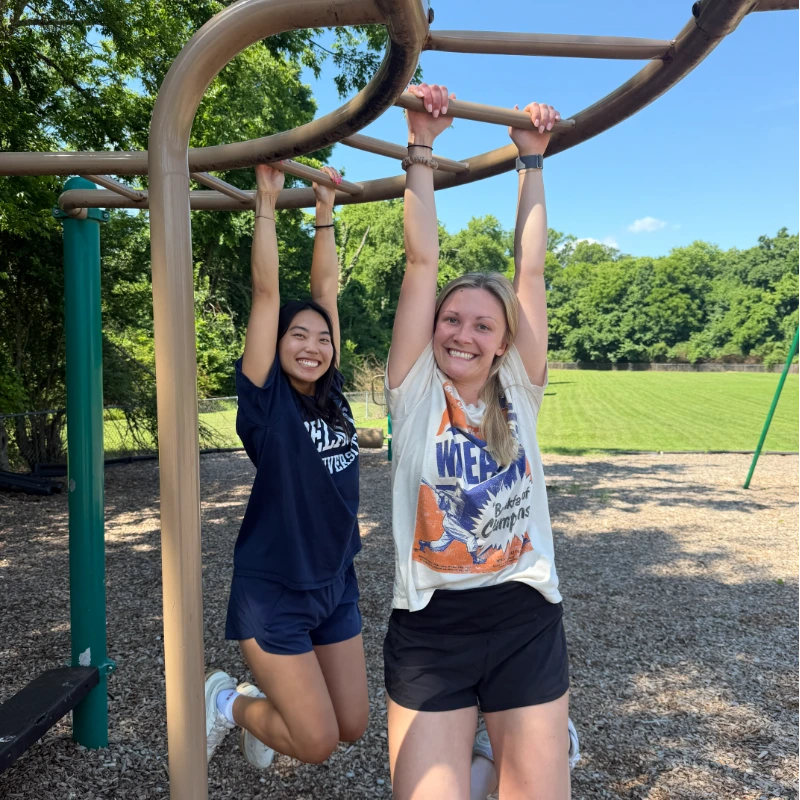
Emerging placements require students to build relationships with their partner organizations so that occupational therapy services can be seamlessly integrated into daily activities. To do this, students must model professionalism and build mutual trust through everything from performing needs assessments to working with counselors and administrators on new techniques for managing behaviors.
“Advocacy is always at the heart of emerging placements because not many people understand what occupational therapists do,” Labuschagne said. “There are a lot of questions about why we’re here and what we hope to accomplish, which is to provide care plans that they can implement next year, ideally alongside OT support. A lot of these counselors have never worked with people that have higher level needs, so it’s fun to come alongside them and provide that education.”
The team’s care plans feature activities and games for students to play and guidelines for staff to use in managing group and individual behaviors. While formulating care plans is a standard practice in occupational therapy, emerging placements require students to be flexible and utilize the resources and supplies on hand. In one exercise, the students developed a system to strengthen campers’ fine motor skills by using clothespins and cotton balls to craft the American flag on a piece of repurposed poster board.
“We don’t even have an office at the camp, so our day-to-day usually involves developing activities and then repurposing what we have available,” Yoo said. “Being in a camp setting is great because they have lots of play mats and space, but we get creative for more isolated skills. Often, we’re limited to what we can grab at the store or fit in our cars. Providing this high level of care in an unpredictable setting makes me feel even more ready for the surprises that will undoubtedly come up in my career.”
Thriving in a High-Performance Environment
A few states over, physical therapy student William Young (‘26) has been navigating a very different environment for his summer placement. At the University of Cincinnati, Young works with a broad range of patients, from professional athletes to young students, while learning to use the same advanced technology found in Division I athletic programs. The variety has challenged him to quickly adapt his approach to each patient’s needs.
Young dedicated a significant portion of his rotation to learning how each piece of equipment can best be used to treat the clinic’s broad patient base. Eventually, he learned how to guide patients through everything from body scans to contrast baths, where hot and cold plunge therapy is used to increase circulation, alleviate stiffness and prevent joints from swelling.
“It’s been really impactful to see how these resources can affect patient care and the recovery process for people with more complex issues,” Young said. “And it’s really cool to see more seasoned physical therapists and athletic trainers working with the same equipment because I can always learn from them and ask questions. Everyone is so willing to help me succeed.”
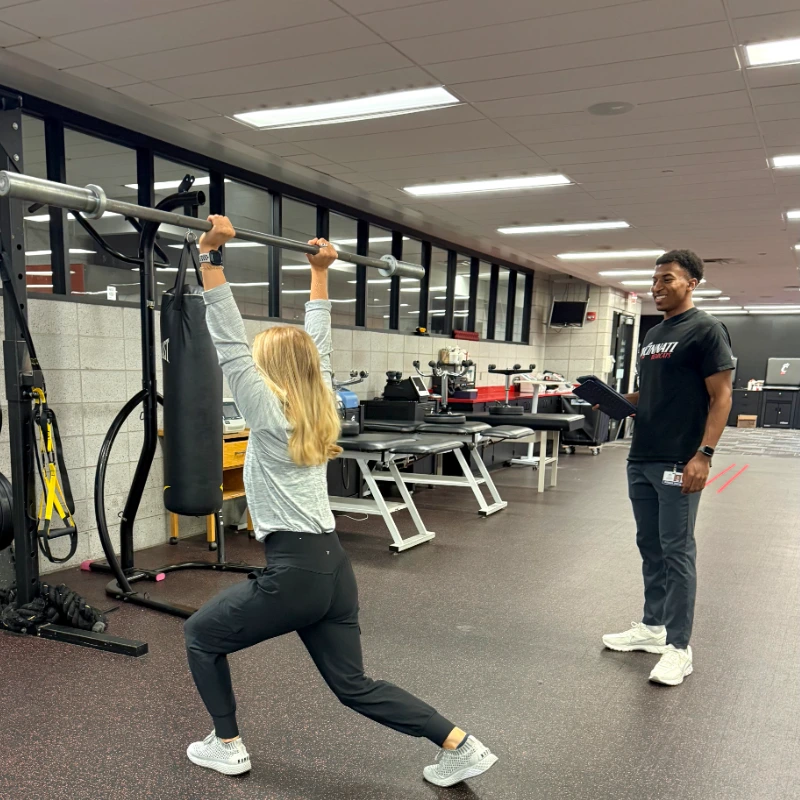
Young also experienced a full-circle moment while working in the clinic: learning that one of his field placement supervisors has been a long-term mentor to his instructor, Dr. Michael Voight, professor of physical therapy at Belmont. For Young, being able to learn from both clinicians has provided him with invaluable insight about the nuance and complexity in different patient populations.
“One area I’ve become much more familiar with this summer is performance athletes,” Young shared. “Whether it be dancers, cheerleaders or professional ballerinas, everything about their care has been interesting. Being able to see the progressions, regressions and special rehabilitations they require has made me realize that this profession touches more people than I ever thought possible.”
Throughout the course of the summer, Young has credited the rigorous preparation he received at Belmont for his success in the clinic. Being able to create advanced treatment plans for an ever-changing patient population and keep up with new concepts has resulted from the thorough preparation he received in classrooms and labs.
“Going to Belmont and getting my physical therapy education here has set me apart from every other PT student in every clinical I’ve done,” Young shared. “My instructors have commented on my preparedness and competency when treating patients, which has made me so grateful for every lesson my Belmont professors have poured into me. It makes me feel very prepared for professional practice.”
With the support of his professors and armed with his newfound skills, Young is finishing his summer rotations ready to put it all together for the good of his future patients.
Finding Inspiration in Global Perspectives
Master of Science in Occupational Therapy (MSOT) student Ronnie Brands spent twelve years advocating for her lymphedema patients as an occupational therapy assistant (OTA) before joining Belmont’s MSOT program with the hope of one day opening her own lymphedema clinic.
After spending the spring exploring options for lymphedema-focused field placements, she joined the world-renowned Földiklinic in Hinterzarten, Germany, an international treatment center for those suffering from lymphedema. Lymphedema is a spectrum of chronic conditions in which a person’s lymph system does not drain fluid correctly, due to procedures like lymph node removal, cancer radiation or congenital abnormalities.
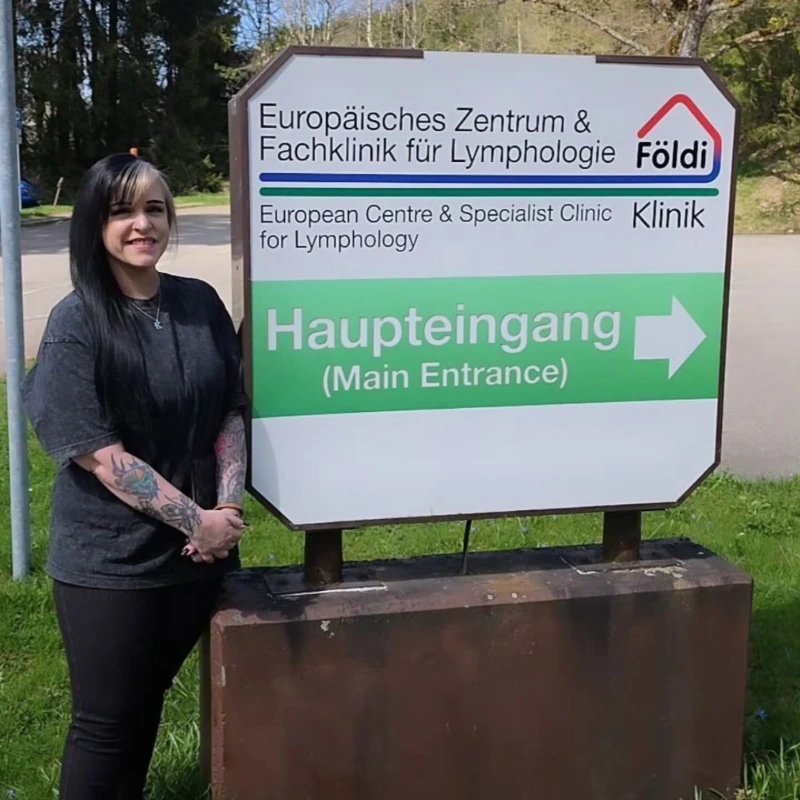
“In lymphedema care, there has never been enough supply to keep up with the care demand,” Brands said. “And I really want to make a difference in this space, so getting my doctorate and opening my own practice felt like the most natural next step.”
In Europe, lymphedema practitioners are physiotherapists, occupational therapists or massage specialists, all of whom have their own ways to wrap limbs in compression bandages and help drain fluid. At Földiklinik, the primary role of occupational therapy is to develop new techniques for bandaging limbs so that patients can be as mobile as possible.
“In Germany, occupational therapy is called ergo therapy and our role is much more specialized,” Brands said. “But that also makes what we do more crucial. I’ve learned so many new ways of wrapping and I’ve even built relationships with several of the clinic’s long-term patients.”
Brands stays motivated on her educational path by focusing on positive patient outcomes and the joy she feels watching people progress through their treatment plans. While at Földiklinik, she participated in an international conference known as “Földi Days,” where lymphedema practitioners, pharmacists and researchers came from all over the world to discuss their developments and involvement in patient care.
“Seeing all of the lymphedema professionals from all over the world reminds me of the amazing support system I have at Belmont,” Brands shared. “I have never felt more motivated and loved than I do in my classes. One day. I want to bring what I’ve learned back to this very conference and do even more to advance the future of lymphedema care.”
This fall, Brands will start the final step in her academic journey: attending Belmont’s Post-Professional Occupational Therapy Doctorate (PPOTD) program, where she hopes to continue developing skills that will make a difference in the lives of her future patients.
Pursuing Purpose-Driven Care in Ecuador
Back across the ocean in South America, fellow MSOT student Kim Cassidy had her own international summer field experience. With guidance and encouragement from her professors, Cassidy set out to complete two field rotations in Ecuador, quickly adapting to two very different clinical environments: a prosthetic clinic and a pediatric outpatient facility.
“I really want to be a bilingual therapist, so it was important to me that I work with a variety of patient populations,” Cassidy said. “And because both of my rotations were entirely in Spanish, I was really challenged to stretch myself and develop everything from an increased vocabulary to cultural awareness.”
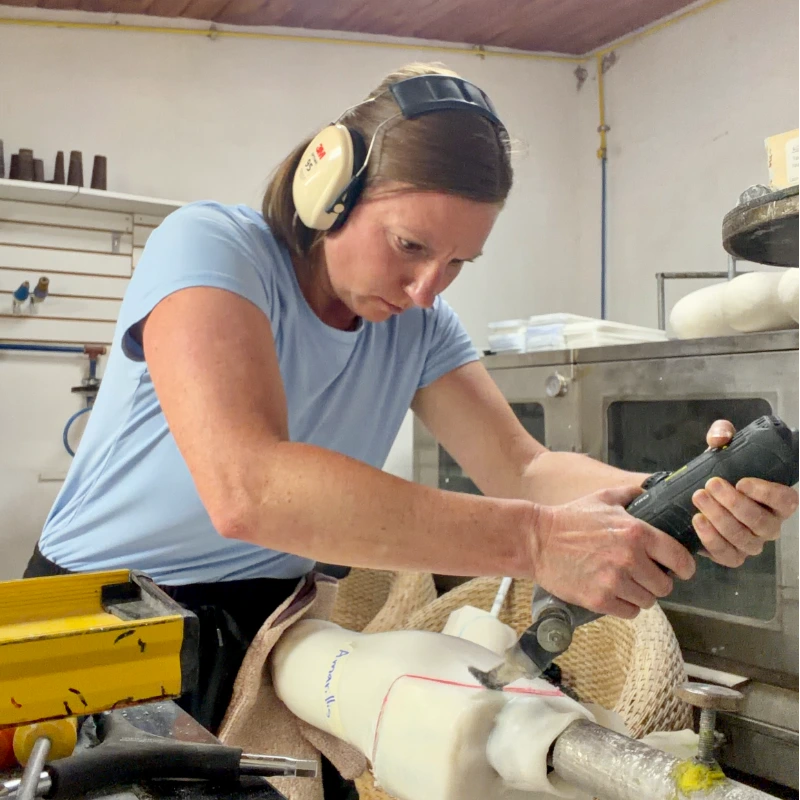
As the first occupational therapist to ever work with the prosthetics clinic, Cassidy acted as both OT advocate and professional partner, refining the prosthetic-making process and providing each patient with more individualized care. Cassidy realized that the clinic was making prosthetics without first consulting patients on what their goals were after receiving the new limb, which is where she used her training to offer support.
“My favorite saying is, ‘there’s no growth in the comfort zone and there’s no comfort in the growth zone,’” Cassidy said. “I saw that the clinicians were making beautiful prosthetics, but patients weren’t getting support in regaining their independence after being fitted. It was a really moving process to work alongside such talented people and bring a new layer of care to their practice, which created some very inspiring outcomes.”
Since finishing her work this summer and graduating from Belmont, Cassidy has begun working as an equine-assisted therapist and plans to return to Ecuador annually to train students in the summer. In her instruction, she hopes to extend the same support and encouragement to her students that she received from her own mentors.
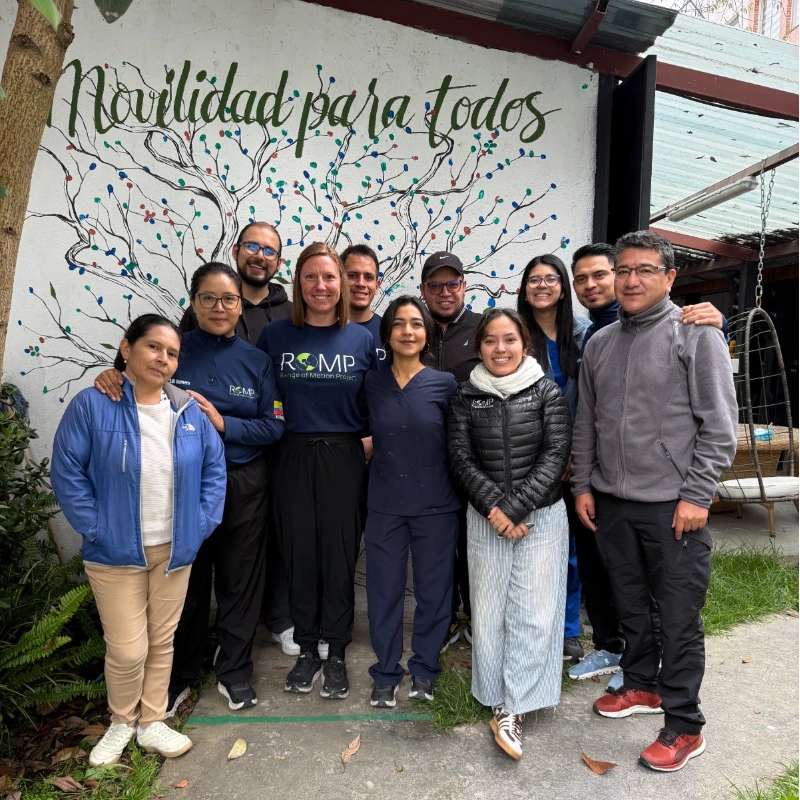
“It was such a beautiful and transformative experience to do something entirely new,” Cassidy shared. “My professors did a great job with facilitating every connection I needed to make this work a permanent part of my life, so hopefully I can help students dig into this community and develop their own cultural humility in the coming years.”
As her practice develops in light of her experiences abroad, Cassidy also hopes that future OT students will consider doing an international fieldwork rotation, even if they don’t plan to work abroad after graduation. “The value in this experience is unbelievable,” she said. “Your life and practice will absolutely be changed for the better.”
Taking New Perspectives into Future Practice
By taking on fieldwork outside of their normal comfort zones, Belmont’s physical and occupational therapy students gain perspectives and skills they won’t find elsewhere. Navigating new environments helps them combine innate creativity with clinical competence, creating experiences they’ll draw on for the entirety of their professional careers.
As they challenge themselves to bridge gaps, forge relationships and provide exceptional patient care, these students live out the College of Pharmacy and Health Sciences’ mission every day: being Christ-centered leaders at the forefront of advancing health and human potential.
Learn More
Learn more about the programs in this story