
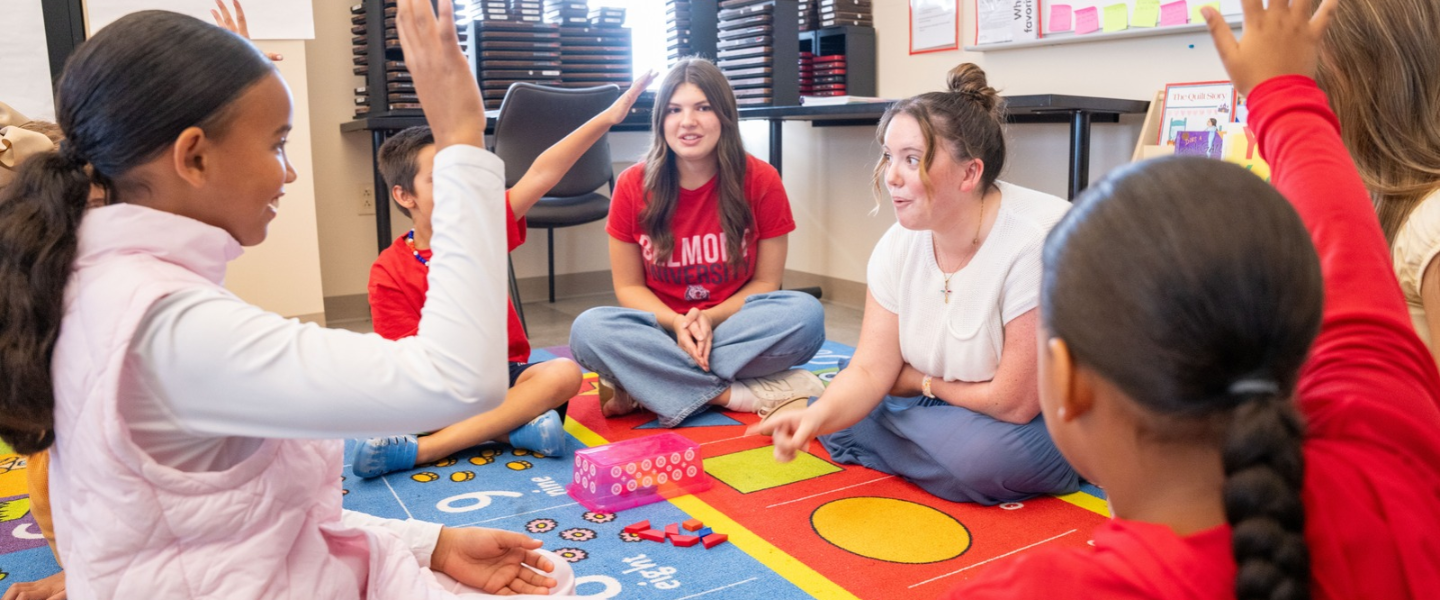
College of Education’s new “Growth-Oriented Conversations” Protocol helps future educators develop the professional habits that support success in the classroom
Effective teaching requires more than content knowledge and classroom management. Future educators must also learn how to receive feedback, reflect on challenges and navigate difficult conversations that support professional growth.
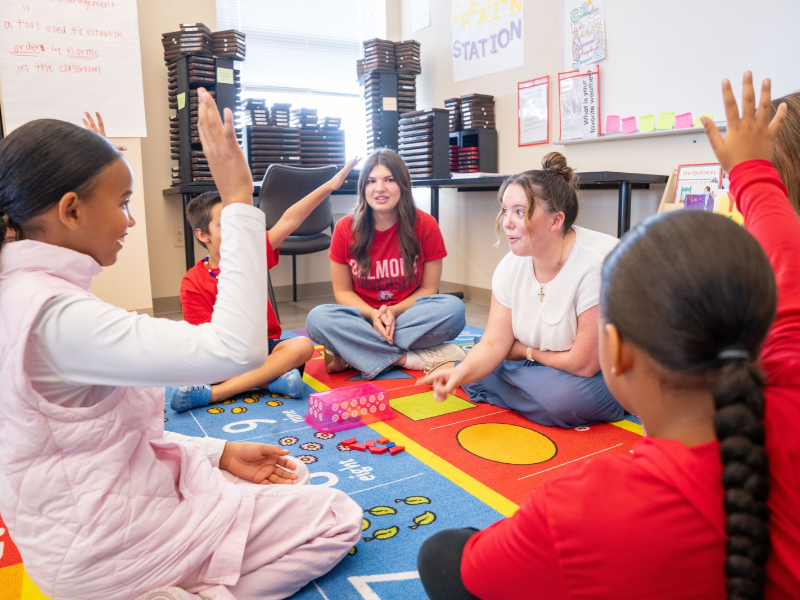 In Belmont’s College of Education, Drs. Annie Insana and Darcie Finch are helping future educators build those skills intentionally through the new conversational protocol designed to foster reflection, professionalism and personal growth throughout a student’s clinical experience.
Together, Insana, assistant professor of education and director of clinical practice, and Finch, director of Metro Nashville Teacher Residency and job-embedded programs, oversee field placements within the College of Education. Through that work, they support students from their initial field placements as undergraduates to their final stop as job-embedded candidates in graduate school preparing to enter the profession.
Looking Beyond Teaching Techniques
As they worked alongside student teachers, Insana and Finch noticed that many of the challenges candidates faced were not tied to instructional knowledge or classroom management. Instead, they often reflected professional dispositions such as communication, preparation, adaptability and openness to feedback.
“How do we flag these habits of mind early and build language and systems to help our students while they’re still shaping the kind of teachers they want to be?” Finch asked.
These observations prompted the pair to explore a more intentional approach to coaching and development.
“Some of the challenges our aspiring teachers were having in the classroom were related to their disposition rather than discipline specific competencies,” Finch shared. “We wanted a way to help students recognize and strengthen those habits while there was still time to grow.”
How the Protocol Works
The Growth-Oriented Conversations Protocol emerged from years of coaching conversations with students. Over five years, Insana and Finch documented their approach, identified common practices and refined them into a reflective model that helps teachers and learners navigate challenging conversations while preserving trust, accountability and growth.
The protocol unfolds in three phases:
- Phase One: Preparing Self. Before a conversation begins, educators are encouraged to engage in self-reflection. “What bias am I bringing? What assumptions do I make about this student or the situation?” Finch said. “These questions help us enter the conversation with openness and clarity."
- Phase Two: Preparing the Student. Rooted in David Yeager’s research on “wise feedback” in “10 to 25: The Science of Motivating Young People,” phase 2 focuses on setting realistic goals aimed towards growth and capability. “Wise feedback goes beyond the compliment sandwich by pairing high expectations with a genuine belief in the student’s ability to meet them,” explained Insana.
- Phase Three: Having the Conversation and Following Up. With expectations clearly established and self-reflection completed, participants engage in a conversation focused on identifying opportunities for growth and creating a path forward. This process extends beyond the initial discussion. “We always want to make sure students know that support continues even after the conversation is over,” said Finch.
Cultivating Brave Spaces
Beyond preparing for, hosting and reflecting on the conversation, the protocol gives student-teachers a framework they can replicate in their own teaching.
“This work is really hard, and we’re modeling what it looks like to approach difficult conversations with intention and courage so future teachers can carry it forward in classrooms of their own,” said Finch.
More than a coaching tool, the protocol reflects the College of Education’s commitment to developing future teachers who lead with professionalism, empathy and integrity. That mission naturally aligns with Belmont’s SOUL Framework for wise leadership, which Finch says shapes how her colleagues approach these types of conversations.
“We want people’s souls to prosper,” she said. “It’s important to recognize that we can’t do that without having these conversations.”
A Community of Practice for Teacher-Scholars
As the framework took shape, Insana and Finch further developed their work through the Teaching Center’s Scholarship of Teaching and Learning (SoTL) Institute, designed for faculty who want to develop a scholarly project based on their teaching.
The institute provided opportunities for peer review, feedback and collaborative inquiry, helping the pair consider how the protocol might apply beyond teacher education.
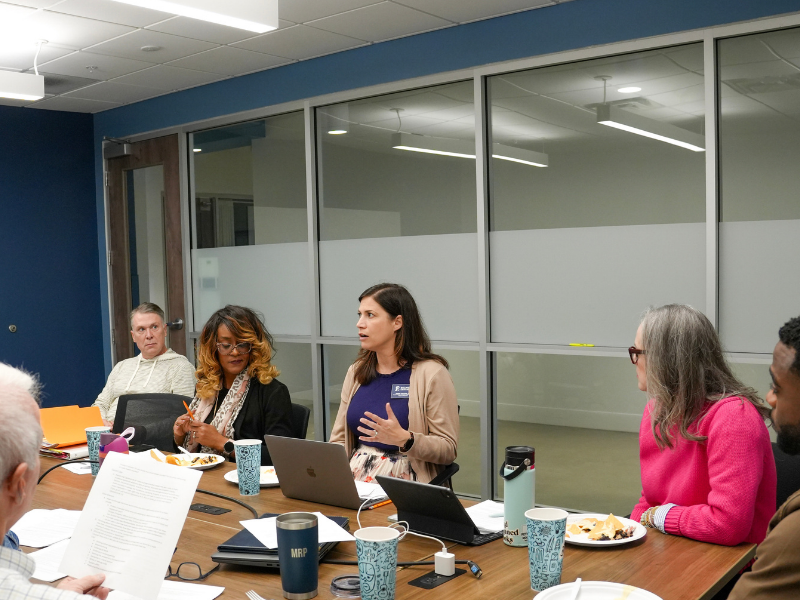 “The peer review process is invaluable,” shared Teaching Center Director Jayme Yeo, who coordinates the SoTL Institute. “Not only do teachers walk away with new ideas for their projects, they see how their scholarly projects might generalize to other contexts and be useful to a wide audience.”
Housed within Belmont’s Formation Collaborative, the Teaching Center has supported this kind of faculty development for over thirty years by providing mentorship, opportunities to collaborate and funding for research and special projects.
“I started working with the Teaching Center because I was in awe of the creativity and wisdom of our teachers," said Yeo. "With grant funding from The Kern Family Foundation and support from the Belmont Formation Collaborative, initiatives like SoTL help us see and celebrate that expertise together.”
Seeing the Bigger Picture
The broader relevance became clear when Finch and Insana shared the Growth-Oriented Conversations Protocol with colleagues from across the University.
“The conversation was so rich; we never made it past phase one,” shared Insana. “Even though we’re doing this in the College of Education, our peers saw so many connections within their own disciplines and conversations with students.”
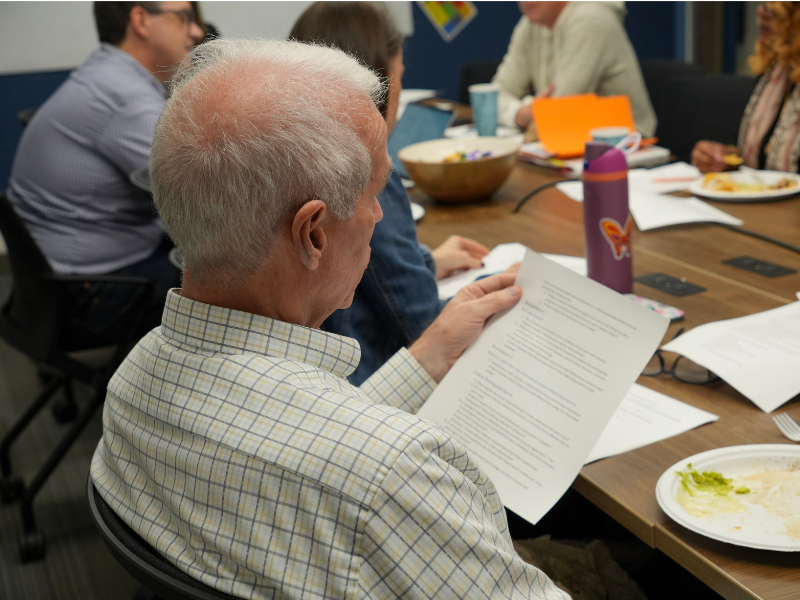
Encouraged by that response, Finch and Insana are now exploring ways to share their protocol beyond Belmont. As they continue refining their work, the pair will present their work at the Association of Teacher Educators conference this spring and are exploring the development of a book of case studies that would help educators apply these concepts in their own work.
What began as a series of conversations between colleagues has evolved into a model for helping future teachers navigate one of the profession's most important responsibilities: fostering growth through honest, supportive and courageous dialogue.
Learn More
Explore Formative Education at Belmont