
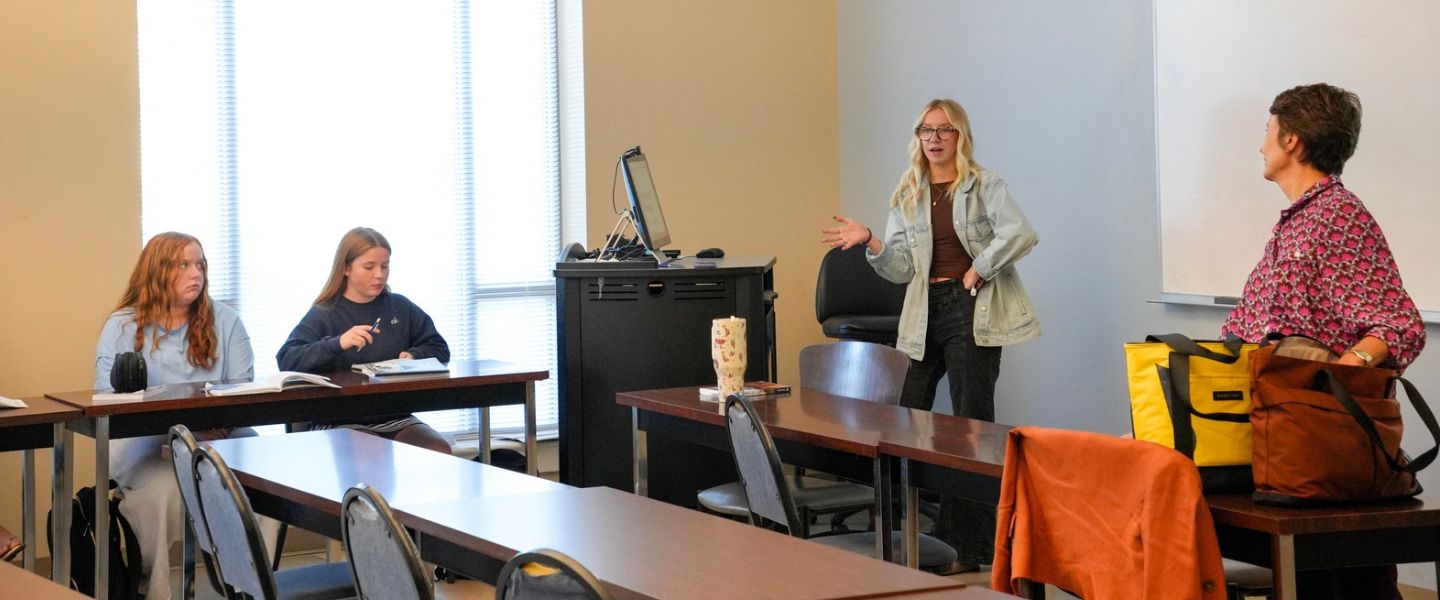
The first year of college is a formative journey of growth and discovery: a time to ask questions, make connections and learn the new rhythms of college life. At Belmont, mentors walk alongside first-year students from their first days on campus through Belmont’s Towering Traditions orientation program, offering guidance, encouragement and connection.
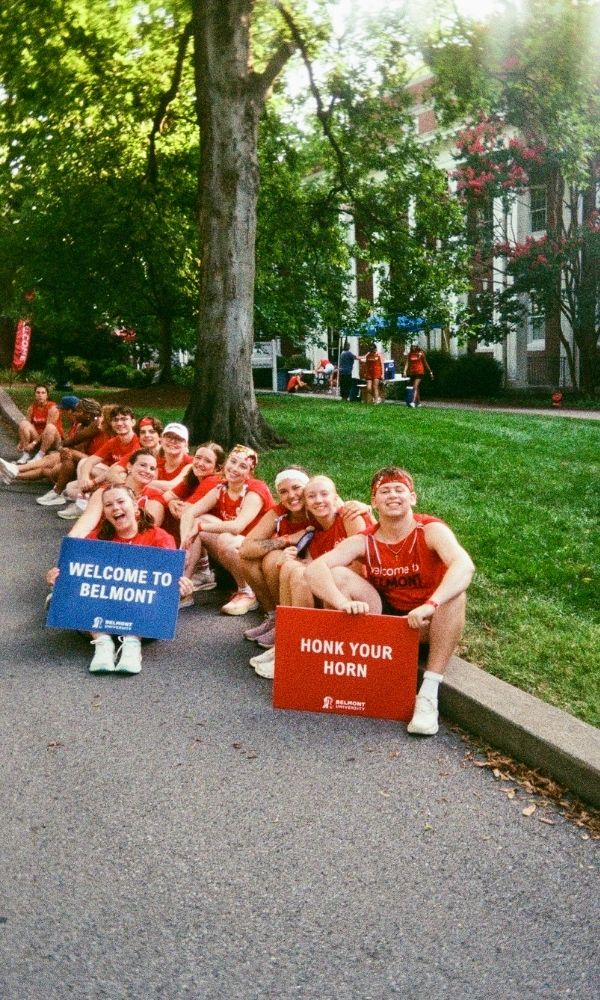
A new First-Year Seminar Peer Mentor Program now picks up where Welcome Week leaves off, inviting select orientation leaders to join their groups’ First-Year Seminar courses as peer mentors.
Building on a strong foundation
Belmont has long invested in the first-year experience, which U.S. News & World Report consistently recognizes, ranking the University No. 29 nationally this year. Towering Traditions plays an important role in helping students find their place on campus, but the need for support continues past the first week.
“Near-peer mentors offer the valuable perspective of someone who has recently navigated that transition,” shared Ryan Holt, assistant dean of students and director of new student orientation. “They help first-year students feel connected, empowered to ask for help and aware of campus resources and opportunities. Just as importantly, they model what it looks like to engage with the Belmont community and take ownership of the college experience.”
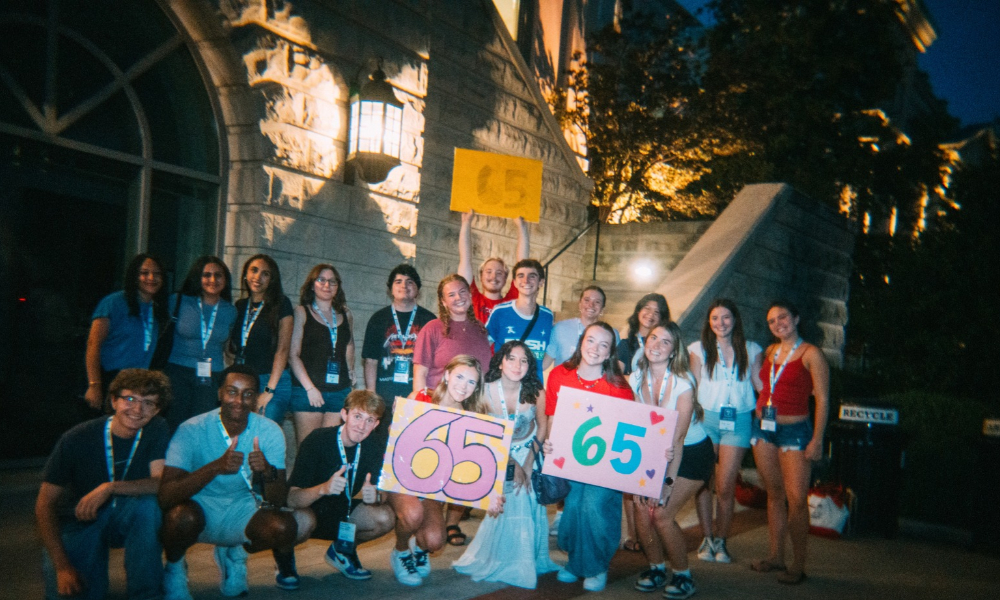
This idea is at the heart of the First-Year Seminar Mentor Program, which extends those relationships throughout the semester.
This fall, 12 Towering Traditions leaders were selected to the inaugural cohort, each joining one class a week with their group to share tips for academic success and holistic wellbeing.
A familiar face in the classroom
Jordyn Santos, a sophomore nursing major and FYS peer mentor, remembers needing the same guidance during her first year. “Incoming freshmen are trying to make sense of a whole new environment. They’re really craving step-by-step guidance on what to do to be successful in college,” she shared.
Each week, Santos leads conversations on topics ranging from study tips to upcoming campus opportunities. She also meets one-on-one with each student, which gives her lead professor, Dr. Charmion Gustke, a deeper awareness of how the students are doing both in and outside of the classroom.
“I’m kind of the liaison between professor and student, so the students come to me with certain challenges and watch the way I interact with Dr. Gustke,” shared Santos. “They know if I can trust her and build a close relationship, they can too.”
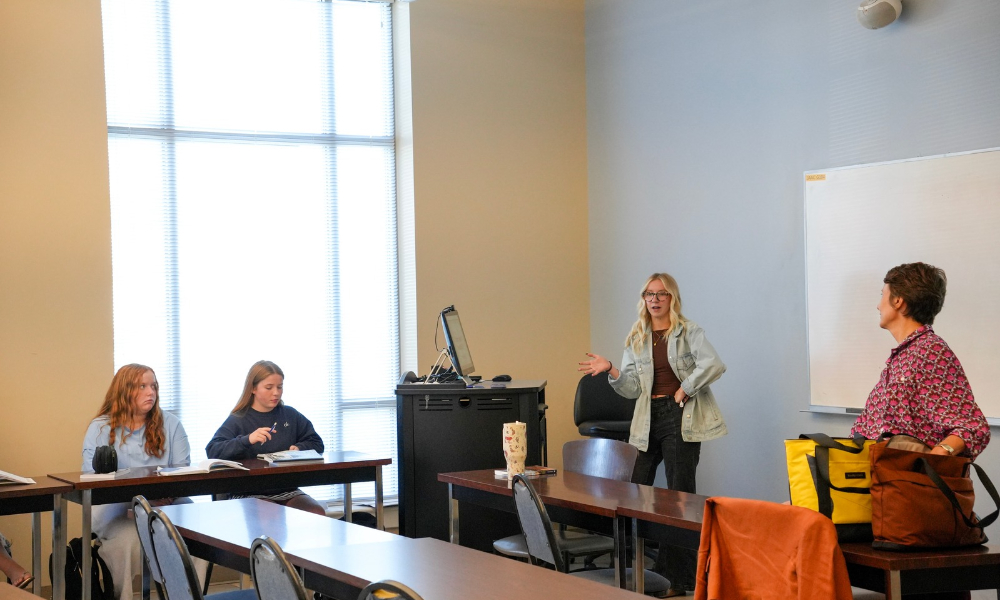
“I’m kind of the liaison between professor and student, so the students come to me with certain challenges and watch the way I interact with Dr. Gustke,” shared Santos. “They know if I can trust her and build a close relationship, they can too.”
As coordinator of Belmont’s First-Year Seminar Program, Gustke has seen Santos help students stay engaged, connected and invested in the course experience. “Having Jordyn in class relaxes students and helps them feel more comfortable sharing their thoughts and ideas,” Gustke said. “This doesn’t mean students take class less seriously; Jordyn’s presence reminds them to pay attention and contribute.”
Santos has watched that change take shape through the students’ overall comfort level with one another, from nervous first encounters to confident connections rooted in trust. For first-year student London Mitchell, that familiarity has made Belmont feel like her own. “Jordyn understands the questions and challenges that come with being a first-year student, but she also has enough experience to give us a different perspective,” shared Mitchell. "Having those personal connections early in my first semester has helped Belmont begin to feel like my own community rather than the school I attend."
A deeper structure of support
Santos and her fellow mentors meet monthly to share strategies for engaging their classes and receive continued training from the new student orientation team. At their first meeting, mentors met with representatives from Student Care and Support who walked them through campus resources to equip them to help connect with students who are struggling.
“We know that FYS mentors are trusted figures in first-year students’ lives and we want them to feel prepared to listen and respond well while recognizing we’re here to support their development, too,” shared Cora Williams, graduate assistant for new student orientation. “Behind-the-scenes support is focused on giving mentors a strong foundation, while still leaving room for them to make it their own.”
Caring for the whole person
Though still in its pilot year, the program is already shaping how Belmont supports students during their transition to college. With grant support, organizers hope to expand it to every First-Year Seminar next year.
“Our goal is to ensure that more students have access to a consistent peer connection during this formative first semester and that the strong sense of belonging established during orientation continues throughout the year,” Holt shared.
Because orientation and First-Year Seminar operate within different areas of the University, bringing the program to life required intentional collaboration across departments. “The Formation Collaborative helped create space for us to think beyond reporting structures, work creatively together and develop a program centered on what will best serve our students,” said Holt.
A curriculum designed for real life
That collaboration reflects where Belmont is headed and what it holds close: making sure each member of the community is seen, cared for and connected to a bigger purpose. These efforts align with Belmont’s recently approved Foundations curriculum, which embeds community, character formation and vocational exploration into each part of the academic experience.
“We want students to see that what happens in their classrooms has as much to do with what they know as it does who they’re becoming,” shared Dr. Amy Hodges Hamilton, director of undergraduate core curriculum.
Seen that way, the First-Year Seminar Mentorship Program offers more than practical guidance. It helps new students discover that growth happens best within community, surrounded by people who can encourage them, challenge them and help them navigate the transition to college with confidence.
Learn More
Discover the first-year experience at Belmont