
How one hour inside Belmont's simulation center changed the way I think about healthcare and revealed the importance of experiential learning
In my two and a half years as a writer at Belmont, I’ve gotten to do some really cool things. I’ve attended fashion shows and grand openings, learned about science and medicine, met celebrities and interviewed students and alumni who are actively shaping their industries. Having these experiences is a perk of my job, and one that I’ve never taken for granted. Amazing things happen here every day, and I’m lucky enough to be on the sidelines for a lot of it.
However, sidelines is a key word in my job description. I am very rarely a part of the action – I typically watch the thing unfold, talk to the people who did the thing and then write about the thing. It’s become a comfortable little routine.
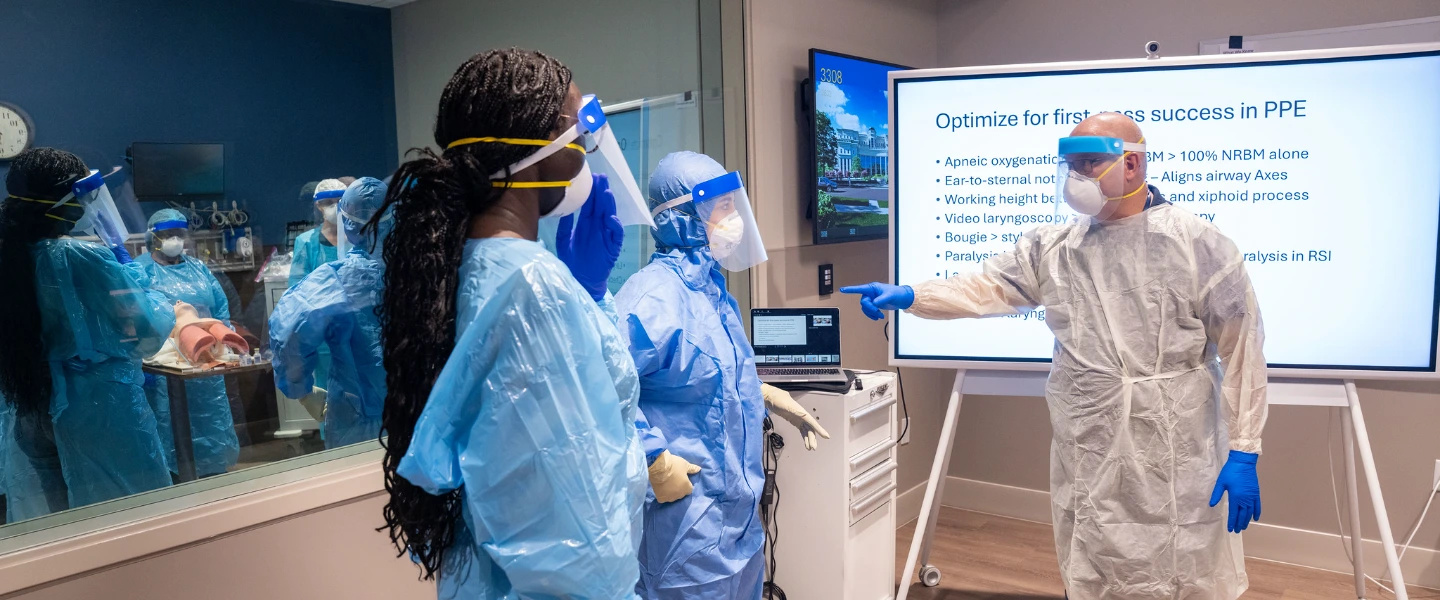
Earlier this month, however, I found myself in completely new territory. Dr. Ben Ryan, professor of public health and global initiatives at Belmont’s Thomas F. Frist, Jr. College of Medicine, reached out to our team with a request. He was leading an Ebola simulation in Belmont's Center for Interprofessional Engagement and Simulation (BUCIES) and wanted a photographer on hand to capture it.
Everything about this made my ears perk up. Ebola? Like, the deadly disease, Ebola? Simulation? Photography? All components of a truly compelling story. Naturally, I invited myself to tag along with University Photographer Sam Simpkins.
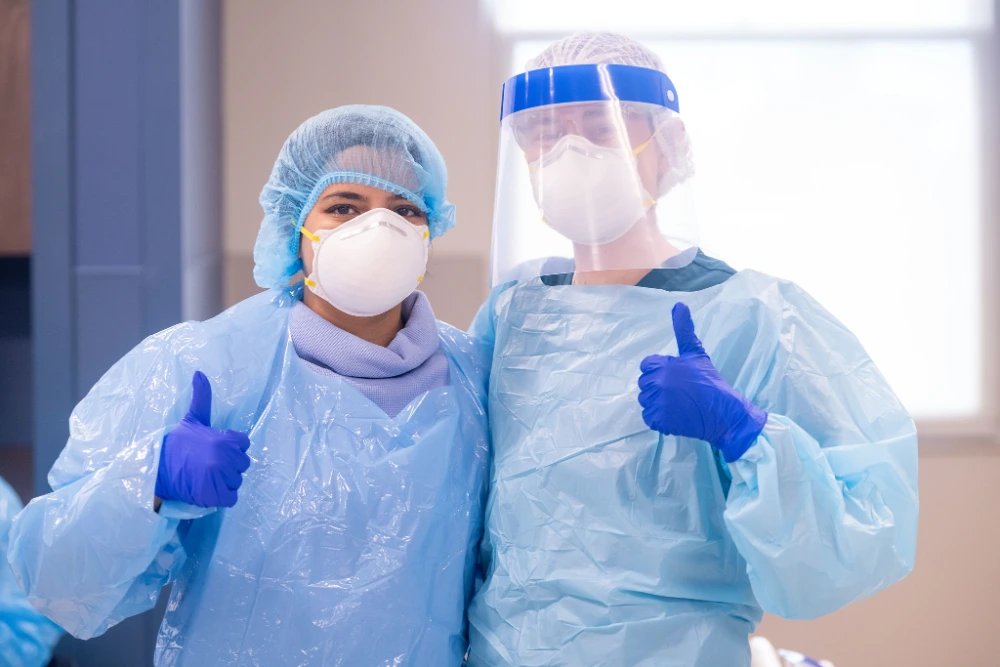 I reached out to Dr. Mark Beard, senior associate dean for academic affairs, to get a little more information about what was going on. I learned that while simulation is a regular part of the educational experience for medical students at Belmont, this exercise was designed to be something entirely different.
And it wouldn't just be Belmont folks in attendance, either. Medical students, public health students and faculty would come to train alongside representatives from the Tennessee Department of Health and other emergency preparedness professionals in an exercise that was designed to combine patient care, infection prevention and public health response to mirror a real infectious disease outbreak.
Sign. Me. Up.
Here is what I thought would happen when I volunteered myself to tell this story:
- I’d go to the simulation to observe — from the back of the room, of course.
- I’d interview a few attendees about what they were learning.
- I’d have fun with my friend Sam.
- I’d write an article sharing the highlights (as seen from the sidelines).
Here is what actually happened:
- I was quickly put right in the middle of the action as an active participant.
- I played a key role in a realistic simulation alongside doctors, students and state officials.
- I intubated a (fake) patient.
- I learned more than I thought I possibly could in an hour about the realities of healthcare.
- And bonus: I had the most fun ever at my job.
Below, I’m going to share my experience and why experiences like this matter. And (spoiler alert) experiences like this matter so much. Belmont is truly providing access to critical, lifesaving training — not just for its students, but for anyone lucky enough to find themselves in the room.
Suiting Up
When I arrived at BUCIES, I was still operating under my original plan: stop by, get a feel for the room, talk to a few people. Ease in, ease out. I had my notebook and I was ready to do what I do best: chat and observe. 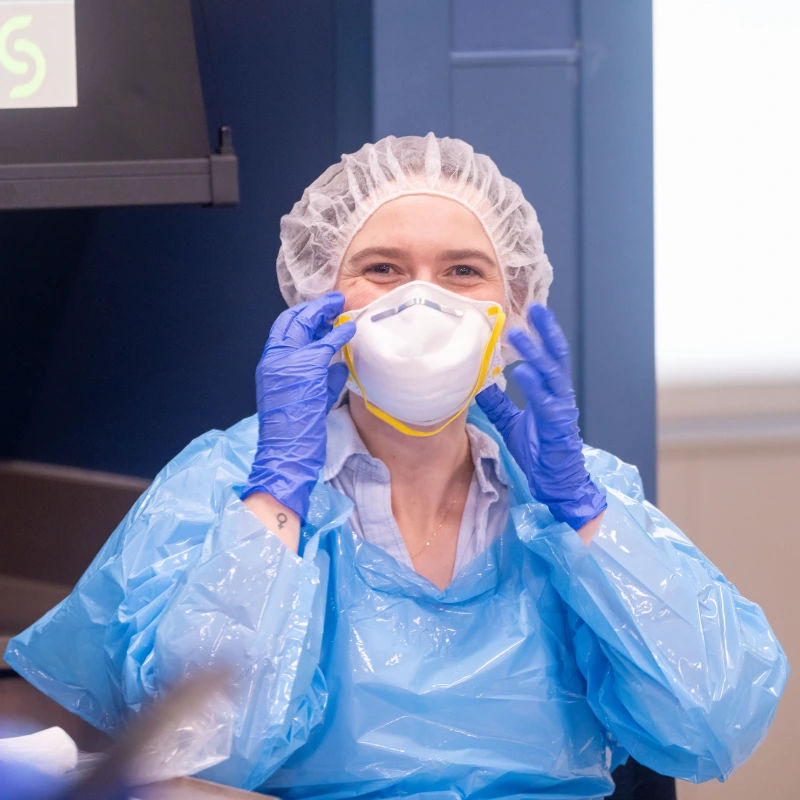
Dr. Ryan had other plans.
"Are you ready to suit up?" He asked as I shook his hand.
I thought he was joking. I laughed. He did not.
His reasoning was simple and hard to argue with: if I was going to write about it, I should do it. How else would I know what to say?
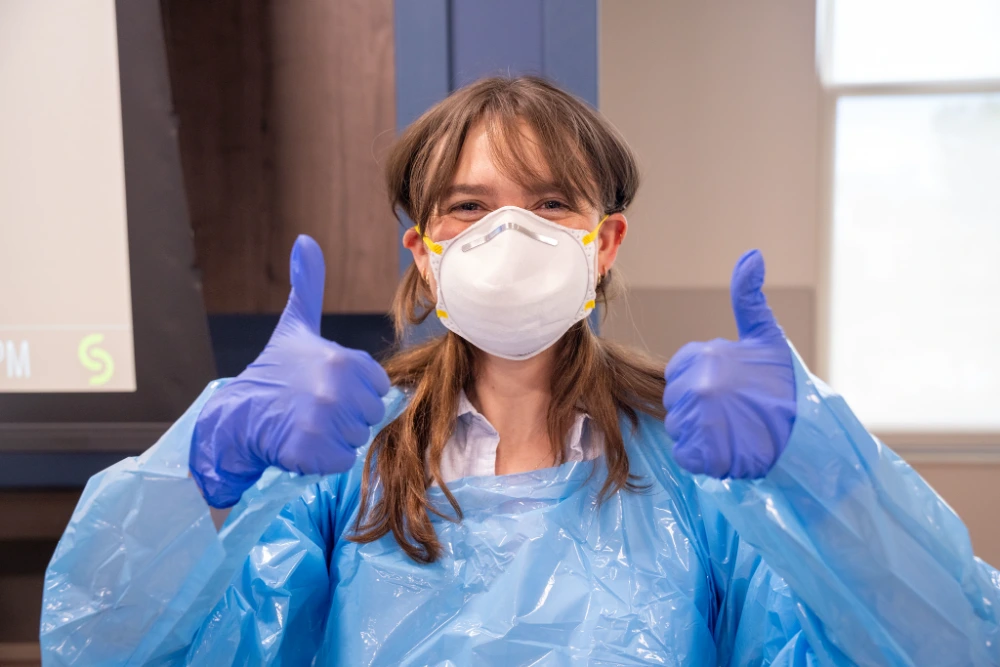
I had an hour. I had two hands. It was time to be brave and step out of my comfort zone and into PPE (which I later learned stands for Personal Protective Equipment. Who knew?). There I am, pictured right, suiting up!
I was placed in Ryan’s group with a medical student, a public health student and Associate Professor of Microbiology & Immunology Dr. Tanu Rana. Our first station in the simulation presented us with an active Ebola patient.
All Hands on Deck
We walked into one of BUCIES' simulation rooms, where a hyper-realistic mannequin was doing a very convincing impression of someone in crisis. I will spare you the details, but I will say that the simulation team did not cut corners on bodily fluids.
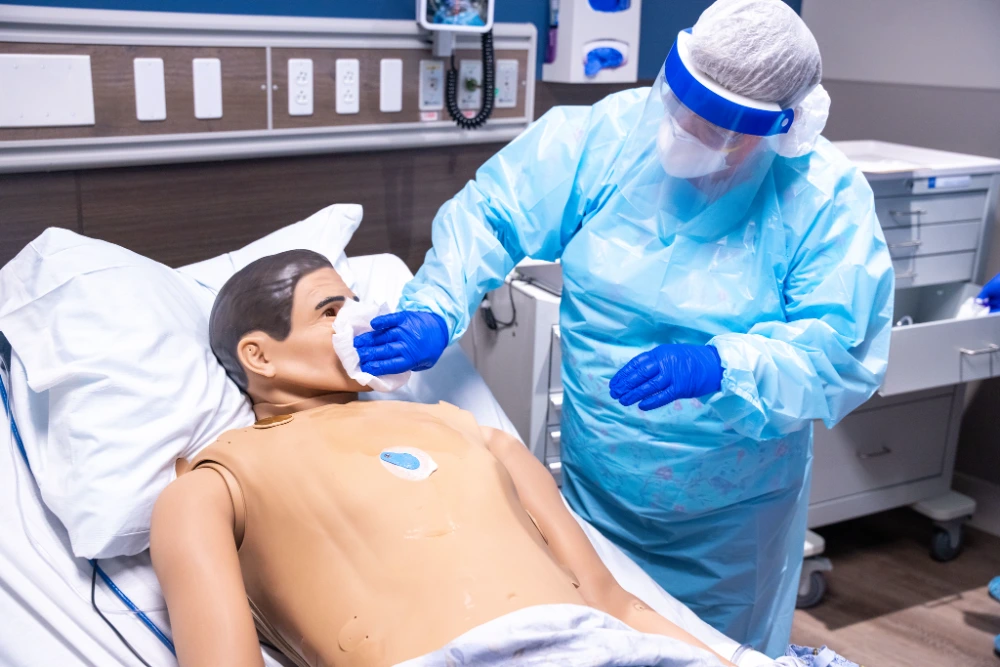 My first instinct was to make myself small. "I'm a writer," I told the group. "I’ll stand over here and observe.” I tried to slink away to an untouched corner of the simulation room.
Ryan stopped me. In a real outbreak, he explained, it would be all hands on deck. Medical professionals would need to be able to direct anyone willing to help, regardless of their background or training. The ability to communicate clearly, delegate effectively and keep a non-clinician useful and calm is part of the skill set. So, I perked up and made myself useful.
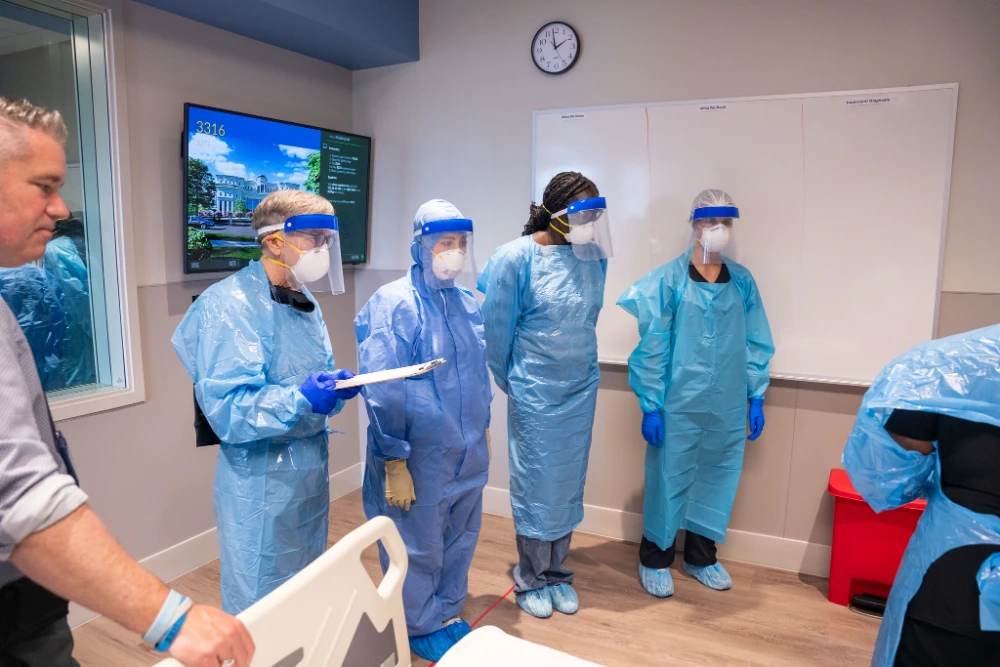 Jenna Hulsey-Thomas, a medical student from the Thomas F. Frist, Jr. College of Medicine, stepped into the leadership role of our group without hesitation. She directed us through caring for the patient: changing linens, cleaning the mannequin, managing waste, keeping the environment as controlled as the situation allowed. We all followed her lead.
"As soon as I entered the room, it was my job as a healthcare provider to focus on keeping the team safe while also accomplishing the tasks of patient care," Hulsey-Thomas said. "Balancing infection control with human connection was a challenge, especially when you're one of six strangers dressed like extras from ‘Contagion,’ but it highlighted how important both are in high-risk situations."
What struck me most in that room wasn't the gross-out factor (though, again: realistic). It was how hard everything was. The PPE makes communication and movement difficult. It makes a room that should feel manageable feel suddenly very small and very loud and very high-stakes.
"Preparedness is not theoretical, it's practiced," said Ryan. "Outbreak response is ultimately about speed, coordination and decision-making under pressure."
Standing in that room in full protective gear, trying to hear instructions through a mask and stay focused on a patient who needed help, I understood exactly what he meant and how exercises like these are vital to future physician training.
Learning by Doing
Our second station raised the stakes, and my confidence, unexpectedly.
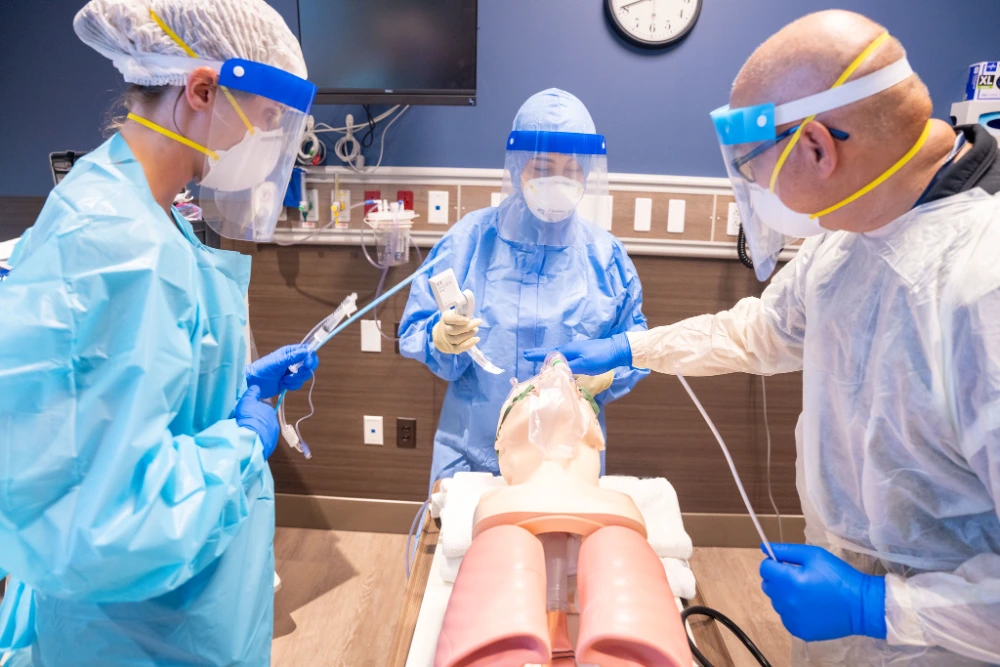
In this room, we were intubating patients. Again, I tried to position myself as a spectator. Again, I was not allowed to be one. One of the doctors leading the station asked if I'd seen "The Pitt.” (My answer: “yes, obviously.”) He told me I'd be playing Dr. Robinavitch today.
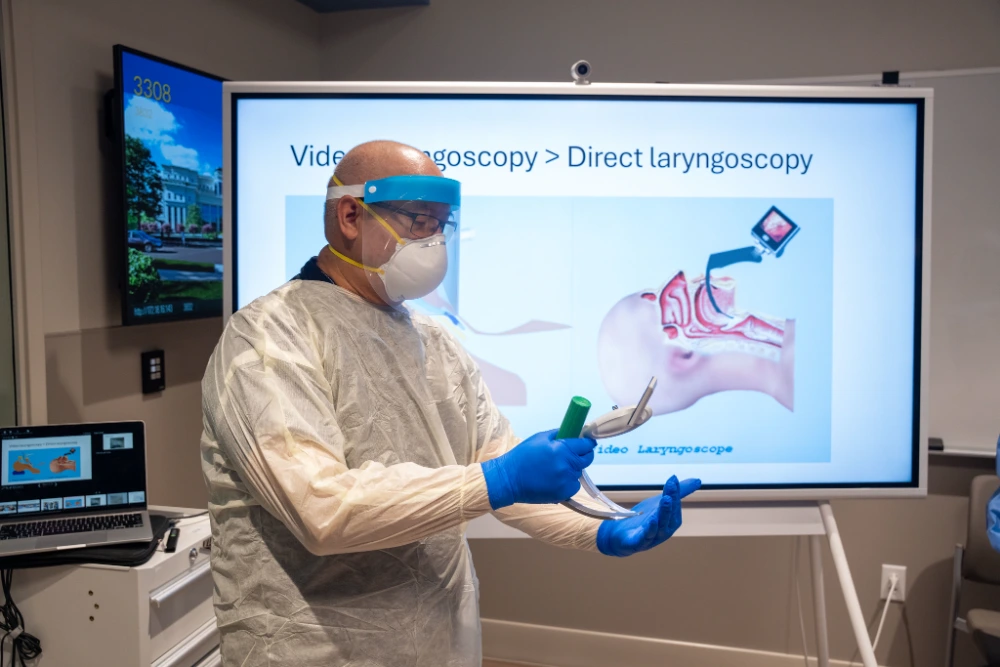 The doctors demonstrated the procedure, walked us through it, and then, one by one, we each did it ourselves.
I have to brag for a second: I intubated a patient on my first try, without the camera-assisted scope! Just me, the laryngoscope and whatever I absorbed from two seasons of prestige medical television.
I'm being a little glib, but I want to be clear: it was genuinely one of the most thrilling things I've done at this job. Not because I have any illusions about my clinical abilities, but because I was given the tools, the instruction and the space to try something I never would have attempted otherwise, and it worked. I walked out of that room feeling capable in a way I hadn't anticipated.
That feeling, I think, is exactly the point. Hulsey-Thomas said the simulation gave her something she couldn't get from a lecture: early, hands-on exposure to protocols surrounding rare but high-consequence diseases.
"Practicing these skills in a controlled environment allows you to approach real-life situations with greater confidence and composure," she said.
 She also came away with something more unexpected: a deeper understanding of just how logistically complex a real Ebola response would be. Wearing full PPE for 20 minutes in an air-conditioned simulation center was, in her words, stifling. In a real transport scenario, personnel would need to rotate after hours of travel. And the doffing process (removing the PPE) is where the stakes are highest. One small mistake at the wrong moment can have serious consequences.
Husley-Thomas also mentioned how valuable it was to learn directly from officials with the Tennessee Department of Health and gain insight into the extensive planning and coordination required to respond effectively to public health threats.
That opportunity to learn alongside state public health leaders wasn't accidental. Belmont regularly emphasizes interprofessional education, bringing learners together across diverse disciplines. This simulation expanded that philosophy even further by pairing students directly with the people in charge in a realistic, team-based environment where everyone can contribute.
Training for the Moments That Matter
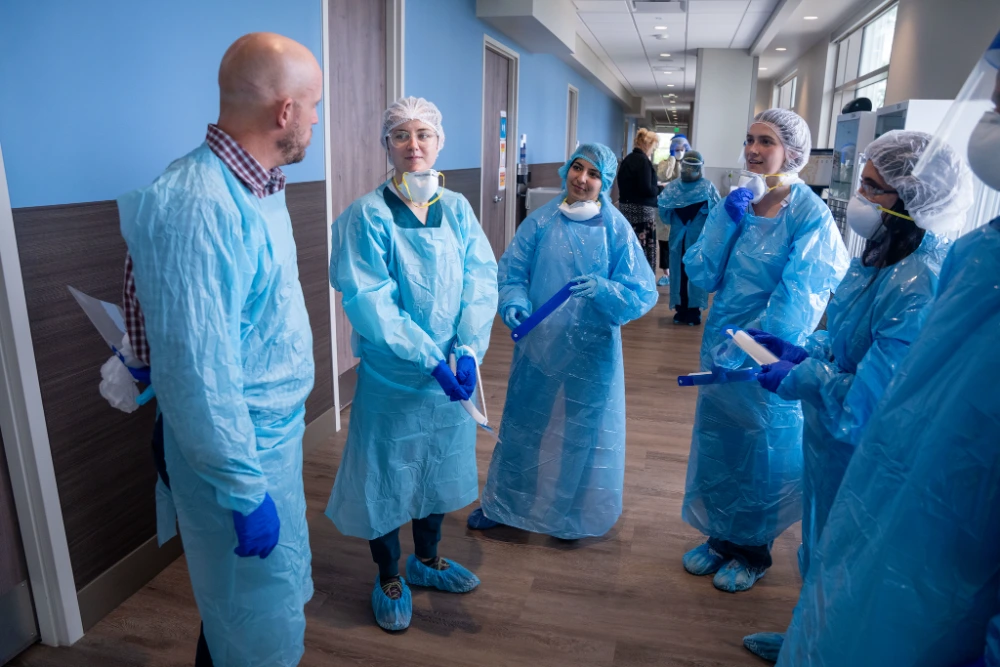 I left BUCIES that afternoon with a newfound appreciation for those who suit up in PPE and a laryngoscope technique I will (hopefully) never use again. But I also left with something harder to shake: an understanding of why this kind of training exists, and what's at stake when it doesn't.
The Bundibugyo virus disease outbreak currently unfolding in Central Africa made the simulation not just educational but timely and relevant. Ryan noted that Center for Disease Control modeling shows that quickly identifying and isolating even 70% of cases in Central Africa could dramatically reduce the risk of a large-scale outbreak.
"Experiences like this give our students and partners the opportunity to practice patient care, infection control and team-based response in real time," he said. "This helps build the skills, collaboration and global perspective needed to protect communities and healthcare systems both locally and around the world when it matters most."
While simulation is woven throughout the medical curriculum at Belmont, Beard said this exercise represented a uniquely collaborative opportunity. By bringing together students, faculty, Tennessee Department of Health officials and public health professionals, participants were able to experience the kind of cross-disciplinary coordination that real outbreaks demand. After all, physicians don't respond to public health emergencies alone.
 “Having learners train alongside state officials and public health leaders created an exceptionally authentic experience that few educational programs are able to offer,” Beard said.
As for me (pictured right!), I came in expecting to watch and leave. Instead, I changed a mannequin's bed sheets, intubated a patient on my first try and walked away completely moved by what Belmont is building here.
If that's what an hour in that room can do for a communications professional with a notebook, I can only imagine what it does for the people who will use these skills when duty calls.
Explore BUCIES
Learn more about simulation at Belmont