
College of Sciences and Mathematics partnership with Kehilla High School provides crucial hands-on laboratory experience for AP Chemistry students
When Kehilla High School teacher Christopher Lundgren reached out to Belmont University's chemistry department last fall, he simply needed help refreshing his knowledge before teaching AP Chemistry. Neither he nor Dr. Rachel Rigsby anticipated it would evolve into a partnership providing critical laboratory access for his students.
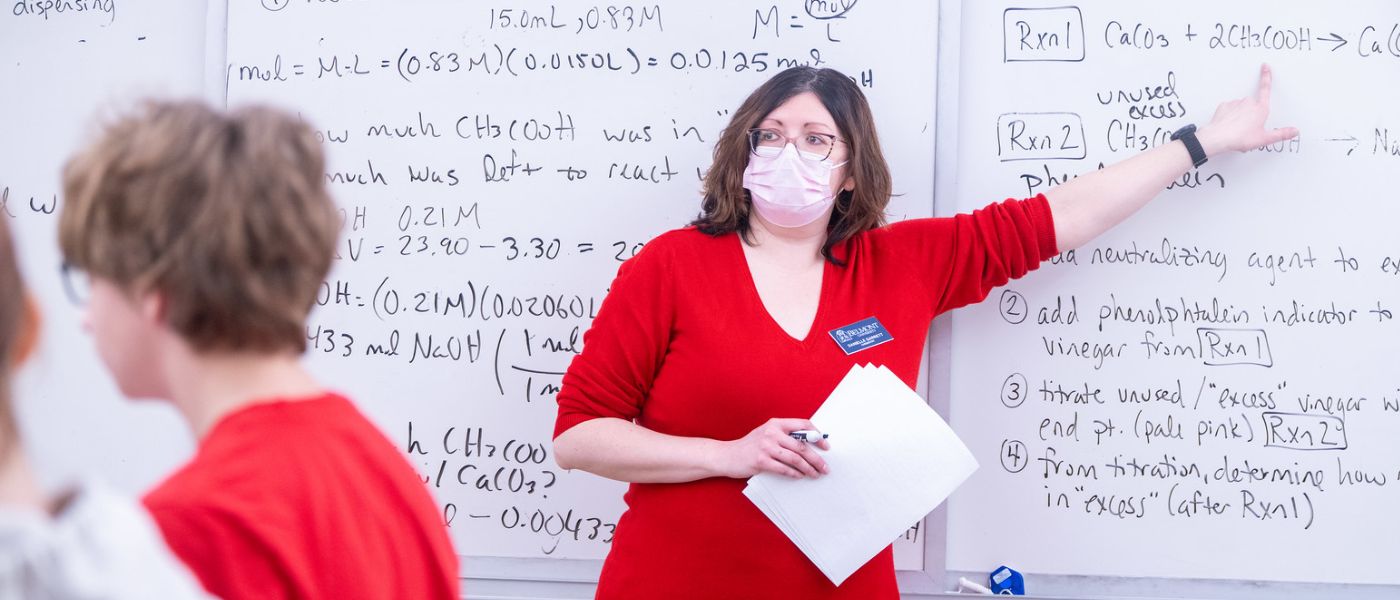
The collaboration between Belmont's College of Sciences and Mathematics and the small independent school has transformed what could have been a significant educational limitation into an opportunity for authentic scientific discovery. Without dedicated laboratory facilities, Kehilla students now conduct experiments in Belmont's chemistry labs, gaining hands-on experience essential for their AP Chemistry curriculum.
The difference between reading about chemistry and actually performing experiments is profound.
"It's like watching a cooking video versus going in the kitchen and cooking yourself," said Rigsby, chair of the Department of Chemistry and Physics at Belmont. "There's just something very different about actually making measurements and touching and doing things yourself."
Building Partnerships from Simple Requests
The partnership began when Lundgren, a veteran teacher transitioning from social sciences to chemistry, audited Belmont's general chemistry course last spring. As he prepared for teaching AP Chemistry, Lundgren faced a challenge common to many small schools: the lack of laboratory facilities necessary for required curriculum components.
Rather than relying solely on computer simulations or video demonstrations, Rigsby and her department opened their doors. The chemistry department has provided not only space but also equipment, glassware and laboratory activities designed specifically for high school students.
Last semester, Lundgren brought his 12 students to campus to work with Rigsby and Belmont chemistry professor Dr. Danielle Garrett, a former high school teacher who develops standards-based lab activities.
Real Science, Real Impact
The difference between simulated and actual laboratory work cannot be overstated, particularly for students considering careers in science. Rigsby notes that Belmont regularly sees incoming students who lack substantial laboratory experience from high school, which can create confidence issues as they enter college-level science courses.
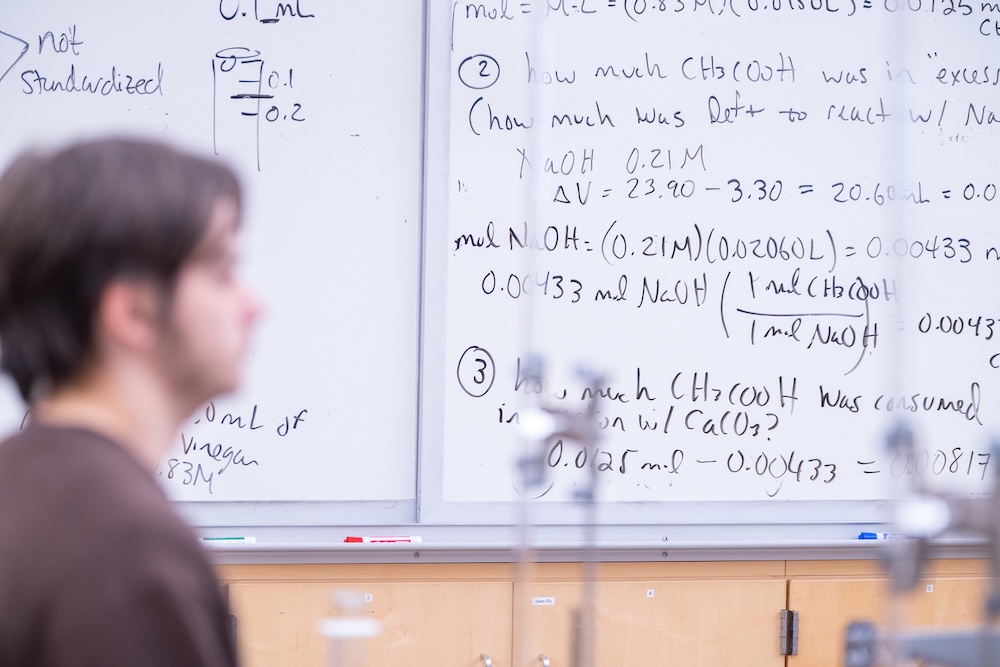 During a chromatography experiment, students discovered how food companies create purple coloring by combining red and blue dyes, watching the colors literally separate on paper before their eyes. But perhaps more telling was an unplanned moment when a student noticed specialized gas tubes emitting light from equipment Rigsby had moved aside.
"He looked at it and said, 'What is that? Something like a neon light?'" Rigsby recalled. The student's instinct was exactly right — he had identified the same phenomenon that makes neon signs glow. "That level of curiosity and connecting the dots was incredible to see."
This spontaneous moment of scientific recognition wouldn't have happened without access to a real laboratory filled with actual equipment.
These opportunities for discovery extend beyond individual experiments. Rigsby has observed students working with their teacher to problem-solve in real time, making adjustments to procedures when faced with unexpected challenges. This is exactly the kind of critical thinking that defines scientific inquiry.
Addressing Systemic Challenges
The partnership illuminates broader challenges facing science education, particularly in underfunded districts where teachers may lack proper facilities or even expertise in their assigned subjects. Metro Nashville Public Schools teachers have reported teaching chemistry in carpeted classrooms where wet lab work is prohibited or lacking funds for basic supplies.
"Sometimes there is an obvious lack in lab facilities or lab equipment, because it's expensive to buy supplies for all the students," Rigsby said. "That's something that we can definitely provide." 
For small independent schools like Kehilla, the challenge isn't necessarily funding but scale, as maintaining a full chemistry laboratory for a small student body presents its own economic challenges. The Belmont partnership offers an elegant solution, maximizing existing resources while providing students with collegiate-level laboratory experiences.
The chemistry department views this outreach as part of its responsibility to the Middle Tennessee community, where many of Belmont's science students originate. As the College of Science and Mathematics develops additional community partnerships, the Kehilla collaboration demonstrates what's possible when universities open their doors.
The impact speaks for itself: 12 high school students who might otherwise have learned chemistry purely through textbooks and simulations are instead experiencing the discipline as practicing scientists do — through observation, experimentation and discovery in a real laboratory setting.
"Getting that hands-on experience is really critical in science," Rigsby emphasized. "So much of science is figuring out how to make things happen, and that’s what this partnership provides to Kehilla’s students."
Learn more about science and mathematics at Belmont.