
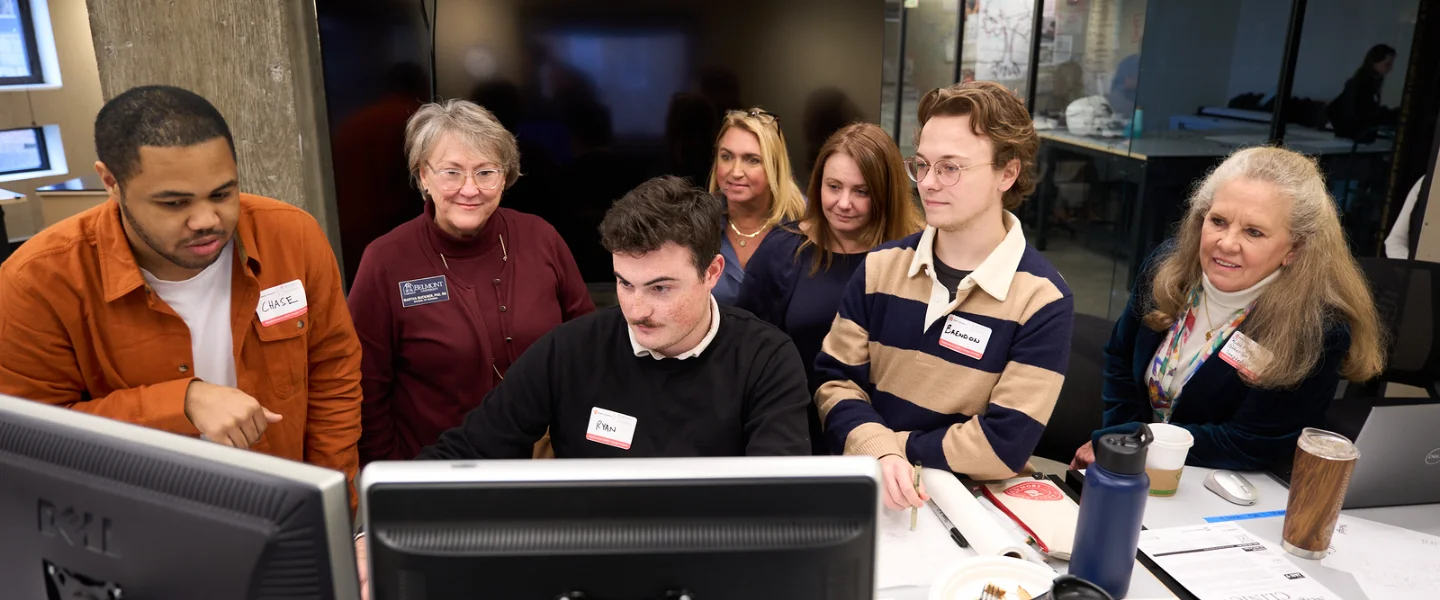
Interdisciplinary partnership prepares next generation of nurse leaders and architects to co-design health care environments that improve patient outcomes, system efficiency
When Belmont University launched the Center for Nursing Innovation (CNI) in 2023, leaders in the Inman College of Nursing set out with a clear purpose: to create a hub where nursing could help lead the future of health care through innovation, collaboration and real-world impact. What began as an effort to think differently about how nurses are prepared and empowered quickly grew into something bigger: a catalyst for collaboration across disciplines, across the University and across local and global partnerships. 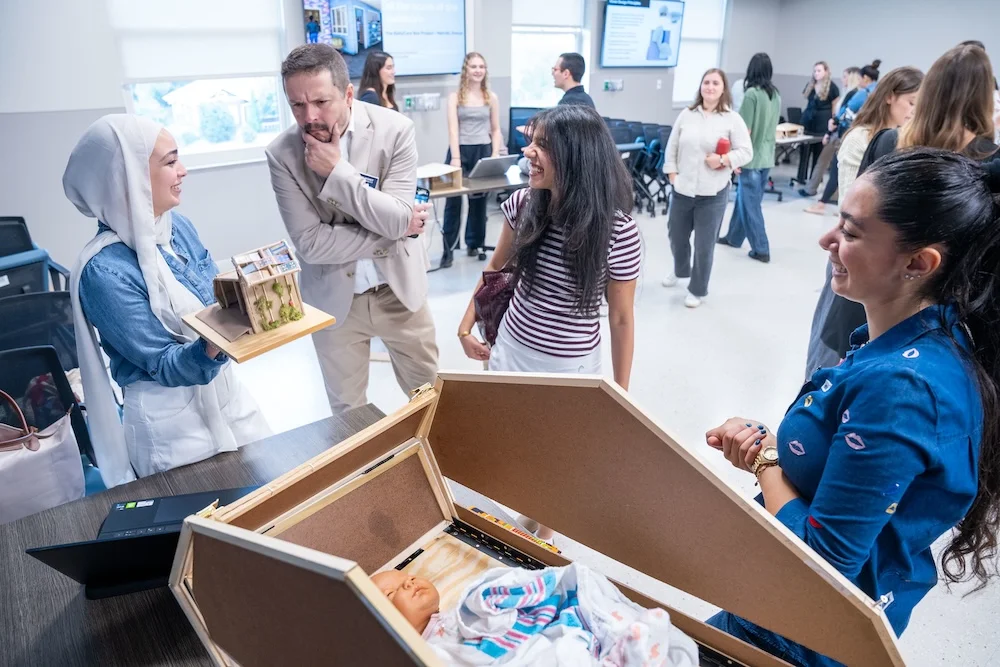
At nearly the same time, with the addition of the architecture program, O'More College of Architecture & Design began exploring new avenues for design to serve as a vehicle for the common good. Both colleges recognized that Nashville's status as the health care capital of the world presented the opportunity to make a real impact alongside local industry partners by joining forces to do something neither field could accomplish alone.
Together, they saw an opportunity to do something neither college could accomplish alone: partner together to build new projects and ongoing collaborations that place human-centered design at the center of both disciplines' curricula. In doing so, both colleges will produce graduates who are uniquely equipped to shape the future of health care.
"Nurses are perfect collaborators for our students," said Dr. Fernando Lima, chair of architecture & associate professor at O'More. "They are the ones taking care of people on a daily basis; boots on the ground; the ones really operating in the space. When we want to design for health care facilities, they are the right clients and the right partners."
A Partnership Built on Purpose
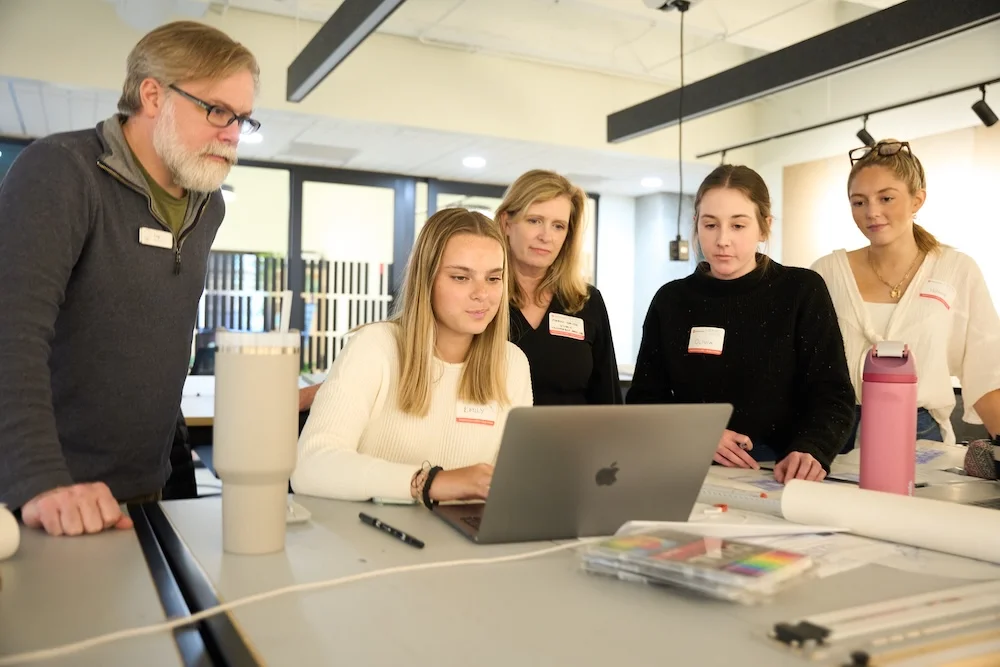 The collaboration began with a joint design charrette — a competitive, intensive design sprint hosted in partnership with the American Institute of Architects Middle Tennessee's Academy of Architecture for Health. Architecture students worked alongside nursing faculty and industry professionals to design a Neighborhood Clinic+ for North Nashville, incorporating not only health care but also childcare, rooftop food gardens and spaces for community belonging.
A subsequent charrette challenged students to design a portable disaster relief complex within six shipping containers, with nursing students guiding the workflow and helping teams think realistically about what care requires in a crisis.
“The CNI was built on the conviction that academia, industry and practice must work in close alignment,” said Dr. Kathryn Dambrino, assistant dean of healthcare innovation. "When the industry says, 'We need more people in this area,' we ask: how do we make that happen? We come together, create the charrette, generate interest and produce designs that lead to real impact."
That industry pull is no small factor. When O'More's architecture program launched, Nashville's health care architecture firms were already paying attention. Of the 18 students in architecture's first graduating class, eight entered health care architecture as a specialty, and 17 B.Arch. graduates are now employed at architecture firms — a direct result of their exposure to the field through these collaborative projects and the industry partners who showed up to mentor them.
From the Classroom to the Real World
The success of those early charrettes led to something even more ambitious: the inaugural Architecture Studio for Health Care, in which fourth-year architecture students and Doctor of Nursing Practice (DNP) students spent a full semester co-designing solutions to real health care challenges — one project for a 20-bed Mother Teresa Hospital in Bengaluru, India, and another addressing neonatal mortality in Nairobi, Kenya. 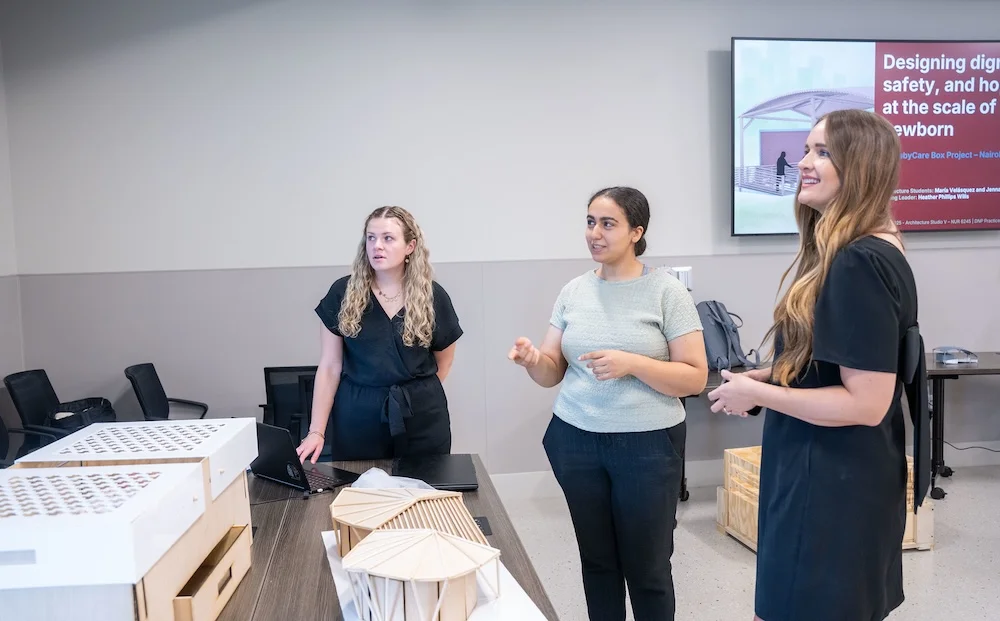
"Our students could just learn how to design a house, and that would be valuable," Lima said. "But what we're really trying to do is give them opportunities to design while also making an impact."
The Leadership and Innovation Track
Central to the nursing side of this collaboration is a relatively new and distinct degree path: the DNP Leadership & Innovation track. It's a three-year Doctor of Nursing Practice program designed to produce a different kind of nurse — one who doesn't just deliver care at the bedside, but steps into systems-level leadership roles to solve health care's most complex and persistent problems.
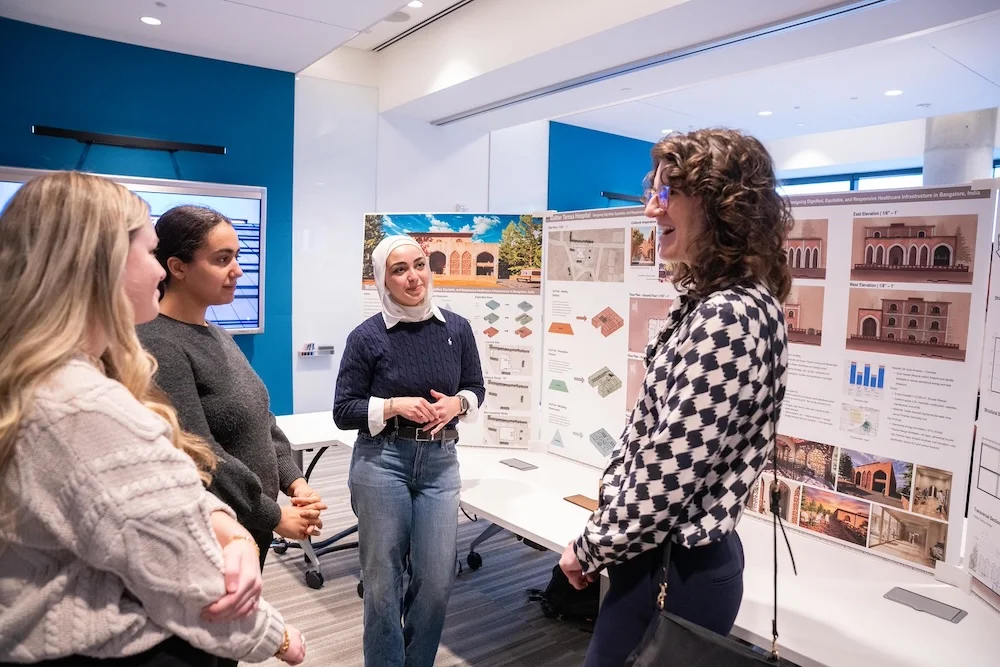 "At Belmont, we allow students to immerse themselves in learning environments that are innovative, cutting-edge and exactly what our industry is asking for," said Dr. Erin Shankel, associate dean of graduate nursing. "We are expanding on what students thought they could do."
Students join the track begin with an introductory nursing innovation course, gaining exposure to human-centered design principles and hearing from innovators around the world. They also have the opportunity to take a course called Creating Healing Environments and to work with nurse designers like Emily Karbo, a DNP employed at ESa — one of Nashville's premier architecture firms — who serves as a living example of where the track can lead.
"A Belmont nurse is different," Dambrino said. "We match what students are exposed to with their future practice, and we push them to exceed what they thought possible. That's what this work is about."
Dr. Julie Honey, dean of the Inman College of Nursing, sees that same ambition reflected in the partnership itself.
"This partnership embodies what we believe at Belmont: that nursing doesn't just belong at the bedside, but at every table where health decisions are being made," she said. "When we bring nurses together with architects, we're not just improving buildings, we're reshaping how the next generation thinks about solving health care's most difficult problems."
Designing for People
What makes this partnership distinctive, both colleges agree, is its insistence on human-centered design — a framework that asks, at every step, how a decision will affect the human who will ultimately live or be cared for in the space being created.
Nurses, Lima says, are uniquely equipped to bring that dimension to design work.
"If I'm a designer and I want to better understand the way people live their daily lives, I need to engage with as many different professionals and fields as possible," he said. "Learning to collaborate, knowing how to ask the right questions and get the best input possible, is maybe the most important thing our students take away." 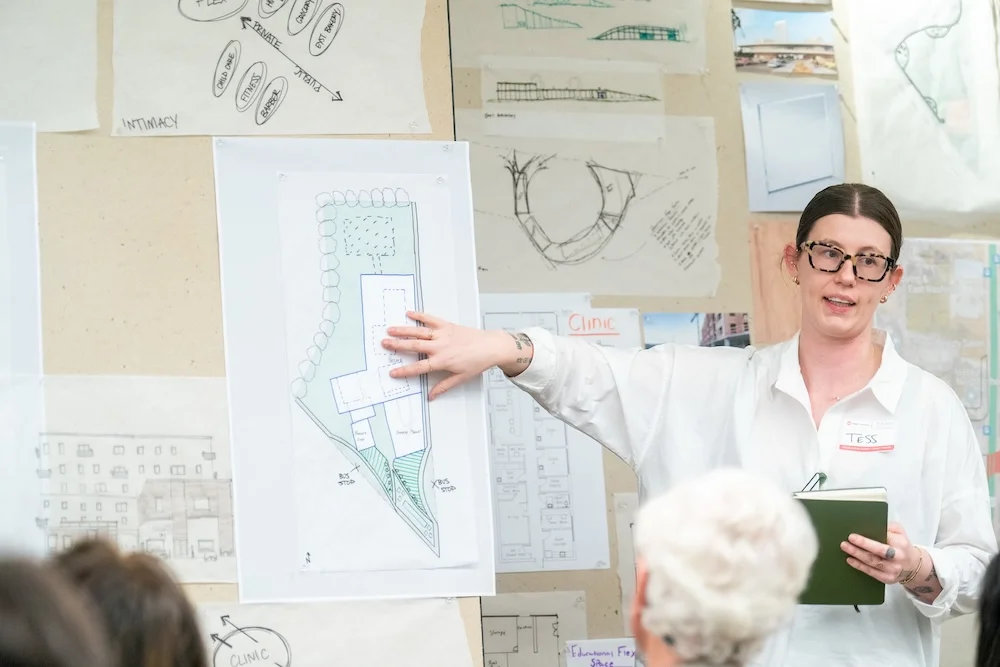
For Dambrino, the implications extend far beyond any single project. "I really hope that people can see the potential in how nurses absolutely can and should be in every single space where health decisions are being made," she said. "Whether that's health design, engineering, finance or informatics, nurses understand the system gaps, and they understand what's needed to fill them. By showcasing nursing as a key collaborator in health design, we're helping people see nurses for what we really are: innate innovators equipped to solve these problems."
A Belmont Education, Redefined
As the partnership deepens — with shared courses in development, expanded global projects on the horizon and conversations underway about a formal concentration in health care design — both colleges are united around a shared vision: put the right people in the room together, and remarkable things follow.
"Belmont is deeply committed to students collaborating across disciplines to address real world challenges, and the intersection of Architecture and Nursing is the perfect example," said Rick Archer, dean of O'More College of Architecture & Design. "Our students and faculty learn from each other, enhancing the on-campus experience while demonstrably affecting our community in Nashville and beyond."
This work is already being recognized on a global scale. Lima and Dambrino spearheaded the production of “Shaping Healing Spaces Together,” a short documentary chronicling the collaboration, which is now being shown at the Florence Nightingale Museum in London — putting Belmont's work in front of nurses, health care professionals and global audiences who are shaping the future of health care environments.
"This partnership demonstrates what Belmont is all about," Lima said. "Cross-disciplinary collaboration that leads to real impact."
Learn More
Explore Nursing and Architecture at Belmont.