
Founder Dr. Maggie Monteverde shares vision for purpose, growth and power of the humanities
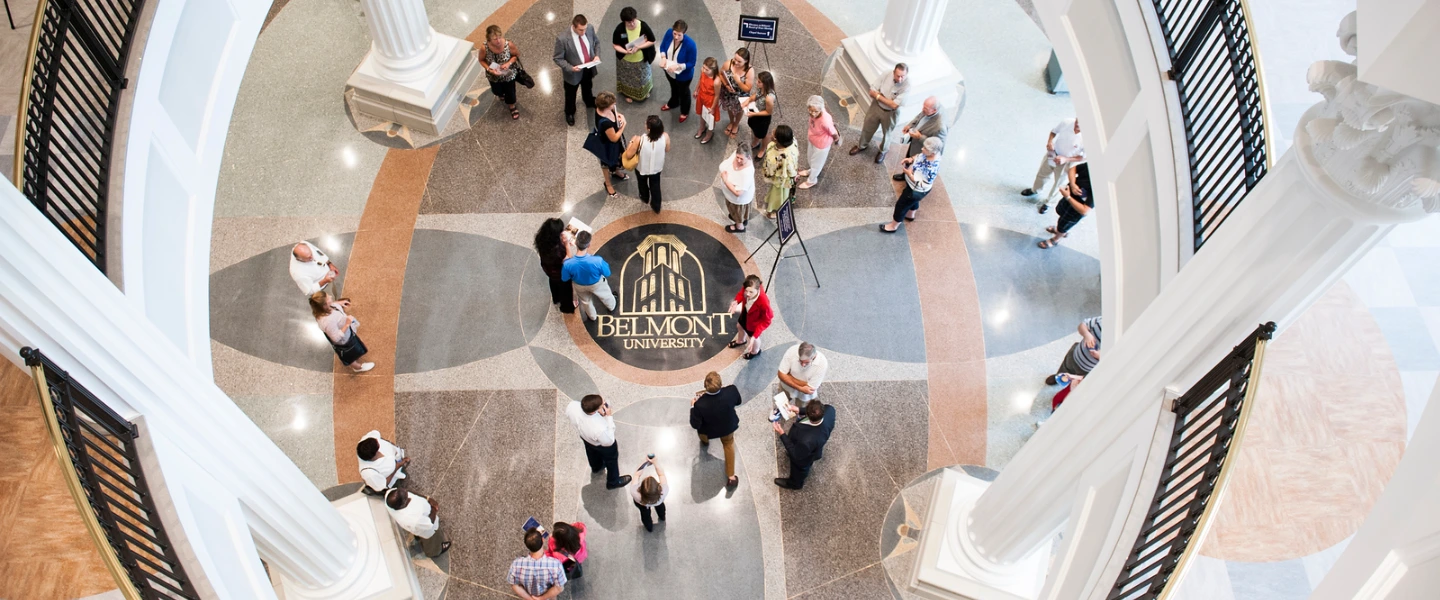
For one week every fall semester, the atmosphere in Janet Ayers Academic Center shifts from the normal rhythm of classes into a period of collaboration, artistry and community for Belmont’s annual Humanities Symposium, hosted by the College of Liberal Arts and Social Sciences. Now in its 25th year, the celebration brings together students and faculty from across liberal arts disciplines to honor interdisciplinary collaboration and a rigorous global education.
With origins tracing back to fall 2001, the Humanities Symposium has hosted notable guest speakers such as Margret Atwood and Maya Angelou, making it an anticipated week for many.
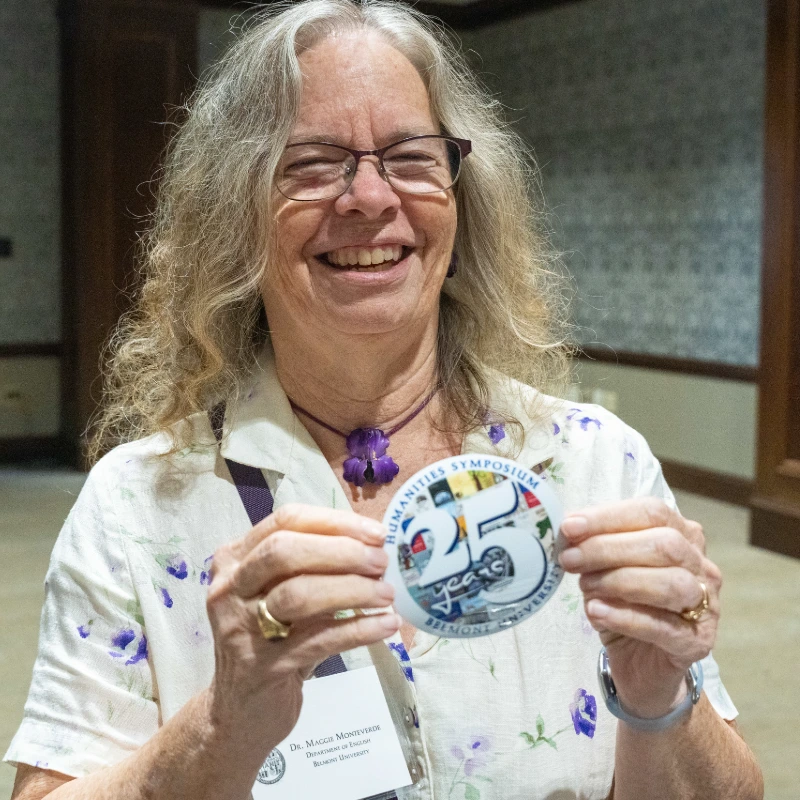
For symposium cofounder and professor of English Dr. Maggie Monteverde, the event signifies a time to celebrate the humanities as both an academic and humanistic endeavor. In the following Q & A, she discusses the importance of the symposium and what it seeks to preserve.
Belmont: What first inspired you to create the Humanities Symposium?
Monteverde: Around 2001, we began to notice a trend in turning away from the humanities as important areas of study, partially tied to false notions about poor job prospects, the increasing emphasis on STEM fields and, really, a lack of understanding of the value of a humanistic education.
At Belmont, we had also just recently regrouped our departments and involving the college in a symposium dedicated to the humanities helped to foster the collaboration necessary to keep those new programs alive.
Belmont: How has the symposium changed over the years as Belmont and the student body have grown and changed?
Monteverde: The symposium started as a weekend event, held in the Belmont Mansion and it stayed fairly small for the first few years. Over time, we expanded to a week's worth of events, for several years even preceded by a week-long international film festival related to the subject of that year's symposium.
Belmont: For the symposium’s 25th anniversary, the theme is “Our Common Humanity.” What does this theme mean to you and how has it influenced the work presented at this year’s symposium?
Monteverde: Since it was an anniversary year, we wanted a theme that could subsume all of our past topics and present this year's sessions as, to some extent, continuing conversations began years ago.
We also felt this theme emphasizes what all the humanities fields should be focused on: helping us to recognize and build habits of mind and action that recognize that we are all human beings and as such we have responsibility to not just ourselves for our fellow humans and the world that we inhabit.
Belmont: What legacy do you hope the Humanities Symposium leaves for future generations of Belmont students and faculty?
Monteverde: That in the face of a national devaluing of what the humanities are all about, we need to persist, need to reach out, need to find the connective tissue that links not just our fields of study, including many fields that don't necessarily see themselves as involved in the humanistic educational program, but us as human beings. We need to not let ourselves be confined by what others would have us believe is important.
Belmont: Twenty-five years later, why is the tradition of the Humanities Symposium still worth sustaining to you?
Monteverde: In some ways, it feels like a conversation every year: Should we continue to do it? It can be hard during the busy fall semester to get faculty and students to find time to prepare presentations and engage in the research.
But then I get wrapped up in it, and I see some students who come for multiple sessions, and I watch them mulling over ideas and sometimes even turning from tuning out and doing their own work to closing their computer, putting down their phone, beginning to engage until at last they dare to share a question or concern that was inside of them all along, just waiting to come out. And it all becomes worthwhile.
Belmont: What has the symposium made possible for students, and why do these conversations matter for students today, regardless of their major?
Monteverde: The digital age and influence of social media are making it difficult for students to diversify their education. I think it reminds students of the value of opening themselves to topics and ideas they might otherwise have scrolled past.
Belmont: Is there a particular speaker, theme or exchange that has stayed with you? What made it memorable?
Monteverde: I have loved years when some of our speakers have been able to share time together, in panels and at meals. One of my best memories from an early symposium on storytelling was sitting out on the lawn in front of the mansion, listening to a past speaker and former French language adjunct Kabahita talk about the healing importance of storytelling in the aftermath of a brutal civil war his native African country had experienced.
His message focused both on honesty and on learning to live together again. I don't know where Kabahita is today, but I feel he could teach us all a lot about what living with others in harmony even means.
Belmont: As you reflect on this anniversary, what are you proudest of, and what do you hope the next 25 years will bring?
Monteverde: What I'm most proud of is that we continue to do it. I believe this is now the longest running, largest academic event at Belmont. It is my favorite week of every academic year. Most years I cancel classes on the condition that my students must go to symposium sessions in lieu of class.
We so rarely come together across disciplines to discuss things and in many ways that problem has only grown worse in the past 25 years as we fail to maintain, let alone expand, interdisciplinary interaction. Human brains, indeed, human beings, have evolved to interact and interconnect, and the humanities disciplines are built on the skills and values required to do this. For me, the Humanities Symposium brings this out every year. For some students, I think it is the first time they realize that.
Learn More
Learn more about the programs in this story