
At the 2026 Hope Summit, innovative leaders convened to develop a collaborative model for expanding access, strengthening the workforce pipeline and improving health outcomes in rural and underserved communities.
On October 26, experts from education, healthcare, government, community organizations and philanthropy gathered at the Thomas F. Frist, Jr. College of Medicine to answer one pressing question: How can we expand healthcare access and improve health outcomes in Tennessee?
The mastermind was part of Belmont University’s Hope Summit, an annual gathering that brings changemakers together to address today’s most urgent challenges. Four workshop tracks explored emerging opportunities in film and media; character in athletics; foster care; and healthcare access and workforce development.
 Tennessee has some of the worst health outcomes in the nation, despite Nashville’s reputation as the healthcare capital of the United States. The state ranks #2 in the nation for rural hospital closures or conversions since 2010, and 93 of Tennessee’s 95 counties have primary care shortages.
Disparity isn’t seen just between urban and rural counties. Within Nashville, the zip code someone lives in can significantly impact their life expectancy. Access isn’t just about the availability of healthcare; it’s also about affordability, transportation and bridging cultural and language barriers that may prevent people from seeking care.
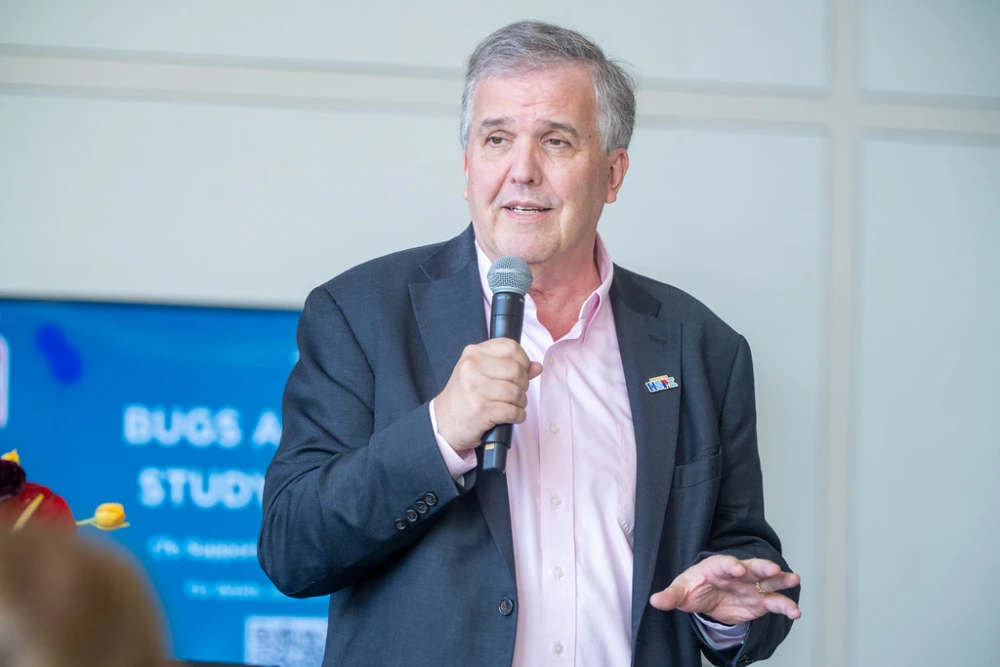
The workshop began by inviting partners in the room to think beyond familiar approaches and limiting beliefs about what hasn’t worked in the past. Belmont President Greg Jones encouraged participants to look for “loonshots,” the breakthrough ideas that seem radical at the time but have the power to create big change in society.
“We have to shift our thinking from ‘We can’t because…’ to ‘We can if…,’” said Jones. “I urge you not to think about incremental change, but what we might do that’s truly transformational.”
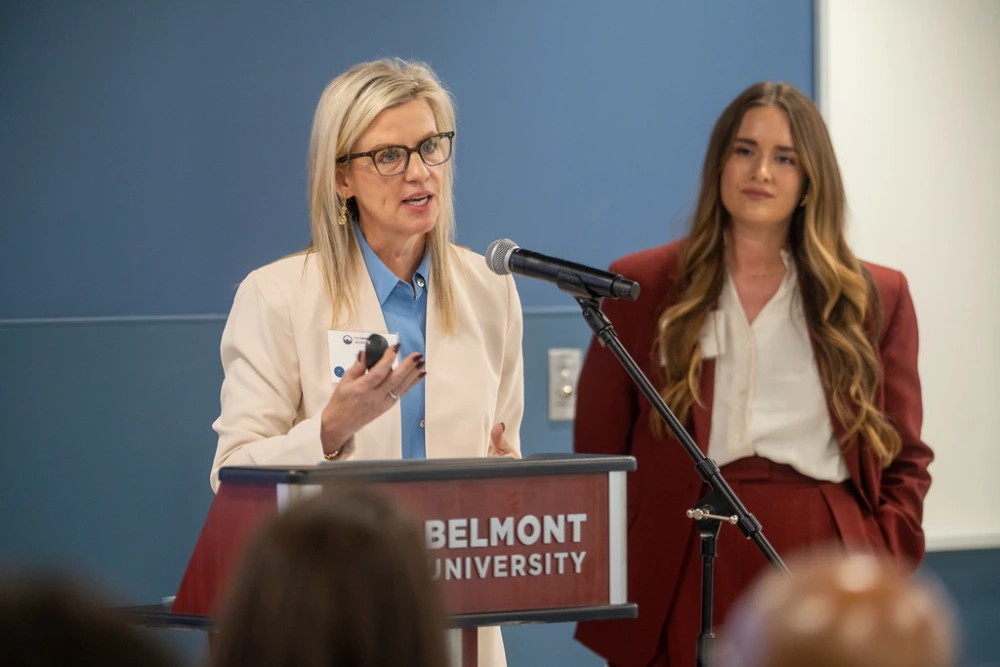 Dr. Julie Honey, vice president of Belmont's health and healthcare ecosystem and dean of the Gordon E. Inman College of Nursing, and Dr. Kathryn Dambrino, assistant dean of healthcare innovation and associate professor of nursing, presented Belmont’s proposed solution: the Belmont Community Hub, a model for bringing health services and education to trusted local spaces in communities.
Anchored by the University, the Community Hub integrates healthcare into places where people already have relationships and access to other services. It also seeks to address the current and projected workforce shortages by creating more pathways into healthcare careers.
“These communities have never lacked talent. What they have lacked is an attainable pathway,” said Honey, noting that clinicians with rural backgrounds are more likely to practice in rural communities. “Our mission is to open the door and prepare leaders of character who can return to serve the community they call home.”
 Students from across Belmont’s healthcare ecosystem shared their experiences living in rural communities where access was limited. Growing up, many didn’t know someone who worked in healthcare, and specialized fields like occupational therapy or psychology felt foreign to them. Without role models, it was difficult to imagine themselves becoming a doctor, nurse or therapist, they said.
It’s essential to identify talented students early, make education affordable and connect students to employment before graduation. But universities can’t address these challenges alone. We need innovative minds from all sectors — “surprising institutional friendships,” as described by Jones — contributing their unique perspectives and resources.
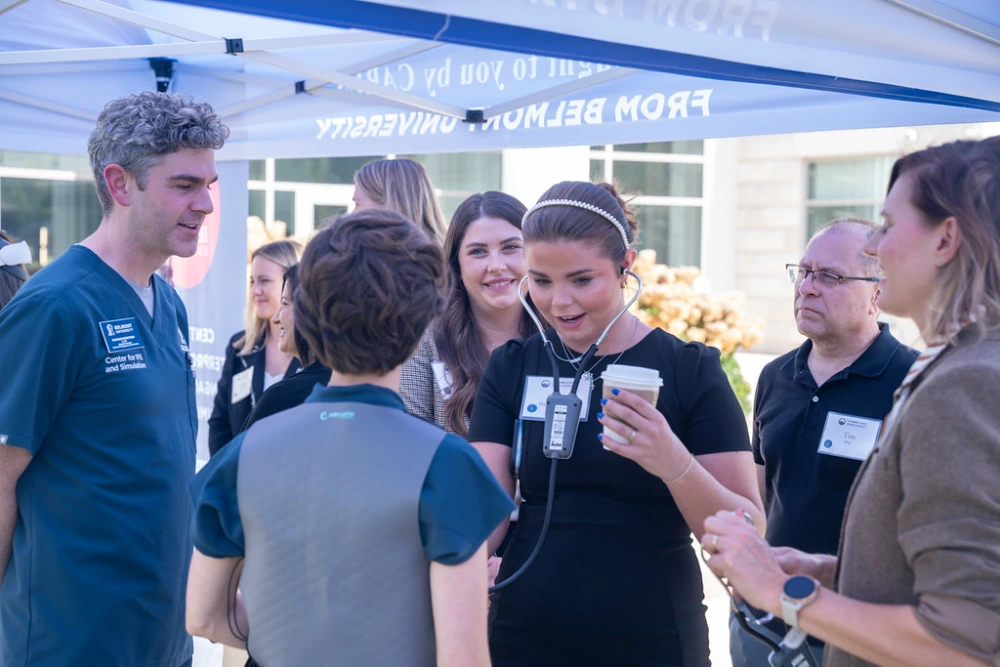
After lunch, where seeds of these friendships were planted, participants toured Belmont’s Flourish Mobile Health Clinic and watched demos from Belmont’s simulation center, giving them a hands-on look at the agile technologies transforming healthcare access. Then, the team rolled up their sleeves and got to work.
- Breakout groups were presented with one of two scenarios: A rural case study, based on Maury County, where there is only one primary care provider for every 3,797 residents
- An urban case study, based on Nashville’s Nolensville Pike, where 16.3% of people are uninsured and 26.6% were born outside the U.S.
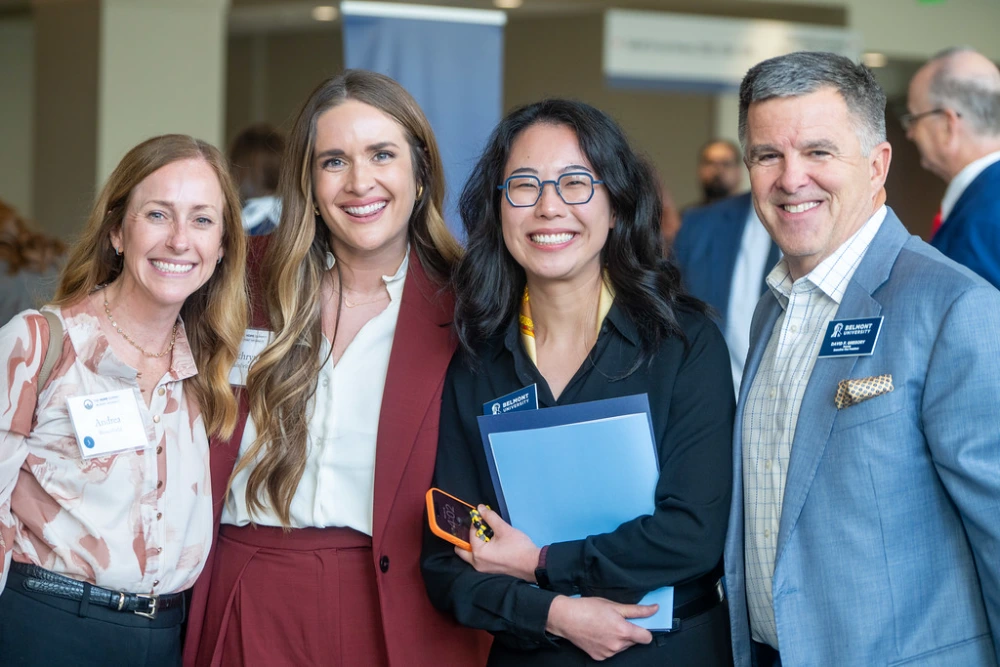 Participants were asked to develop the Community Hub concept for their assigned community, workshopping Belmont’s starting ideas, adding their own and identifying what — or who — may be missing from the equation.
While the scenarios were different and perspectives diverse, several themes emerged that will shape the Community Hub model moving forward:
- The hub must be community-led, with input and ownership from people who live there.
- Partnerships with organizations that have established trust, such as churches, nonprofits and schools, are essential.
- The hubs must have sustainable funding sources to ensure longevity and attract healthcare workers.
- Awareness of healthcare professions and pathways must begin earlier in a student’s education, expanding young people’s ideas of what’s possible for their futures.
Hope Summit is just the beginning. Over the coming weeks and months, Belmont will compile feedback and work closely with partners and friends to turn ideas into working models. From an employer providing clinical support to a medical interpreter bridging communication gaps and a philanthropist funding a hub in a new community, everyone has a role to play.
“Part of Belmont’s vocation is to convene people to solve complex problems, with unexpected partners and ideas,” said Jones. “Dreams without execution are fantasy. We are here today to put hope into action.”
The Belmont Community Hub is rooted in three connected pillars: expanding care close to home, creating educational pathways for workforce development and surrounding people with the wraparound support needed to thrive. If you’re interested in becoming a partner by offering your expertise or philanthropic support to the Community Hub model, please contact Julie Honey at julie.honey@belmont.edu.
Learn more about medicine at Belmont