
Women’s conference connects students with Middle Tennessee leaders and cross-cultural perspectives
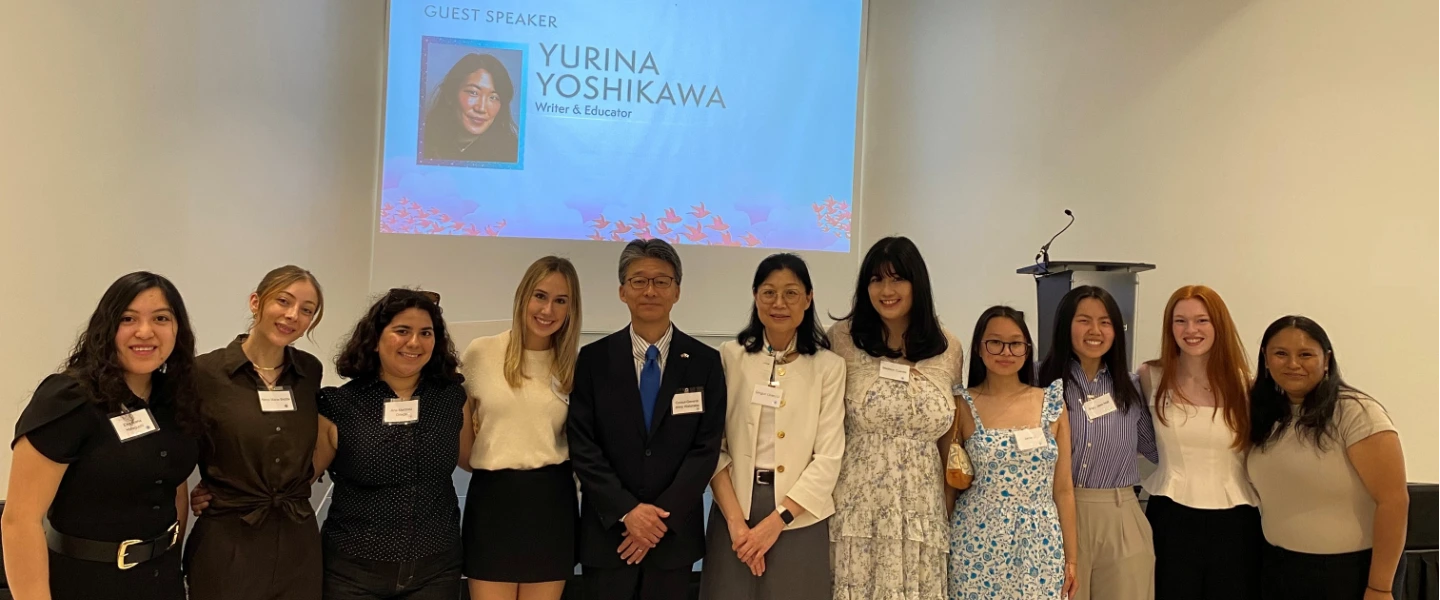
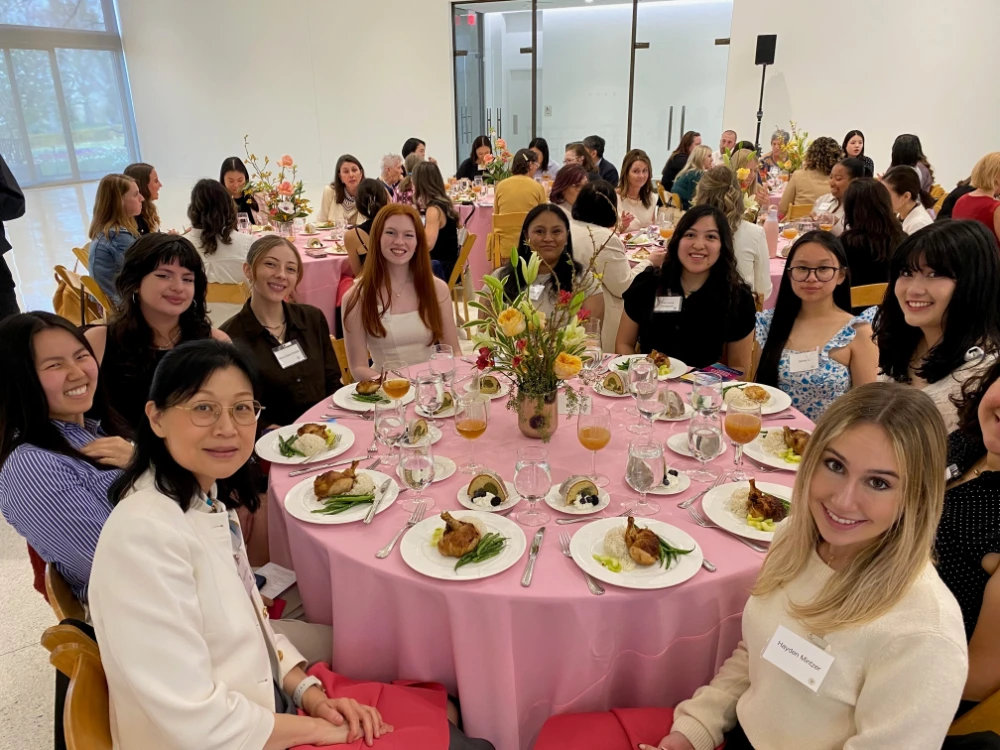
This spring, students in Belmont’s Asian Studies program and Chinese Cultural Association (CCA) traveled to Nashville’s Cheekwood Estate and Gardens to attend the Japan-America Society of Tennessee's annual women’s conference. Students learned directly from industry professionals about the struggles they’ve faced in their careers when being called to lead and the importance of women answering leadership’s call with confidence. The conference, titled “Answering the Call: Staying Ready and Leading When it Matters,” allowed students an opportunity to connect with leading professionals from a variety of industries across Middle Tennessee to learn what leadership might look like in their own lives.
The group of students in attendance represented a wide range of majors, minors and language interests, but they returned to campus with a shared commitment to strengthening their communities through leadership and cross-cultural understanding.
“I wanted the students to be exposed to different types of leadership so that they could be inspired and encouraged,” said Dr. Joan Li, professor of Asian studies and Chinese. “Belmont students bring energy and vitality to any event they attend and through networking and deep discussion, my students did just that. I’m incredibly proud of them and everything they’ve learned.”
Being Empowered to Lead the Charge
Each featured speaker at the conference focused on the impact of strong leadership on others and emphasized the importance of platforming and maintaining international relations between America and Asian countries. Hearing how these women drew strength from their identities and experiences in the workplace and projected it as humble leadership was motivating for students, who felt empowered to use their voices as future opportunities to step into leadership roles and be catalysts for change arose.
“The term the speakers kept using was ‘grateful, hopeful leadership,’ which, to me, feels like something incredibly positive that will incite change,” said (could you specify her major here) senior Grace Hill. “And it really speaks to the heart of what Belmont tries to teach in everything they do. Making that connection was a special moment because it really brought what we’ve been learning about international relations to a real-world context.”
Students were especially drawn to the message given by featured speaker Jenneen Reed, director of finance for Metropolitan Nashville and Davidson county, who said that leaders can distinguish themselves by action, posture and ability to continue learning through every challenge as opposed to title alone. Reed emphasized that because anyone can be a leader, women should lead wherever they felt called, using their individual gifts and talents to incite positive change.
“Reed told a story about navigating a situation in a former job where she was being paid less than her peers because she was a woman,” said junior (major) and CCA president Mary Jess Holt. “She emphasized her use of perseverance in navigating that moment and told us that if we work smarter as opposed to just harder, we can overcome any obstacles.”
Senior Asian studies major Madison Cuevas felt especially connected to a speaker panel featuring international relations scholar Krista Wiegand and novelist Yurina Yoshikawa, who emphasized the importance of maintaining cultural and economic alliances between America and Asia. Both Wiegand and Yoshikawa spoke about the positive impact of cross-cultural goodwill on their personal and professional lives and encouraged their audience to lead initiatives in consistent cultural exchange in their own communities.
“I was really inspired by hearing about the importance of goodwill between nations,” said Cuevas. “Our world is much bigger than we often realize, which makes me want to bring even more visibility to Asian studies and promote understanding about cultures that are very different from our own. Overall, the conference has made me more excited about taking charge of my future in academia and life after graduation, which is really exciting.”
Building Bridges for a Bright Future
Cuevas, Hill and other participating students came back to the classroom eager to apply what they learned at the conference to their future work, starting with leading the charge to make Asian languages and cultures more visible among their fellow students by encouraging them to explore classes in the Asian studies program. For Cuevas, elevating awareness of Asian languages and cultures not only prepares people for an increasingly globalized society, but it encourages students to bond over newfound interests and expand their worldview.
“I think our Asian Studies program is incredibly special,” said Cuevas. “Learning about positive relations between countries is relevant, because so much of what we learn about bridging cultural and personal divides mimics what Belmont tries to foster between students on campus every day. Now, I’m even more motivated to champion deep understanding in my community. Though the Asian studies program is small, I want everyone on campus to know about it and hopefully take an interest in learning about Asian-American relations.”
As the conference attendees prepare to step into their careers, they see leadership as a tool to extend a hand to those around them and build understanding where it wasn’t present before.
“Women in leadership will experience highs and lows, challenges and victories,” shared Hill. “Which means we always should be ready to step up and answer the call.”
Learn More
Learn more about the programs in this story