
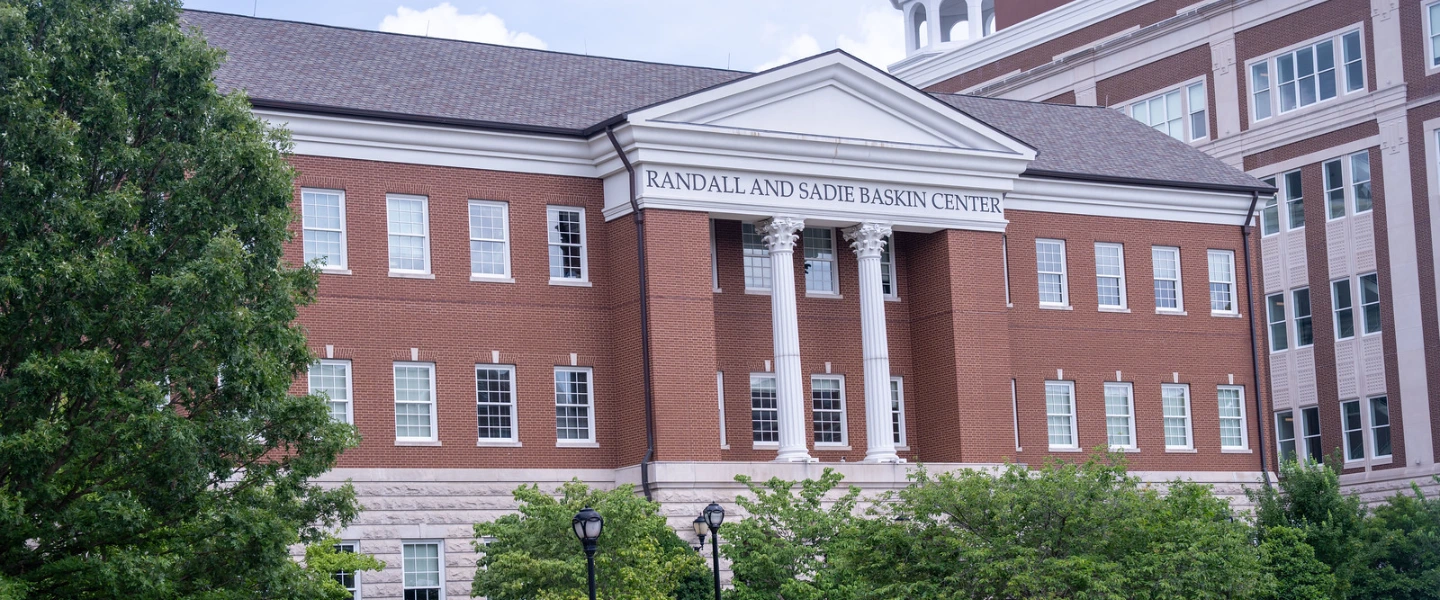
Alumna returns to Nashville after prestigious Supreme Court fellowship
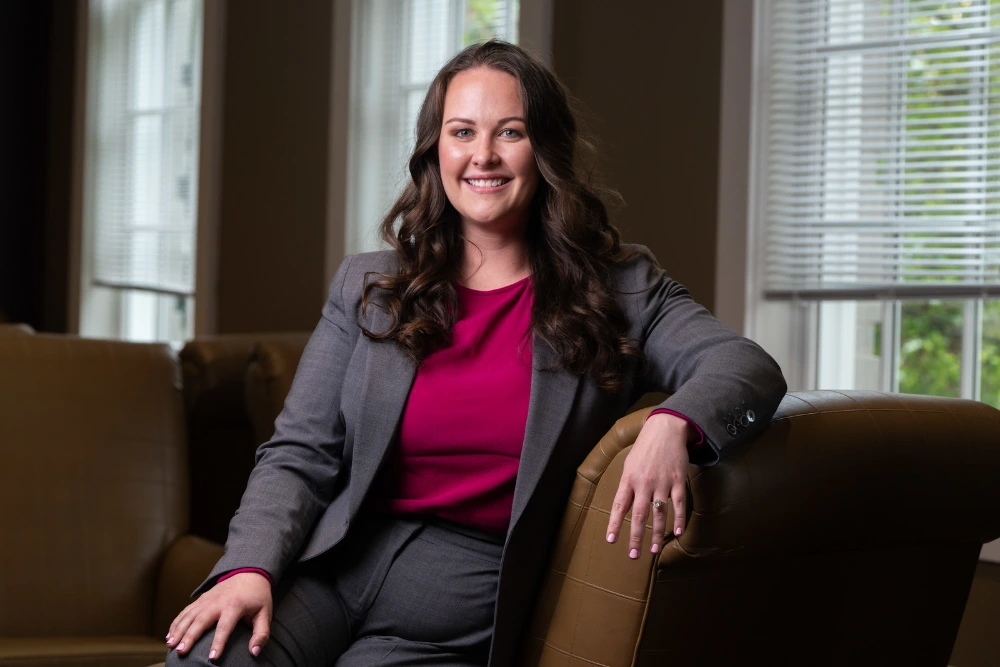 “If I can sing in Russian and have people understand what I’m saying, I can definitely speak to you in English and communicate effectively,” she said. “There is a lot of performance in law. I love doing this.”
That ability to understand an audience, withstand critique and deliver under pressure helped carry McCaleb from the stage to Belmont University College of Law, then to a federal appellate clerkship and, most recently, the Supreme Court Fellows Program.
One of only four professionals selected for the prestigious 2025-26 program, McCaleb spent the past year at the Administrative Office of the United States Courts, where she supported work related to the federal judiciary’s evolving approach to artificial intelligence.
Next, she will bring that experience home to Middle Tennessee, joining the Nashville office of international law firm Womble Bond Dickinson. It is a trajectory she could not have predicted when she first arrived at Belmont, but one shaped at nearly every turn by professors, judges and fellow alumni who recognized her potential.
“I just felt like every step up that I took, I had people behind me who were championing me and cheering me on,” McCaleb said.
The Road to Law School
A Franklin, Tennessee, native, McCaleb earned a bachelor’s degree in vocal performance from New York University in 2020. She was preparing to pursue opera abroad when the COVID-19 pandemic brought those plans to a stop.
Back home in Tennessee, her father made her a compelling offer — she could live with him if she applied to law school.
As a first-generation lawyer, she knew little about choosing a law school or building a legal career. Belmont’s strong bar pass rate first caught her attention, and a full-tuition scholarship sealed the decision.
Once classes began, McCaleb discovered that the qualities that had drawn her to music also had a place in law.
“I love how it scratches the creative side,” she said. “And there are rules. I love rules, because if you know what the rules are, you know how to work within them.”
Her performing arts background had also taught her to receive exacting feedback, adjust quickly and try again.
“When you go to music school, you get critiqued on something very personal all the time,” she said. “Law school wasn’t all that different.”
Belmont Mentors Lead to Federal Clerkship
McCaleb entered Belmont Law without knowing what a judicial clerkship was. Professor of Law and Director of Judicial Clerkships Lynn Ridgeway Zehrt changed that.
Zehrt noticed McCaleb early and began alerting her to opportunities that matched her interests and abilities. Through that mentorship, McCaleb worked for Tennessee Circuit Court Judge Joseph A. Woodruff while still a first-year law student.
When she began, she "knew nothing," but McCaleb was able to witness trials and develop her legal writing at a rapid pace thanks to Judge Woodruff.
Other faculty members helped McCaleb sharpen different parts of her legal skill set. She worked with Assistant Dean for Experiential Learning Kristi Arth on an evidence treatise and received guidance as she developed an article that was later published in the Marquette Intellectual Property Law Review.
Professor Amy Moore coached McCaleb through Belmont’s moot court program, helping her channel the expressiveness she brought from the stage into precise legal advocacy.
“I think I’m very gregarious,” McCaleb said. “But when you’re arguing before a judge, you have to package that in a different way.”
McCaleb ultimately served as president of Belmont’s Board of Advocates and an associate editor of the Belmont Law Review and left law school with mentors who continued advocating for her after graduation.
That network was game-changing when Judge Bobby E. Shepherd of the U.S. Court of Appeals for the Eighth Circuit contacted then-Dean Alberto Gonzales in search of a law clerk. Gonzales turned to Zehrt, who immediately thought of McCaleb.
McCaleb ultimately was offered the position in El Dorado, Arkansas, and became the first Belmont Law graduate to secure a federal appellate clerkship.
The role gave her a rare view into how judges evaluate arguments and reach decisions. She researched the law, analyzed cases and continued to hone her legal writing skills.
“You get to see how the decisions are made,” she said. “You kind of peel back the curtain on the judicial decision-making process.”
It also positioned McCaleb for another opportunity. When information about the Supreme Court Fellows Program circulated among federal law clerks, she decided to apply.
Researching AI in the Federal Courts
Founded in 1973, the yearlong program places four fellows with institutions supporting the federal judiciary. Applicants must propose a research topic of interest to the courts, and McCaleb focused hers on whether artificial intelligence could require changes to the Federal Rules of Evidence. 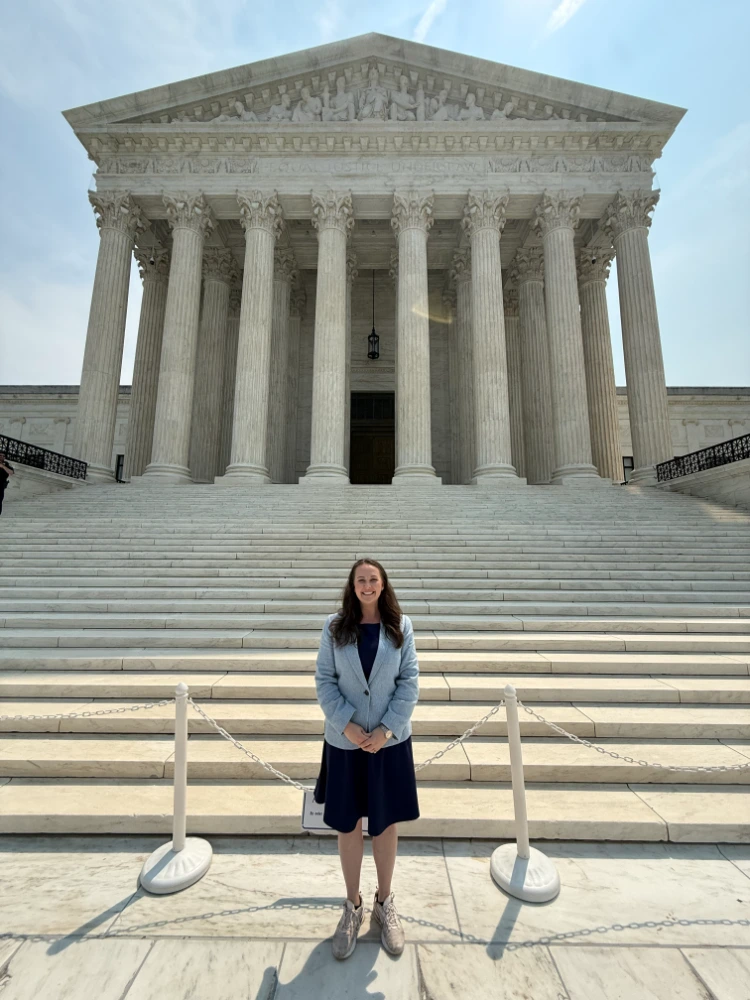
Authenticating evidence has historically been relatively straightforward in federal court. The rise of deepfakes and other AI-generated material, McCaleb believed, could complicate that process.
Her proposal earned her a place among eight finalists invited to Washington, D.C., for interviews. With recommendations from Gonzales and Shepherd, she was selected as the 2025-26 fellow assigned to the Administrative Office of the United States Courts.
There, she worked with the artificial intelligence task force and contributed to internal judicial policy work. Her fellowship research examined the approximately 160 orders federal district judges had issued governing attorneys’ use of generative AI.
Some judges prohibited its use, while others allowed it but required attorneys to disclose when and how they used it, while others simply cautioned attorneys to use the technology responsibly.
“You could hypothetically go to one district and have a judge who says no, a judge who says yes, but you have to tell them exactly where you used it and how, and a judge who says you can use it but just be careful,” McCaleb said.
She later presented her research to a Judicial Conference committee in California. The fellowship also allowed her to attend oral arguments and watch experienced attorneys advocate before the Supreme Court — another kind of performance grounded in rigorous preparation and command of the law.
Bringing It Home
Even before beginning the fellowship, McCaleb knew she wanted her next chapter to lead back to Nashville.
Her path home once again ran through Belmont. A College of Law alumna working at Neal & Harwell became a professional connection as McCaleb explored opportunities in the city. After the firm merged with Womble Bond Dickinson, McCaleb reconnected with its attorneys and soon received an offer.
At Womble Bond Dickinson, she expects to begin in complex commercial litigation, with the goal of eventually expanding into appellate work. The position offers the sophisticated legal practice she has been preparing for in the city and professional community she has long hoped to rejoin.
“I’m going to get to do what I want to do in Nashville,” she said. “Which has always been the goal.”
Returning also means reconnecting with Belmont’s alumni network and settling into a routine with her fiancé after two years away.
“I will sing Belmont’s praises from the rooftops,” she said. “I’m really excited to be back.”
In retrospect, McCaleb’s journey can look carefully orchestrated. Living it felt much less certain. She did not expect to receive the federal clerkship or even be interviewed for the fellowship. At each stage, applying meant accepting the possibility of hearing no.
That is now her advice to Belmont Law students imagining opportunities that may feel beyond their reach.
“Don’t self-select out,” McCaleb said. “Apply. If you don’t try, you never know.”
As an undergrad, opera taught McCaleb how to use her voice. Belmont helped her discover all the places it could take her.
Learn more about the College of Law