
At the Thomas F. Frist, Jr. College of Medicine’s second annual Research Symposium, curiosity was on display as student discoveries advanced solutions for better patient care
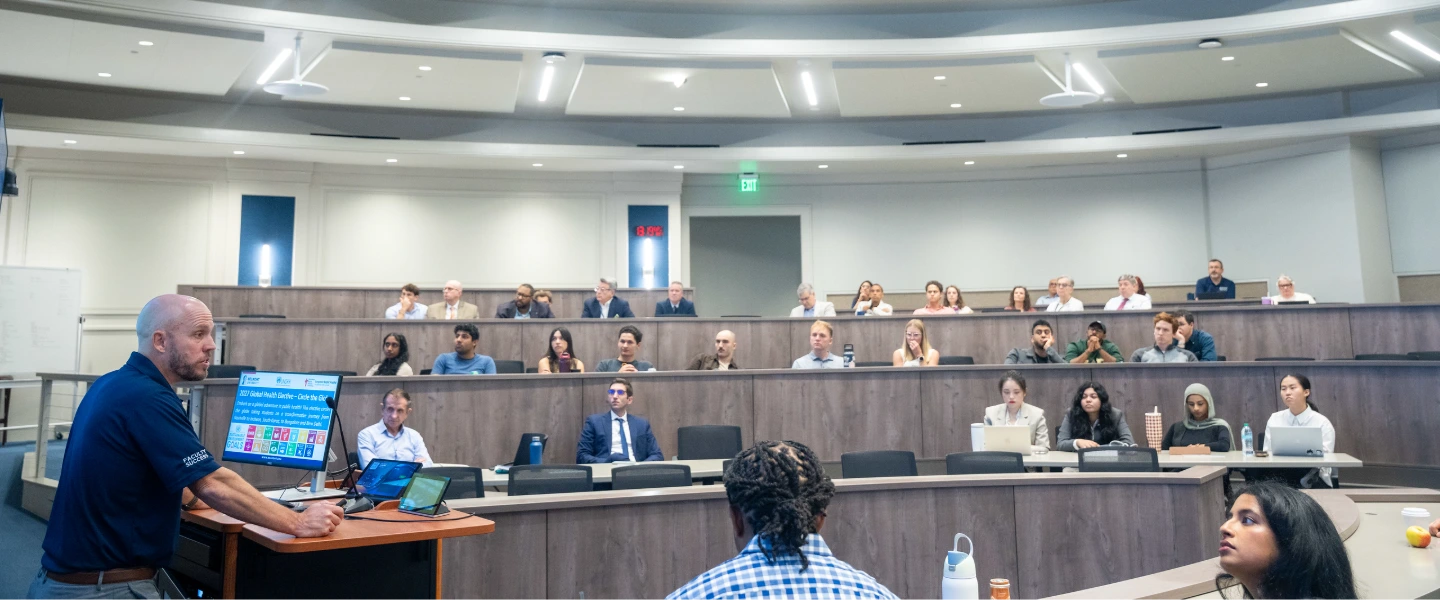
 This August, the Thomas F. Frist, Jr. College of Medicine hosted its second annual Research Symposium.
Across oral presentations, poster sessions and a keynote address, students and faculty shared work from more than 30 summer research projects. With guidance from mentors, students explored patterns, causes and solutions across a range of health-related topics, from glaucoma to spinal cord regeneration.
Across the college, research doesn’t simply live in a lab or classroom. It has real-world implications and global impact as medical students imagine how today’s research will shape tomorrow’s practice, and the lives of their future patients.
Oral Presentations
Dr. Jamaine Davis, assistant dean for scholarly productivity and innovation, kicked off the day by showcasing the remarkable growth in research over the last year. More than $350,000 in research dollars were awarded, and 125 publications were produced, including 10 student-authored publications.
Dr. Ben Ryan, professor of public health and global initiatives, shared research opportunities the Thomas F. Frist, Jr. College of Medicine offers around the world. Through networks in 18 countries, students can work alongside global mentors, participate in immersive electives abroad and contribute to boots-on-the-ground public health projects.
Both speakers encouraged students to actively shape their research journeys, backed by the support of academic and industry mentors committed to bringing their visions to life.
A few of those dreams were on display through the talks given by professor Dr. Mihai Covasa and three students whose abstracts were selected for presentation:
- Jenny Shen, who studied the role that microglial circadian rhythms play in diabetic retinopathy
- Zain Hussain, who studied non-linear visual field progression in glaucoma and whether clinical information can help predict decline
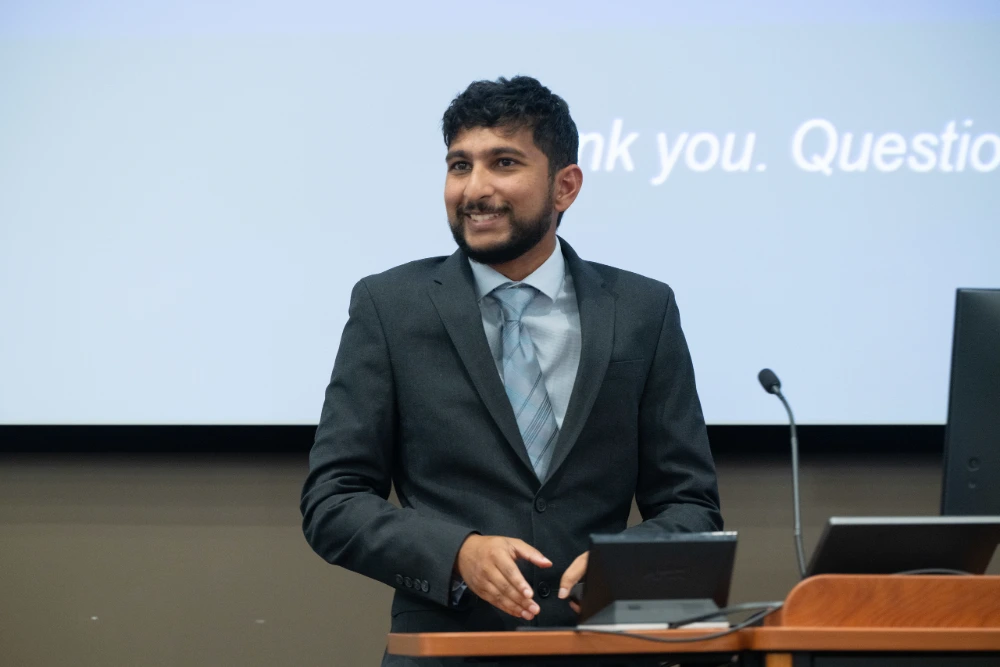
- Huzaifa Khawaja, who evaluated associations between tumor mRNA expression of selected MASLD-related genes and overall survival in hepatocellular carcinoma, with emphasis on those of East Asian ancestry
Shen, Hussain and Khawaja presented their objectives, methodology and findings, along with what they hope to study more deeply in the future. Fellow students, faculty and mentors in the room posed clarifying and, at times, challenging questions, teaching student researchers how to not just conduct research, but advocate for their work.
Poster Sessions
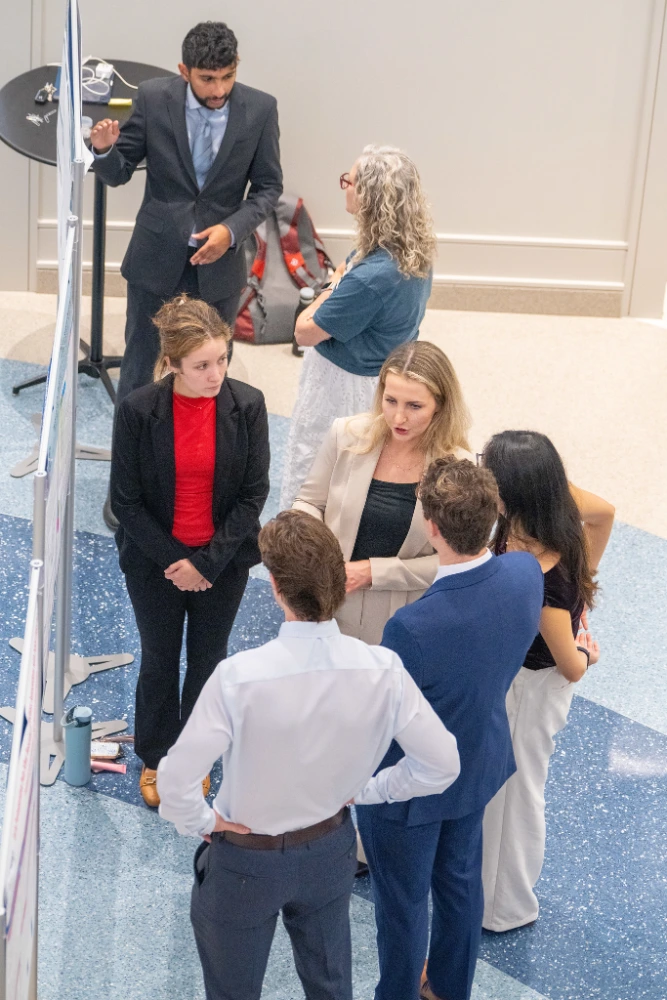
During poster sessions, the first floor of the Thomas F. Frist, Jr. College of Medicine buzzed as students shared their abstracts and discoveries. Members of the Belmont and health care community mingled, asked questions and learned from each other.
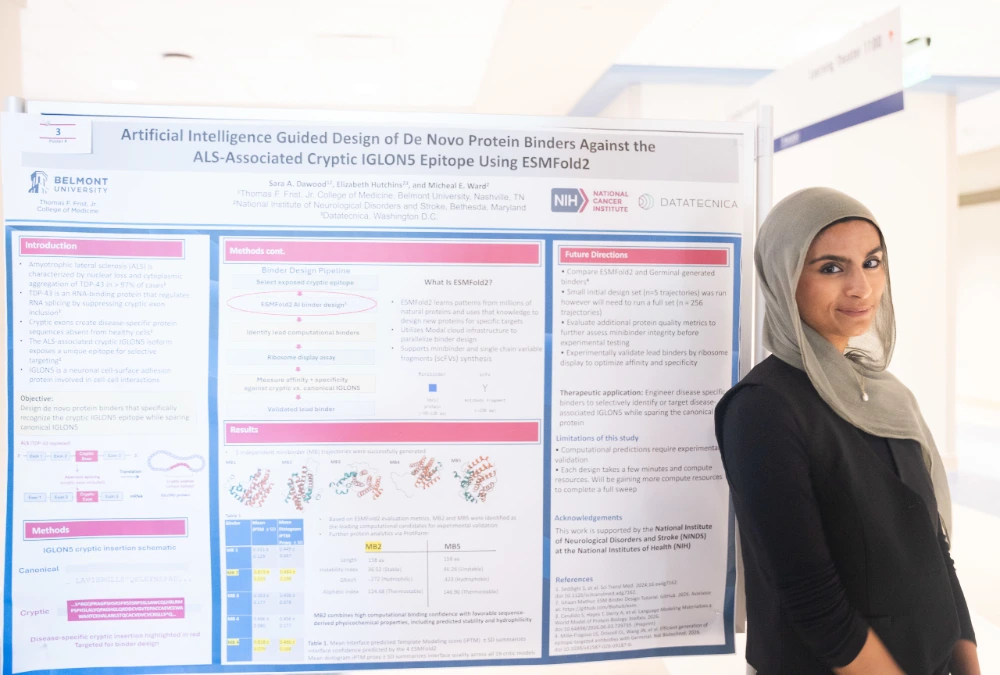 Second-year medical student Alexandra Penney shared a retrospective data study about cognitive decline in perimenopause and whether factors such as vasomotor symptoms and insulin resistance affect how quickly cognitive function returns to baseline after menopause. Penney is interested in neurology and hopes to make research a part of her career — both for the sake of expanding knowledge and giving patients hope through new discoveries.
Another second-year medical student, Angela Jo, studied risk assessment models that predict renal failure in patients with Type 2 diabetes. Working with the Belmont Collaborative for Health Systems Innovation and Quagga Health (a health care startup founded by innovation fellow Joey Nelson, Ph.D.), Jo hopes to contribute to better modeling — which results in earlier interventions, better patient outcomes and more equipped health care systems.
Across the room, posters covered basic science; translational science; clinical and epidemiologic research; health services, outcomes and quality; medical education scholarship; and case reports and clinical innovation — demonstrating research’s role in improving systems, patient experiences and how we train future health care leaders.
Keynote Address
The day concluded with a keynote address from Ben Ho Park, M.D., Ph.D., director of the Vanderbilt-Ingram Cancer Center, that connected science to patient care and gave students a picture of a research career. 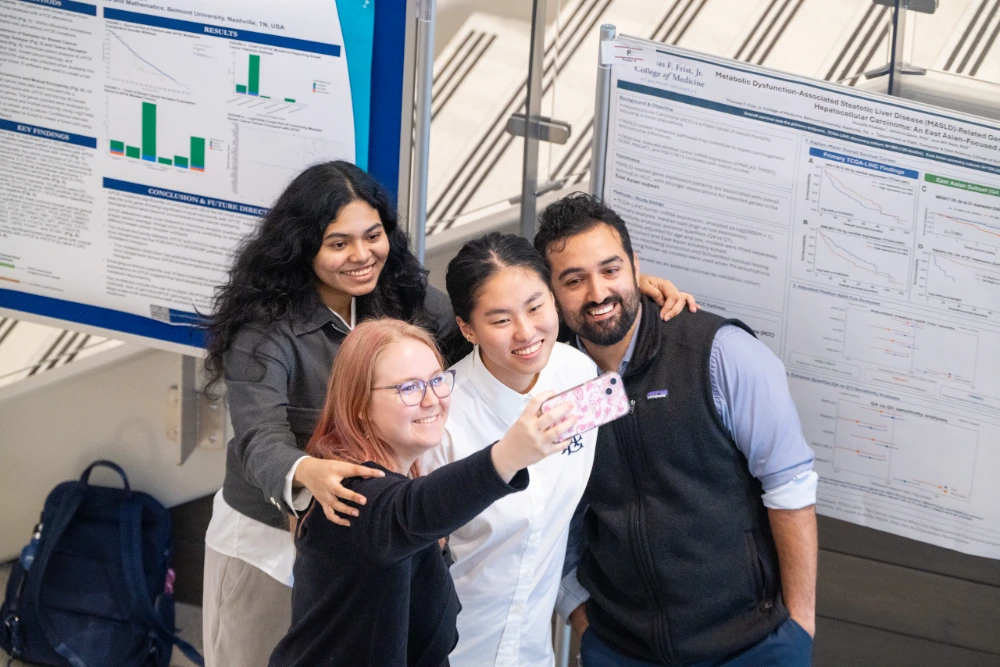
"What is exciting is seeing students, faculty mentors and community partners working together to produce scholarship that advances both science and patient care,” said Dean Anderson Spickard.
Behind every presentation, publication and discovery is a network of supporters who believe in advancing health care through education and research. If you share that vision, we invite you to join us in equipping the next generation of physicians through a philanthropic partnership. Contact us at hopetransforms@belmont.edu to explore how you can make an impact today.
Learn more about the Thomas F. Frist, Jr. College of Medicine