

Choose Your Path | Is Songwriting right for you? | What You'll Learn | Program Details | Outcomes | Career Possibilities | Testimonials | Portfolio FAQs | FAQs
Why a Songwriting Degree at Belmont?
 There is no better place to pursue a songwriting degree than Nashville, and no address closer to the work than Belmont’s. The Songwriting program sits on Music Row at 34 Music Square East, next to the historic Quonset Hut and Columbia Studio A, where artists like Johnny Cash and Patsy Cline recorded.
You learn the craft from people who live it. As a Songwriting major in the Mike Curb College of Entertainment & Music Business, you train with faculty who have earned Grammy, CMA and Dove Awards, and your classroom regularly includes guest writers, seminar speakers and showcase judges from the industry. Belmont songwriting alumni have won those same awards.
Your degree balances creativity with career readiness. Alongside the craft, you take courses in copyright law, music publishing, recording technology, Digital Audio Workstation, music theory and music history, so you understand the business you are writing for. Paired with a music business minor and internships, you graduate ready for a range of paths in the industry.
Not Sure Which Songwriting Path Fits?
Belmont offers two ways to study songwriting, and the right one depends on your goals. Compare our songwriting program options to see how the Songwriting BA/BS in the Curb College differs from the Commercial Music songwriting emphasis in the College of Music & Performing Arts.
Exploring other programs?
Compare all Creative Careers Programs
Request Information
From Classroom to Chart-Topper
You study songwriting where the industry works, right on Music Row. The program gives you direct access to industry professionals, chart-topping alumni and songwriting legends, and with immersive, hands-on learning at its core, you refine your voice, grow your catalog and collaborate in real-world settings from your first semester. Through Belmont USA, your reach extends to cities like New York and Los Angeles and beyond.


Learn From the Writers Behind the Hits
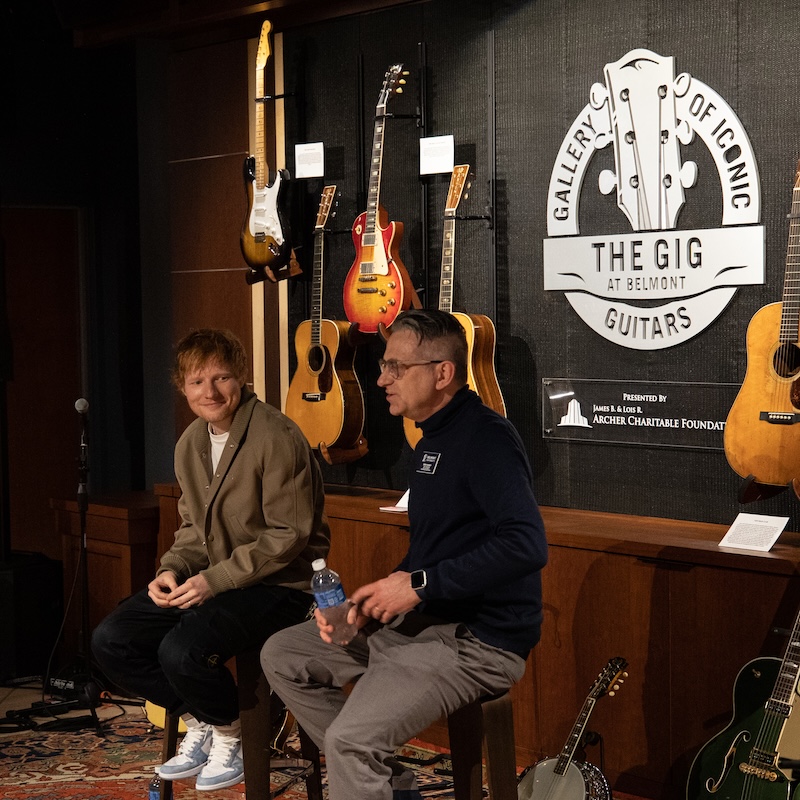
Your access to the industry is constant. Recent guests and mentors have included Ed Sheeran, who joined songwriting students for a Q&A on campus, and Hall of Fame writer Liz Rose, who led a masterclass in partnership with the Songwriters Hall of Fame. Beginning in 2026, Belmont hosts GRAMMY Camp Nashville. Alumnus and Songwriters Hall of Fame Inductee Ashley Gorley frequently serves as a guest speaker and mentor for our songwriting students.
Graduate With a Recorded Catalog
Co-writing sits at the center of the curriculum. You write, record and pitch from early in the program, and you graduate with a portfolio of recorded songs and real collaborative writing experience built for professional pitching and publishing.
Is a Songwriting Degree Right for You?
This program fits several kinds of students:
- The career songwriter who wants to write professionally, for themselves or for other artists, and wants the craft and connections to do it.
- The artist-songwriter who performs their own material and wants to grow as a writer and a recording artist.
- The lyricist or collaborator who thrives co-writing and wants a program built around collaboration.
You do not have to play a traditional instrument or perform to major in songwriting. If you write, or want to learn to write at a professional level, this program is built for you.
Build the Craft and the Catalog

As a songwriting major, you explore the many paths your music can take, across genres, platforms and audiences. In the Songwriting BA/BS, you learn to:
- Co-write songs with other writers
- Record and produce demos of your own songs
- Write lyrics and music across commercial genres
- Pitch your work to publishers
- Apply copyright, publishing and business practices to a songwriting career
You stretch your creativity and experiment with new styles to find where your writing shines, building confidence through performance and collaboration.
Program Details
Curious about your coursework? View requirements for this degree in the course catalog.
Course Requirements
The songwriting major leads to either a bachelor of arts or a bachelor of science. It requires 128 hours of coursework.
- BELL Core requirements: 53 hours
- Major requirements: 43 hours
- Minor requirements: 18 hours
- General Electives: 14 hours
Our location in the heart of Music City provides unmatched opportunities for industry engagement. Students in upper-level classes have written songs for Sony Records Nashville, Universal Music Publishing, Big Machine Records, Warner Chappell Music, TV shows like “Nashville,” Curb Publishing, Warner Brothers Records Los Angeles and other companies.
Studying songwriting at Belmont’s Curb College offers an incredible collaboration between Songwriting, Audio Engineering and Motion Pictures majors for the production of music videos.
Your studies are enhanced by classes in commercial songwriting, audio engineering, music business and the choice of dozens of minors.
Study Abroad opportunities are plentiful with songwriting courses taught in Ireland, Northern Ireland, Scotland, England and Germany.
Application Process:
Start your Belmont application, then navigate to Acceptd landing page and walk through the steps to submit your portfolio.
Songwriting Portfolio
All applicants must answer three short-answer questions explaining why they would like to be a part of the Belmont Songwriting community, talking about their career goals and musical inspirations. Next, they will upload a video where they perform two original songs alongside two (2) PDFs of the lyrics to each song. Video should be no longer than seven (7) minutes.
Submission Requirements:
Complete the online submission page in its entirety. Capture a video of yourself singing two of your original compositions. If someone else is accompanying you, you must make an on-camera introduction of each song and its instrumentalists and/or performers. All songs must be written solely by you. Valid submissions must be received no later than 11:59 p.m. (CST) on the due date to be considered in that round.
Portfolio Due Dates:
- September 1 (Decisions by October 1 for transfers and current students, December 1 for first-year applicants who apply for Early Action I)
- November 1 (Decisions by December 1 for transfers, current students and first-year applicants who apply for Early Action I)
- January 15 (Decisions by February 15)
- March 1 (Decisions by April 1)
- April 15 – First-time applicants only (Decisions by May 1)
- July 1 – Transfer students only (Decisions by August 1)

Belmont Tracks: Arden Snead
Arden Snead is a songwriting alumna who was glued to music even as a baby. She learned to play guitar at a young age, and songwriting soon followed after. Arden takes most of her inspiration from her family and the stories of others — she believes that the most truth is found in the things that take time. Her primary genres are country and singer-songwriter, and she has been known to pick the banjo on occasion.
Career Possibilities
The Songwriting major equips students with the essential knowledge and skills needed to pursue a professional career as a songwriter in today’s entertainment industry. An emphasis on critical thinking and collaboration encourages individuality and creativity as you develop skills in lyric writing, musical composition and demo production. This practical knowledge gained through this program prepares students for all aspects of the songwriting and publishing industry.
The following is mere snapshot of some of the jobs student pursue upon graduation.
Within a music publishing company, the creative director works directly with the staff songwriters on direction in song creation. The creative director also meets with record producers and industry executives to pitch songs for recording and other commercial applications.
Entertainment industry entrepreneurs build and run their own companies, turning an idea, an artist roster or a gap in the industry into a functioning business. To get there, they raise capital, develop business plans, negotiate contracts and build the brand strategy and marketing that attract artists, clients and investors. They also oversee day-to-day operations, managing budgets and staff while developing new products, platforms and revenue streams as their companies grow.
Belmont Songwriting graduates have gone on to found companies including MadeIn Network (Kevin Grosh/Keith Johnson), EVA Entertainment (Channing Moreland) and Lucky Money Entertainment (Sarah Morey).
A music publisher’s job is to secure commercially released recordings of songs it controls, encouraging and working with their staff songwriters. To achieve that goal, they work with record company A&R executives, producers, recording artists, music supervisors and managers. Publishers also oversee proper administration of musical compositions, registering copyrights, filing necessary information to mechanical and performing rights organizations, auditing record companies, negotiating licenses and collecting monies due. Belmont Songwriting graduates are working at record labels, publishing companies and music supervision companies like Warner Brothers, Sony, Big Loud Records, Integrity Music, Warner-Chappell Production Music and many others.
Many of our former students and alumni pursue and secure recording contracts with record labels. Recording artists are at the center of a curated team with representatives from all sectors of the industry. Artists need an attorney, manager and booking agent and will partner with the label’s creative team, a producer, co-writers and other collaborators to craft their sound and a deliverable product that will hopefully benefit everyone involved. Our former students on this path include Dasha, Carter Faith, Jack Van Cleaf, Katie Pruitt, Jake Wesley Rogers, Liza Anne, TORRES, Ian Munsick, Annie DiRusso, Anna Vaus, Kelsey Waldon, Mackenzie Carpenter, Natalie Layne and many others.
A contract position with a music publishing company, typically a one year, exclusive contract with a series of 1–3 year options. Staff songwriters are hired to write songs that will be promoted to recording artists, used in film or television and other commercial uses. Belmont Songwriting graduates have signed publishing contacts with Sony/ATV Music Publishing, This Music/Warner Chappell Music, Sea Gayle Music and others.
Perform on recording sessions in studios in Nashville, Los Angeles, Miami or New York.
Perform live on tour with recording artists on U.S. and international tours.
Outcomes & Alumni Success
 Belmont’s songwriting program equips students with the creative tools, industry knowledge and hands-on experience needed to launch successful careers. With an emphasis on co-writing, performance and mentorship, students graduate ready to navigate the ever-evolving music industry. From their first semester, they’re building a catalog, recording demos, connecting with professionals and performing original work — all while studying on Nashville’s Music Row.
Our songwriting alumni have gone on to sign publishing deals, release original music and write for major artists across genres. They’ve landed cuts with chart-topping performers, placed songs in film and television, and built careers as independent artists, producers and collaborators. Whether they stay in Nashville or take their talents worldwide, Belmont songwriters are shaping the sound of today’s music industry.
We're committed to your success
Curb College's Professional Development team helps students and graduates grow their skills and networks, preparing them to enter the entertainment industry. To support this, our team offers one-on-one meetings, weekly workshops led by industry experts, off-campus networking events and hundreds of internships each semester. We serve as ambassadors and connectors for Curb College students and graduates through active involvement in the entertainment world.
Within six months of graduation, 98% of Mike Curb College graduates are employed, continuing their education or serving in the military, and 89% of employed graduates hold positions aligned with their short- or long-term career goals.

Carter Faith
Songwriting
MCA Nashville Recording Artist
“I wouldn’t be the songwriter I am today without the Belmont Songwriting program. In the four years I spent there, I transformed not only as a creative but also as a person, finding confidence and strength to take on this industry. I will forever be grateful to my professors, who were honest with us about the career path we were choosing but also who dreamed alongside us that we could go into the world and make music that inspired others like we had been inspired before.”

Alysa Vanderheym
Songwriting
Songwriter, Producer | Rhythm House
“Belmont was truly instrumental in my journey to find my path as a creative. I can’t think of a better launching pad into the music industry. From being surrounded by the talent of my peers to having some of the best lyricists down the street on Music Row, foundation-building and door-opening opportunities are well within reach.”

Taylor Agan
Songwriting
Staff Songwriter, Curb/Word Entertainment | Creative Director , Integrity Music | Co-writer of "That's My King" winner of Best Contemporary Christian Music Performance/Song at the Grammys 2025
“My time in the Belmont Songwriting program is something I remain deeply grateful for. The lessons I was taught—and the wisdom I “caught” simply by being immersed in such a creative community—refined my focus, reinforced my calling, and resourced me for the career I’m walking in today. I’m forever thankful for my professors and peers, who had a profound impact on my life.”

Emily Weisband
Songwriting
Sony Songwriter, Warner Brothers Artist, Grammy Award winner
“[I] have every person on staff in the Songwriting program...to thank for even having a degree....They were just all so supportive and encouraging of everything that I was doing outside of the classroom and the actual music industry, and if it weren't for them lifting me up in that area the whole way through, I wouldn't be the writer that I am.”

Anna Vaus
Songwriting
Big Machine Songwriter, Independent Artist
“Studying songwriting at Belmont was awesome because it just gave me the opportunity to connect with a lot of different people and people on Music Row, and that was thanks to my professors....”

Jake Wesley Rogers
Songwriting
Sony Songwriter, Warner Brothers Artist
“For my career, it's changed my whole life. It put me in front of the publishing company I’m with now and everything has changed because of this program.”
Learn from Experienced Faculty
Our songwriting faculty are accomplished writers, performers and industry professionals who bring real-world experience into the classroom. From hitmakers and producers to artists and engineers, they’ve worked across genres and stages — and they’re passionate about helping you find your voice. Through storytelling, collaboration and one-on-one mentorship, they’ll guide you as you grow as both a songwriter and an artist.

Victoria Banks
Email: victoria.banks@belmont.edu
Office Location: 34 Music Square East 310

James I. Elliott
Email: james.elliott@belmont.edu
Office Location: 34 Music Square East 303
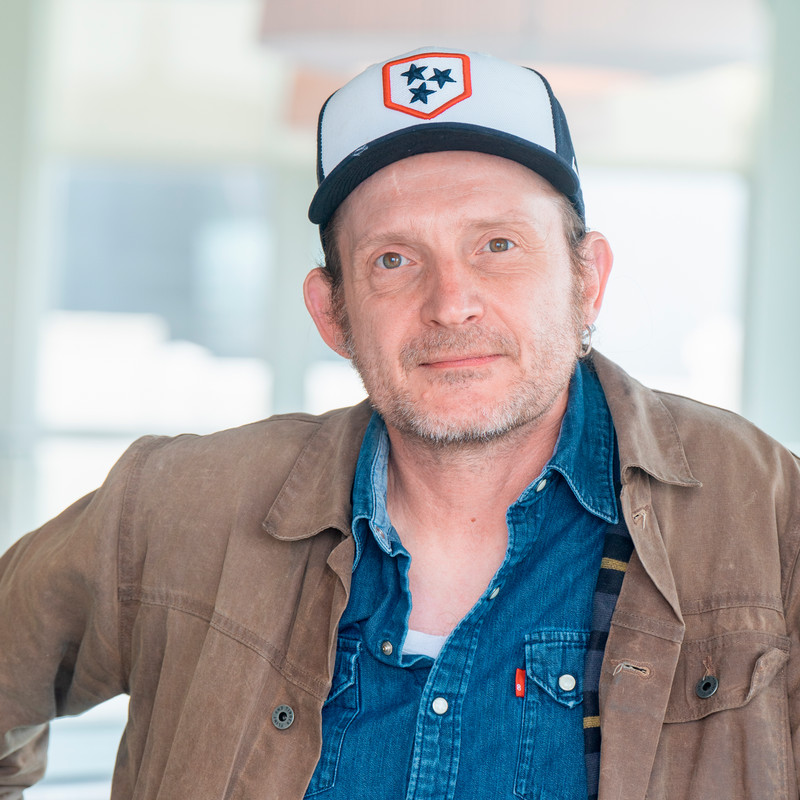
Thomm Jutz
Email: thomas.jutz@belmont.edu
Office Location: 34 Music Square East 308


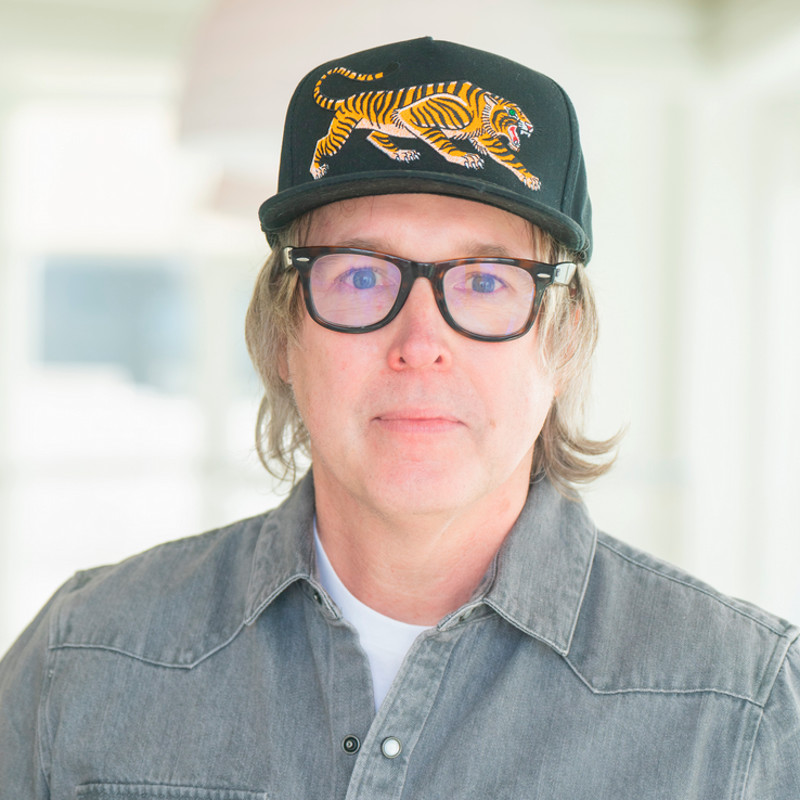
Drew Ramsey
Email: drew.ramsey@belmont.edu
Office Location: 34 Music Square East 307
Submitted video portfolios should be no longer than seven (7) minutes.
Videos should include a brief introduction of yourself, an explanation of why you’d like to be a part of the Belmont Songwriting community and two original songs.
There's a lot of valuable content our committee would like to see in a short amount of time. Some helpful tips for meeting the time requirement: Practice a timed introduction that captures everything you'd like to say in about a minute. Shorten the amount of time between sections. Shorten musical intros and outros for songs where applicable. Perform a modified version of your song that captures the essential components (example: verse, chorus, bridge, chorus).
Yes. Submit your two strongest songs in any commercial genre. Please note that we prefer to review songs free of profanity, graphic imagery, risqué/inappropriate content, etc.
No. Songs must be written by the applicant alone. No co-written pieces should be submitted.
Yes. However, applicants may have someone else accompany them. If this is the case, applicants must make an on-camera introduction for all accompanying performers.
The songwriting discipline involves putting words to music. For that reason, songs submitted by applicants must contain both lyrics and music.
If you are a track writer or production-based writer/artist, we encourage you to use your creativity and technology to maximize your video while highlighting your unique musical style and talents. Some examples: While the camera is rolling, show a screenshot of your session, hit play on your computer, then play, rap, sing, etc., live while your track plays in the background. Or while the camera is rolling, show the loop pedal that you're playing or singing into, then create a "live loop" and perform your song live over the newly created loop. Everyone has their own unique style — this is your opportunity to surprise (and impress) us!
No. The songwriting portfolio process is designed to evaluate songwriting ability only as it relates to the requirements and expectations of the songwriting program at Belmont. It is not designed to be evaluative of your overall strengths as a songwriter or to provide you with individual feedback.
Applicants who have been admitted to Belmont University will receive their decision letter through their BU4U account by the decision dates stated above. Current students who are applying or reapplying to the program will receive an email notification within 30 days of the submission deadline.
Award-Winning Faculty
Our program is blessed to have a full-time faculty made up of award-winning songwriters in multiple genres. Every full-time faculty member has been nominated for major awards within the last six years, including Grammy, Emmy, Latin Grammy, Dove, BMI, ASCAP, NSAI, ACM, CMI, SOCAN, CCMA and IBMA awards.
Genre Expertise
The musical genres of those awards include Americana, bluegrass, blues, country, gospel, contemporary Christian, new age, R&B and reggae.
Notable Artist Recordings
Artists who have recorded our faculty members' songs include India.Arie, Steven Curtis Chapman, Nanci Griffith, Mickey Guyton, Alejandra Guzman, Paloma Faith, John Legend, Ricky Martin, MIKA, Newsong, John Prine, Jessica Simpson, The Oak Ridge Boys, The SteelDrivers, The Temptations, CeCe Winans and many others. Our faculty have also had songs featured in many major films, television shows and advertisement campaigns.
Faculty-Led Selection Process
We rely heavily on our full-time faculty for the selection process (those with a Belmont email address and office location listed on the website). Detailed biographical information can be viewed here. As we go through the applicant portfolio links, we rely on the strengths of our various faculty based on their expertise in their genre or career path.
Reasons for Rejection
If there's a file that doesn't play, a submission includes excessive profanity or an applicant hasn't followed the submission requirements, then their portfolio may be rejected.
Reapplication Welcome
Students can reapply up to four times, and some of our best students over the years were accepted on their third or fourth attempt. Being a professional songwriter involves accepting the fact that about 90% of your songs will be rejected initially. This application process has helped us build a strong program but is also an early initiation into that disposition.
A common misconception is that we expect fully formed professional writers. We're not looking for perfection but rather a discernible talent that can be developed and that, hopefully under our tutelage, can be raised to a level that can serve a sector of the industry.
The "Play" Test
When we hit "play," there should be a lyric, melody, harmonic construction or produced track that stops one or more of the review team and makes them want to rewind and play it again.
Show Your Quirks
Applicants should be willing to display their unique talents, however unusual. Highlight quirks rather than hiding or softening them.
Song Selection Strategy
Select one song that people are always asking you to play (one that you may consider to be too mainstream, cute or pop) so that your second song can potentially be one you consider to be your best-crafted, more artistic representation of your writing.
Our Review Process
Much like a creative staff at a music publishing company or an A&R staff at a record label, some member of the team needs to stand up and vouch that an applicant has promise and can be developed. This is where the vast experience and success of our faculty plays a key role, as we have all been part of developing talent in the music industry and have assisted from the earliest phases of a writer's or artist's career up to the point where those artists are accepting their own awards.
Belmont’s songwriting program is located on Nashville’s Music Row and taught by working hit songwriters who have earned Grammy, CMA and Dove Awards. You co-write from your first semester, learn from visiting writers and Music Row publishers, and graduate with a recorded catalog built for professional pitching.
Yes. Songwriting applicants submit a portfolio of original work so faculty can review your creative potential and style. The portfolio typically includes original songs, a short video and short-answer questions. See the Portfolio FAQ for full requirements.
Belmont’s Music Row location and constant industry exposure give songwriting students real chances to connect with publishers, and some students build professional relationships while enrolled.
Studying in Nashville places you in the songwriting capital of the world, steps from Music Row. The curriculum connects directly to that community, giving you access to the writers, publishers and studios that shape today’s music, plus guest sessions with visiting artists and Hall of Fame songwriters.
Yes. You build a professional catalog as you go, graduating with a portfolio of recorded songs and real co-writing experience designed for professional pitching and publishing. Co-writing and demo recording are central to the curriculum from early in the program.
No. You do not need to perform or play a traditional instrument to major in songwriting at Belmont. The program is built for writers and lyricists, and it welcomes students who want to learn to write at a professional level.
The Songwriting BA/BS is a dedicated songwriting degree in the Mike Curb College of Entertainment & Music Business, built around co-writing, demos and professional pitching. The Commercial Music songwriting emphasis is part of a Bachelor of Music in the College of Music & Performing Arts, with a broader music foundation and performance requirements. Belmont’s Compare Songwriting Programs guide breaks down the differences in detail.
Related Stories




Contact Us
Mike Curb College of Entertainment & Music Business
Emily Reynolds
Admissions Coordinator
615.460.6453
Email Emily
Plan Your Visit
There's no better way to experience Belmont than by visiting campus. Whether you attend an admissions event, take a student-led campus tour or explore Nashville while you're here, a visit helps you picture yourself as part of the Belmont community.