

Songwriting vs. Commercial Music
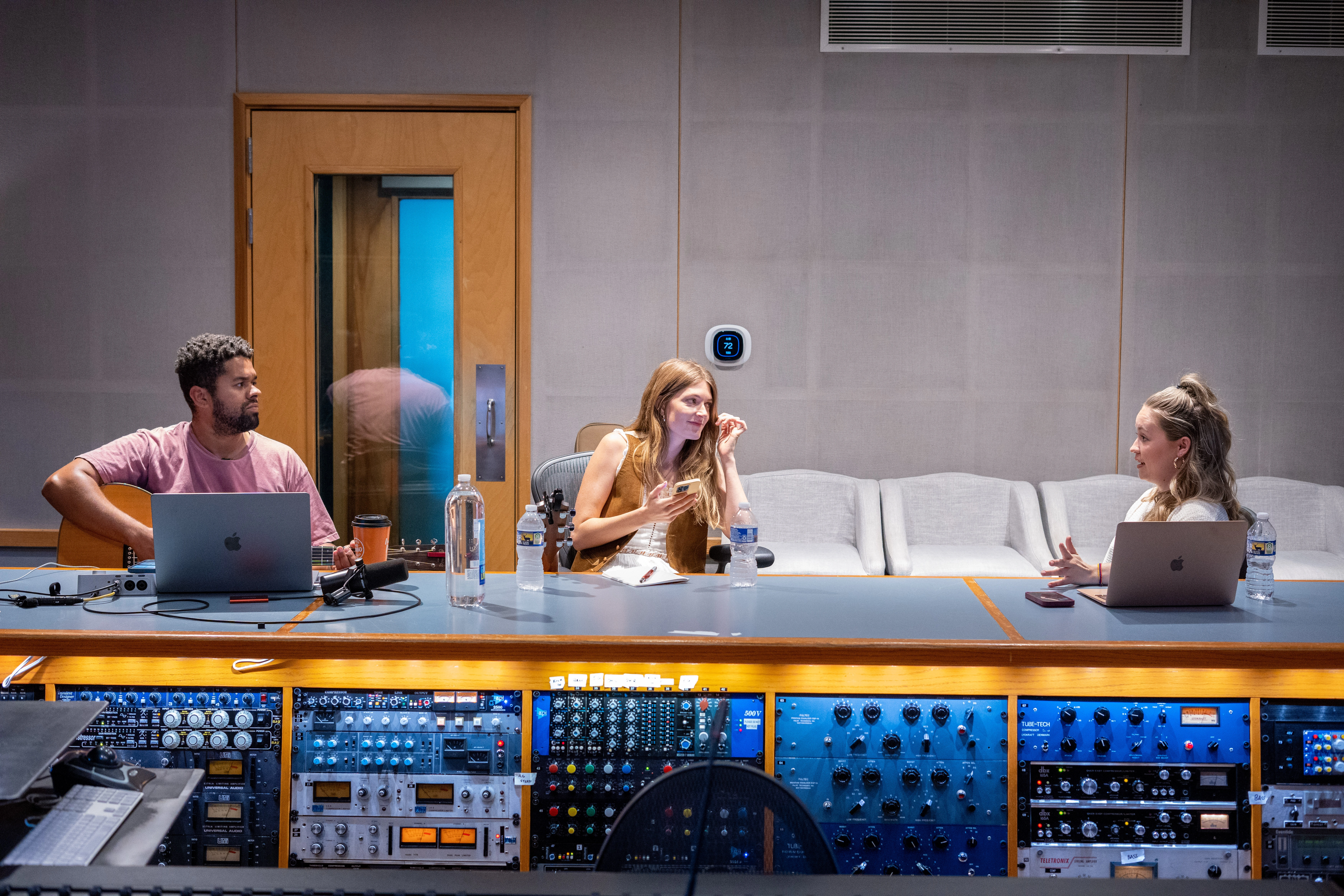 Both programs offer exceptional training in Nashville with direct access to Music Row, but they're designed for different goals and learning styles. This comparison will help you understand which path aligns best with your career aspirations and educational preferences.
Exploring other programs?
Compare all Creative Careers Programs
Which Program Is Right for You?
- Want to focus primarily on the craft and business of professional songwriting
- Are interested in writing for publishers, artists and commercial applications
- Prefer a business-oriented approach to the music industry
- Want extensive training in audio production and demo creation
- Value flexibility in performance requirements
- Are interested in specialized songwriting applications (sync, artist development, Music Row)
- Prefer a portfolio-based admission process
- Want a comprehensive music education with songwriting as your focus
- Are interested in performance and formal recitals
- Value extensive music theory training and classical foundations
- Want to develop strong instrumental skills alongside songwriting
- Are comfortable with audition-based admission
- Want built-in classical training within a commercial music context
Program Comparison
| Feature | Songwriting (BA/BS) | Commercial Music - Songwriting Emphasis (BM) |
|---|---|---|
|
Degree Type |
Bachelor of Arts or Bachelor of Science |
Bachelor of Music |
|
College |
Mike Curb College of Entertainment & Music Business |
College of Music and Performing Arts |
|
Location |
34 Music Square East (Music Row) |
School of Music + Music Row facilities |
|
Admission Process |
Portfolio submission (2 original songs + video + short-answer questions) |
University application + audition on primary instrument + songwriting materials submission for emphasis approval |
|
Music Theory |
3 credit hours (songwriting-focused approach) |
15 credit hours (comprehensive music theory sequence) |
|
Business Coursework |
Extensive - part of Mike Curb College curriculum including:
|
Music business fundamentals:
|
|
Audio Engineering |
4 courses:
|
1 course:
|
|
Performance Requirements |
Multiple performance opportunities; ensembles and lessons optional; no formal recital requirement |
Required ensembles, private lessons, junior and senior recitals |
|
Instrument Requirements |
None required |
Classical and commercial instrument training + piano required |
|
Songwriting Courses |
8 specialized courses including:
|
4 core songwriting courses:
|
|
Genre Focus |
All commercial genres (country, pop, Christian, etc.) with emphasis on professional songwriting |
All commercial genres with broader music foundation and performance emphasis |
|
Co-Writing Emphasis |
Central to curriculum |
Included in emphasis |
|
Recording/Production Skills |
Demo recording skills emphasized through multiple audio engineering courses |
DAW and studio techniques included through survey course |
|
Industry Connections |
Direct Music Row access; major publisher partnerships |
Direct Music Row access; major publisher partnerships |
|
Additional Requirements |
Music History, Professional Musician Class |
Music History, Classical Instrument Study, Professional Musician Class |

What Both Programs Share
- Location advantages: Direct access to Music Row and Nashville's music industry
- Industry connections: Partnerships with major publishers and industry professionals
- Music City immersion: Learning in the heart of the commercial music capital
- Collaborative environment: Co-writing opportunities with talented peers
- Professional development: Real-world experience and industry networking
- Belmont's reputation: Recognition as a leading music education institution
Explore These Programs
We're here to help you make the best choice for your goals. Reach out to the Admissions Coordinator and visit campus.