
What You'll Learn | Program Details | Career Possibilities | Testimonials | FAQ
Why Study Art History at Belmont?
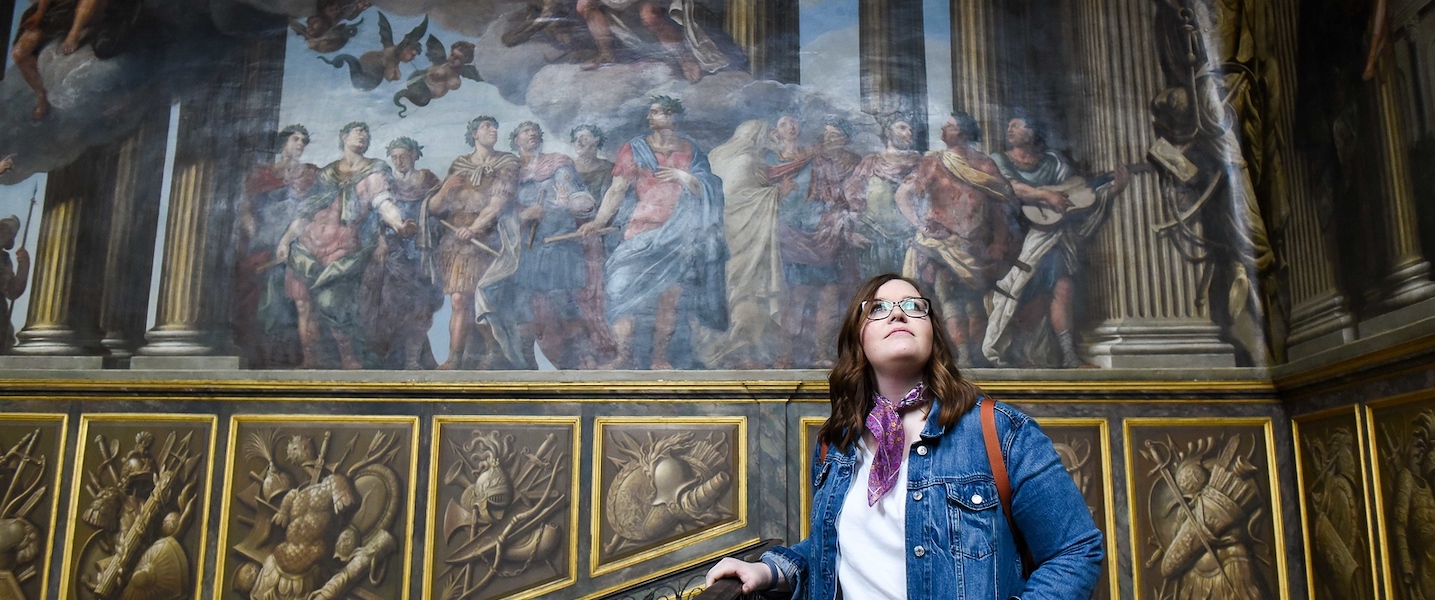
Art is more than a painting on a wall or a sculpture in a museum. It tells stories about people, cultures, beliefs, politics and society.
At Belmont, you'll learn how to analyze art as a reflection of the human experience while developing skills that extend far beyond the art world. Art History students learn to research deeply, think critically, communicate clearly and understand different perspectives.
Whether you're interested in museums, galleries, education, law, nonprofits or creative industries, Art History provides a strong foundation for understanding how visual culture shapes the world around us.
Three Reasons Students Choose Art History
Learn Through Art, Culture and History
Study how art connects to every aspect of human experience across different cultures and time periods.
Build Highly Transferable Skills
Develop research, writing, presentation and analytical skills that employers value in many industries.
Experience Art Beyond the Classroom
Participate in internships, museum projects, study abroad programs and community-engaged learning experiences.
Request Information
Learn From Art, Not Just About Art
One of the most exciting aspects of Belmont's Art History program is the opportunity to experience art firsthand.
Students don't simply read about art in textbooks. They engage directly with museums, galleries, exhibitions, archives and collections.
Courses encourage students to ask questions, make connections and explore how culture, history and visual expression intersect.
Areas of study include:
- Global art and culture
- Contemporary art
- American art
- African American art
- Asian art and architecture
- History of photography
- Women in art
Study Art Where Art Happens
Art History students have opportunities to learn inside museums, galleries and cultural institutions.
Internship opportunities, museum partnerships and community engagement experiences help students connect academic learning with professional practice.
Students may gain experience in:
- Museum education
- Curatorial work
- Exhibition planning
- Collections management
- Public programming
- Arts administration
See the World Through Study Abroad
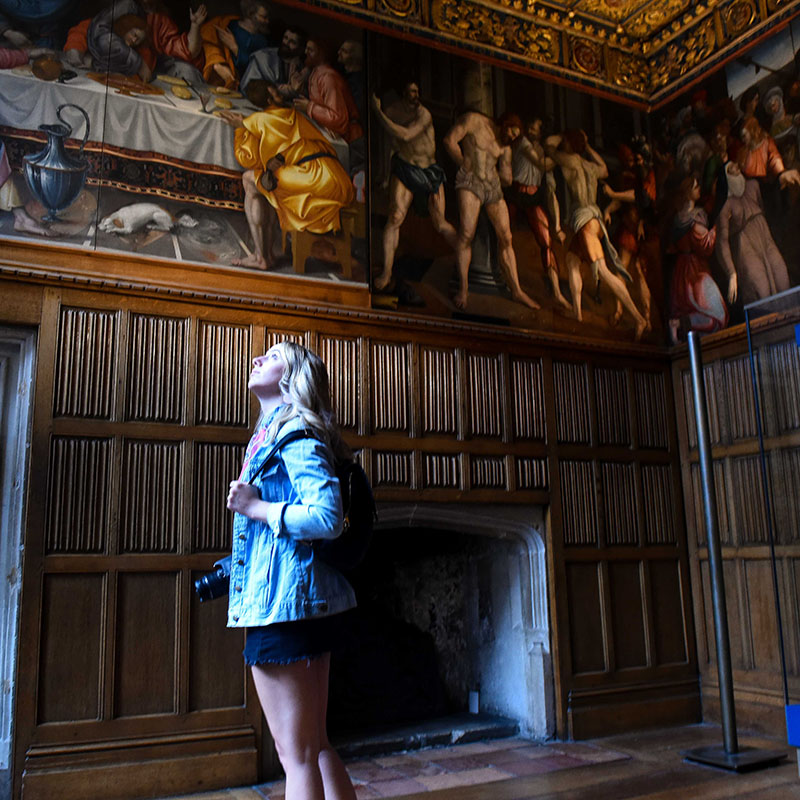
Some works of art can only truly be understood when you stand in front of them.
Art History students have opportunities to participate in Maymester, summer and semester-away programs that may include destinations such as:
- Greece
- Italy
- United Kingdom
- Germany
- Japan
- Other rotating international locations
These experiences allow students to encounter important works of art, architecture and cultural landmarks in their original contexts.
As one graduate shared:
"Nothing compares to learning about a painting or historic site while standing right in front of it."
Hands-On Curatorial Experiences
Art History students don't just study exhibitions. They help create them.
Students have participated in real-world curatorial projects, including exhibition development, exhibition installation and public programming experiences.
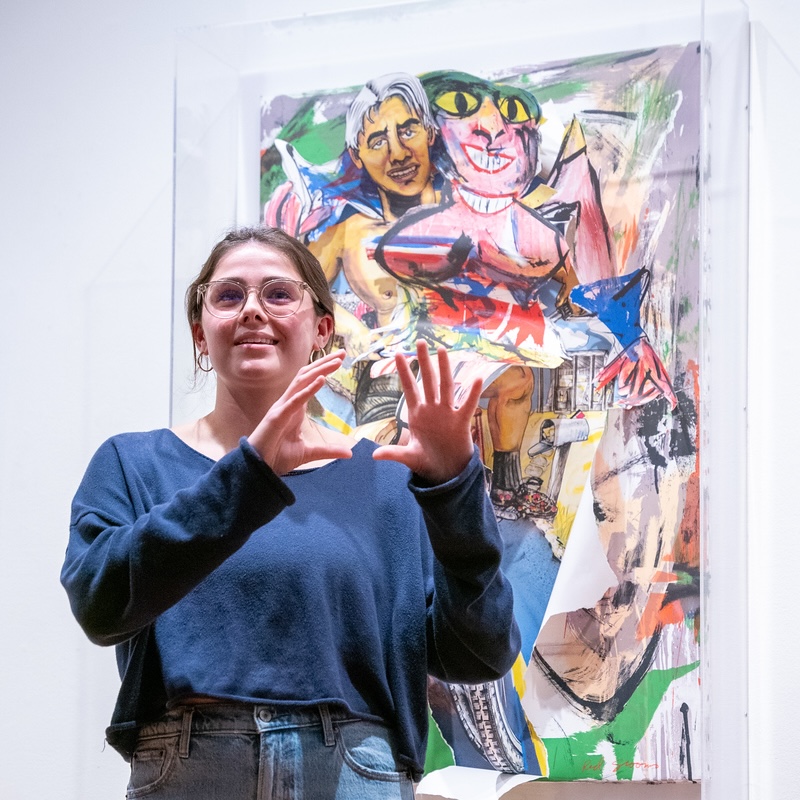
A recent museum studies course transformed a semester into a professional curatorial project that brought the work of Nashville artist Red Grooms to campus.
These opportunities help students understand how exhibitions move from ideas to public experiences.
What Will You Learn as an Art History Major?
Through the Art History program, you will:
- Analyze artworks from diverse cultures and historical periods.
- Understand how art reflects social, political and cultural change.
- Conduct archival and database research.
- Develop professional presentation and communication skills.
- Create original research and scholarly writing.
- Explore museum and gallery practices.
- Learn curatorial and exhibition development methods.
- Apply art historical frameworks and critical analysis techniques.
Program Details
Curious about your coursework? View requirements for this degree in the course catalog.
Explore visual art and architecture across time and cultures.
- Surveys: Art History: World Art Pre-Modern and Art History: World Art Early & Modern
- Core courses: Museum Studies, Art History Research and Methodology and Contemporary Art
- Electives: Art history courses that fit your interests, plus one studio course
- Finish with: A senior capstone and a minor
For complete course descriptions, see the current catalog.
- Study abroad (Semester, Maymester, or Summer). Art History has led trips to Greece, Germany Italy, United Kingdom, France and Japan.
- Study away for a semester in alternate markets through Belmont USA (N.Y.C., L.A., Washington D.C.).
- Internships- Our relationship to Nashville’s professional creative community is personal and rich. We will assist you with internship placement to ensure the experience is a good fit.
- Four campus gallery spaces to professionally exhibit your work.
- Opportunities to present at campus-wide research symposiums and professional conferences.
- Kappa Pi, an international honorary art fraternity.
In addition to Belmont University's Southern Association of Colleges and Schools Commission on Colleges (SACSCOC) accreditation, the Watkins College of Art is a fully accredited institutional member of the National Association of Schools of Art and Design (NASAD).
The Watkins College of Art has significant scholarship opportunities for students. Last year, the college offered more than 55 scholarships to incoming students valued over $380,000.
Applicants who intend to pursue a degree in the Watkins College of Art and wish to be considered for the merit-based scholarship must submit an additional essay. Students must have their Belmont application and essay submitted by December 1 to be eligible for the scholarships.
Please visit the Portfolio and Essay Guidelines page for more specific details.
Need-based scholarships will be determined from a student's Free Application for Federal Student Aid (FAFSA). This is the official form that families use to apply for college financial assistance from the federal government.
Art has served a unique role in every society from the beginning of time to the present. Visual art and architecture defines human history and communicates the essential truths of every culture and society.
This minor provides students an opportunity to explore focused topics in Art History by means of the two standard survey courses, four seminars in specialized topics such as Greek and Roman art.
Coursework may be completed entirely at Belmont or in combination with a Study Abroad Program.
Hands On Projects
Belmont students transformed one spring semester into a real-world curatorial experience, bringing the vibrant works of Nashville native Red Grooms to campus.
This project, born from the college's first museum studies class, enriched the students' academic journey and brought a slice of Nashville's artistic heritage to the public.
Bailey Tichenor
Art History
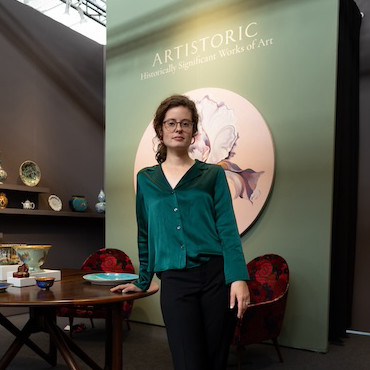
Co-Founder & Director of Artistoric
“Belmont gave me a firm foundation for my career and fostered my appreciation of art and material culture. There was a real community of fellow students who were invested and interested in each other’s research. Some of my favorite memories were my during study abroad programs (Greece, London, Paris). Nothing compares to learning about a painting or historic site while standing right in front of it!”

Gwyneth Cunningham
Art History
"Through the Art History program, I have developed a sense of purpose and belonging which has helped me to feel empowered in my studies. Art History provided me with critical tools that apply and translate to every subject, giving me a new perspective on how to engage with the world both academically and socially."
Faculty Mentorship and Support
Art History faculty help students become thoughtful researchers, engaged scholars and culturally aware professionals.
Through small classes and individualized mentorship, students receive guidance as they develop research interests, pursue internships and explore career possibilities.
Faculty encourage students to think broadly about how art connects to society while helping them discover where their own interests fit within the creative and cultural landscape.

Meaghan Brady Nelson
Email: meaghan.brady.nelson@belmont.edu
Office Location: Leu Center for the Visual Arts 119
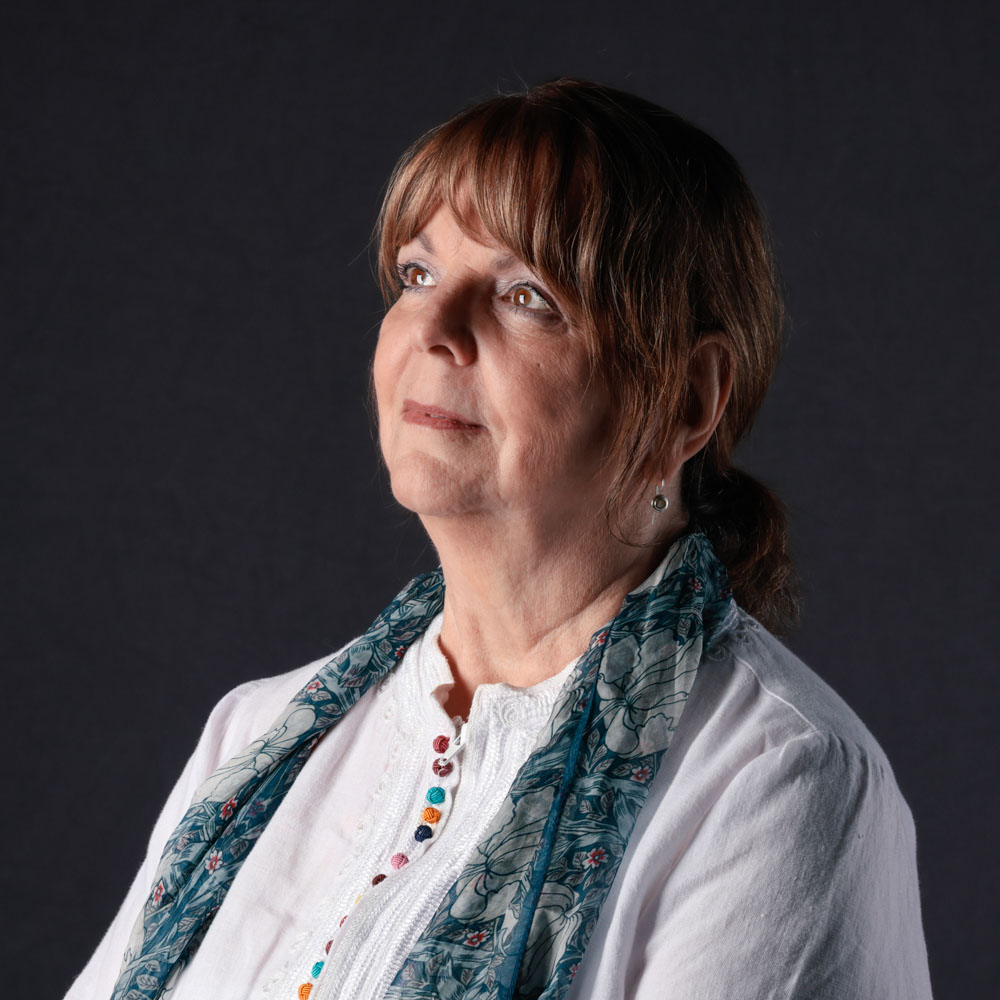
Judy Bullington
Email: judy.bullington@belmont.edu
Office Location: Leu Center for the Visual Arts 105

Benjy Davies
Email: benjy.davies@belmont.edu
Office Location: Leu Center for the Visual Arts 108

Kristi Hargrove
Email: kristi.hargrove@belmont.edu
Office Location: Leu Center for the Visual Arts 117

Jack Latham
Email: jack.latham@belmont.edu
Office Location: Leu Center for the Visual Arts 110

LaKesha Lee
Office Location: Leu Center for the Visual Arts

Armon Means
Email: armon.means@belmont.edu
Office Location: Leu Center for the Visual Arts 118

Christine Rogers
Email: christine.rogers@belmont.edu
Office Location: Leu Center for the Visual Arts 111

Mandy Rogers Horton
Email: mandy.rogershorton@belmont.edu
Office Location: Leu Center for the Visual Arts 114

Brandon Williams
Email: brandon.williams@belmont.edu
Office Location: Leu Center for the Visual Arts 109
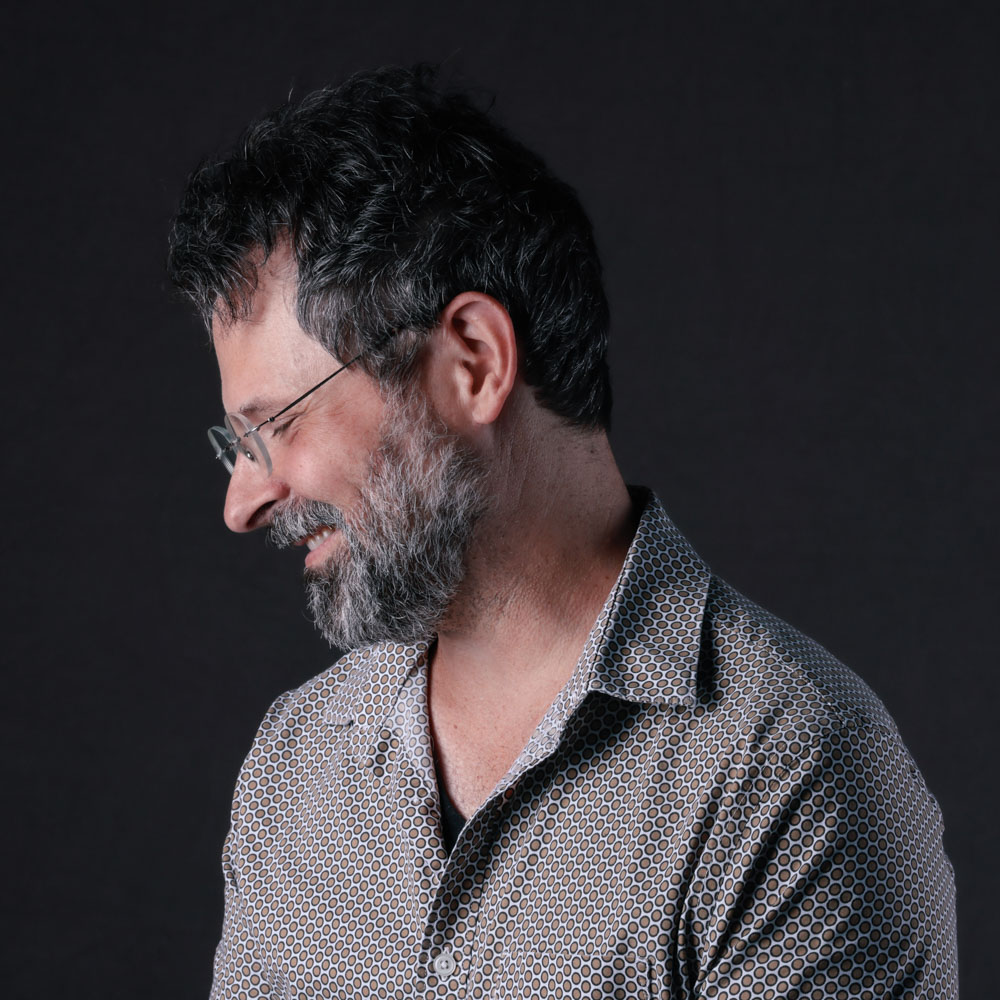
Tom Williams
Office Location: Leu Center for the Visual Arts 114
FAQ
No. While many graduates pursue museum and gallery careers, the degree also prepares students for careers in law, nonprofit leadership, communications, education, consulting and other professions.
Yes. Students have opportunities to pursue internships with museums, galleries and cultural organizations, including opportunities within Nashville's arts community.
Yes. Students may participate in study abroad experiences that allow them to study art, architecture and culture in locations around the world.
You'll develop critical thinking, research, writing, public speaking, cultural awareness and visual analysis skills that transfer across many professions.
Belmont combines academic study with hands-on museum experiences, curatorial projects, study abroad opportunities and close faculty mentorship. Students learn not only how to analyze art, but also how to engage with the institutions and communities that shape cultural life today.
Contact Us
Ellie Aldrich
Admissions Coordinator
615.460.6772
Email Ellie
Plan Your Visit
There's no better way to experience Belmont than by visiting campus. Whether you attend an admissions event, take a student-led campus tour or explore Nashville while you're here, a visit helps you picture yourself as part of the Belmont community.