
Five teams developed innovative approaches to address resource accessibility, aging out challenges, community awareness
Belmont University design students spent a semester developing solutions to enhance Tennessee's foster care system, creating innovative approaches that could transform lives for children and families across the state.
The projects, developed in Professor Dale Addy's Usability and Interaction Design class, addressed different aspects of the complex system, from resource accessibility and community awareness to helping young adults age out successfully. Each team of three students presented solutions ranging from comprehensive websites to physical community spaces and educational programs.
Learning from Lived Experience
Their research began with "a lot of listening,” according to senior design communications student Esther Kuperus, whose team developed "The Foster Collective of Tennessee," a comprehensive website hub of vetted resources for foster families and advocates.
The students got to hear first-hand experiences from Belmont community members directly involved in foster care, including Dr. Cathy Eschete and Professor Amanda Waterman, both foster parents, and student Ella Bat-Ami, who grew up in the foster care system and is now a foster care advocate herself.
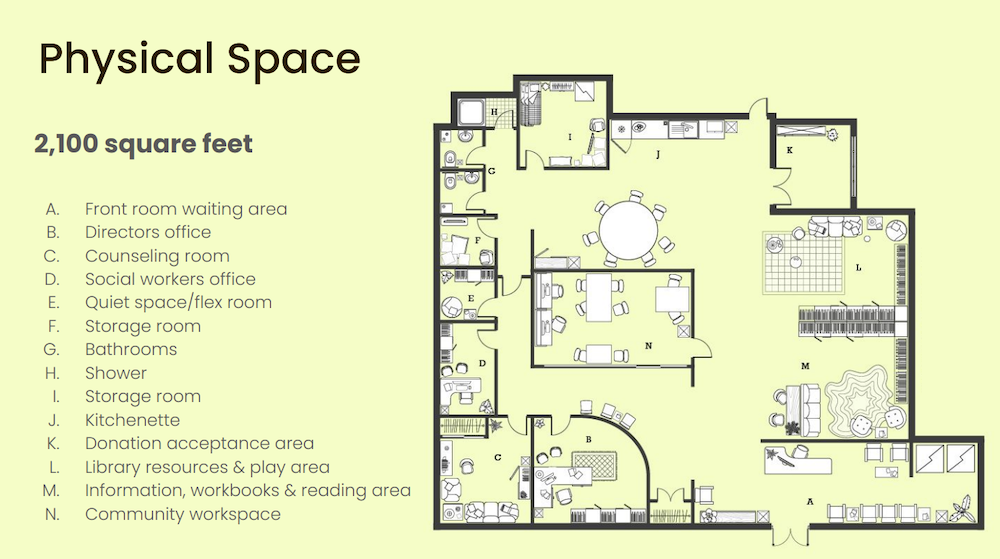 "The interviews and stories that we heard were ultimately what shaped our solution," said Taylor Rose, whose team created "The Village Roots," a physical community space concept where foster families could access resources, donated items and educational modules.
Solutions Tailored to Real Needs
These conversations revealed the multifaceted challenges within the system, from resource accessibility to aging out of care. Junior design communications major Grace Allensworth's team focused on the latter, developing "New Leaf," a website designed to help older foster youth and aged-out young adults navigate adulthood.
"Processes that are part of growing up — getting a job, buying a car, renting an apartment — are difficult to navigate without mentors and resources to guide you, which leaves these groups stranded," Allensworth explained. 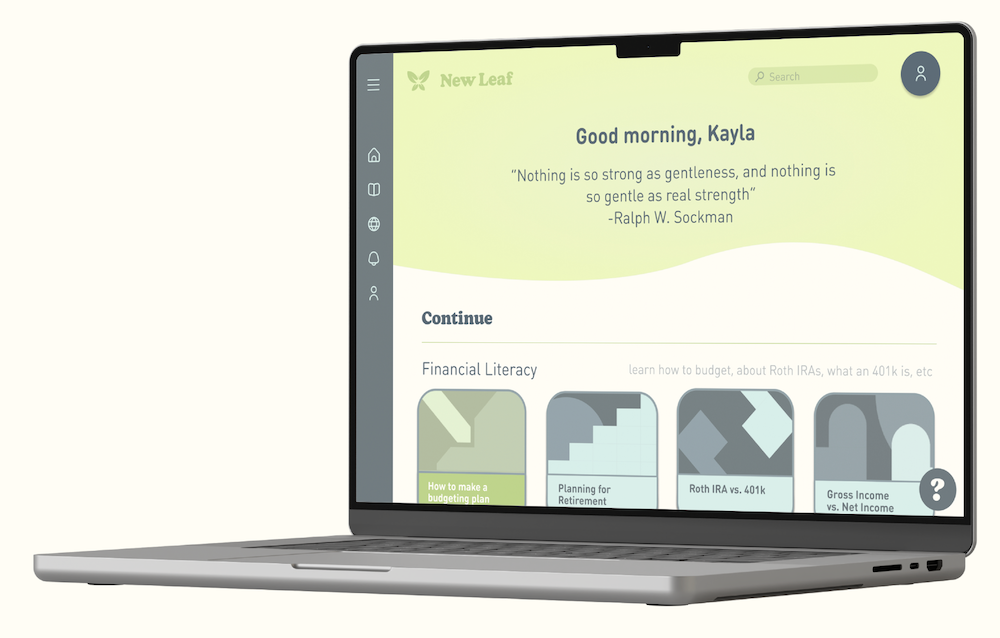
Her team initially planned to create a mobile app but discovered through research that their target audience often lacks reliable access to cellphones. "It could be a great product, but if our intended audience can't access it, what would be the point?" Allensworth said. The team pivoted to a web-based platform accessible through computers in educational facilities and public spaces.
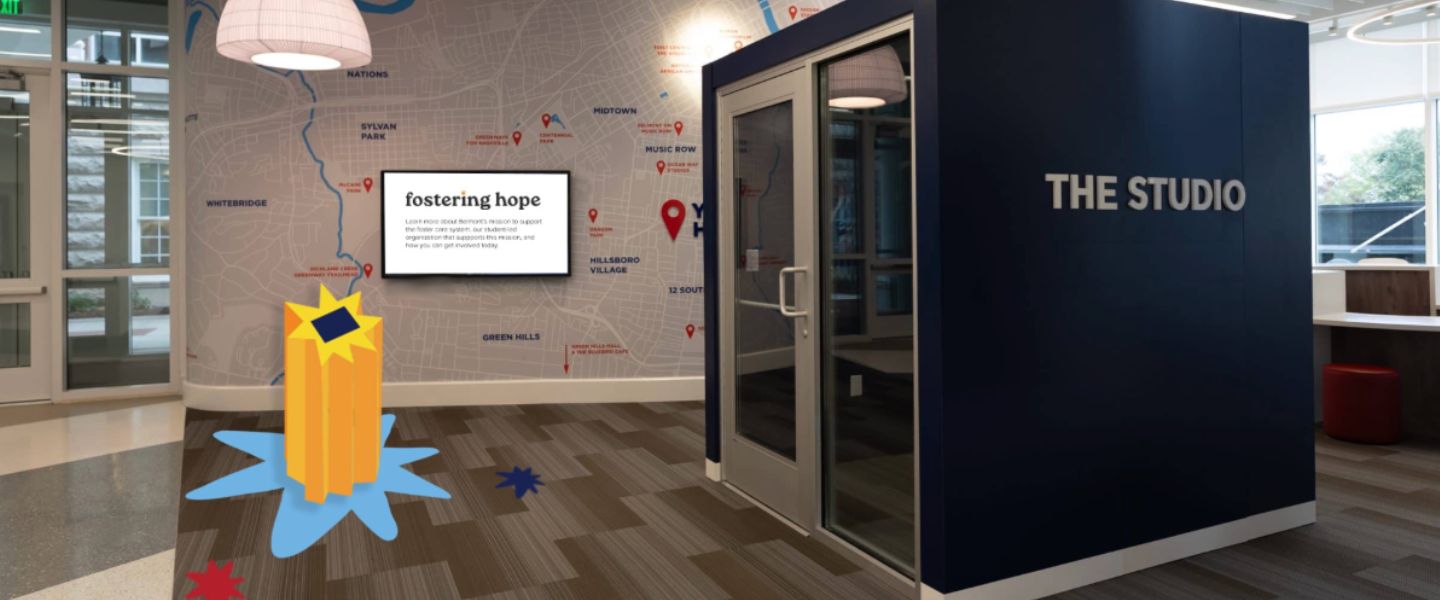
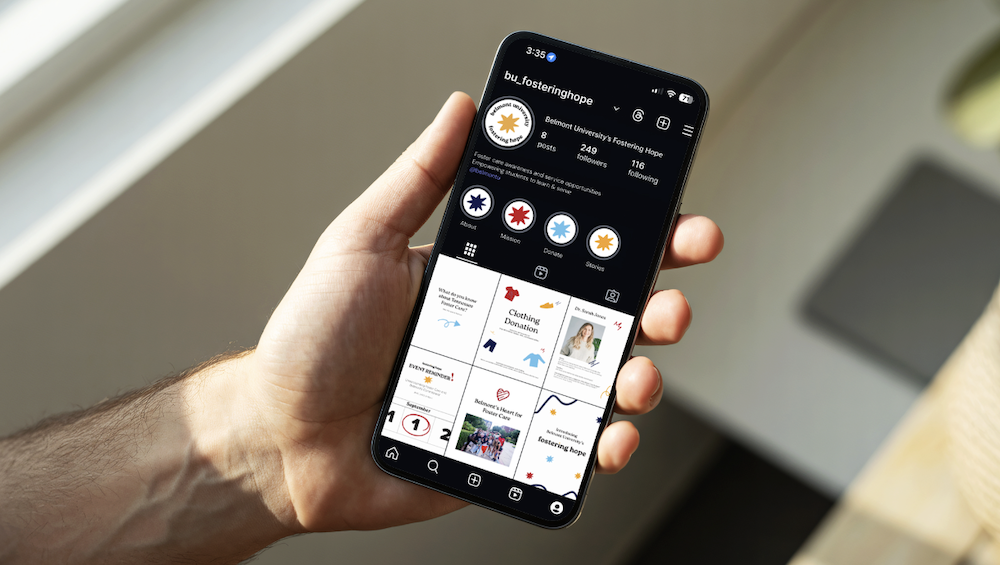
Junior design communications major Hagan Riley's team took a different approach, recognizing that awareness must come before action. Their solution, "Fostering Hope," proposed an eight to nine-week program combining educational seminars and service opportunities for Belmont students.
"My group members and I determined that none of those problems would have effective solutions if people weren't aware of them, and we knew other students were lacking knowledge about these subjects," Riley said.
The program would culminate in interactive displays around campus showcasing students' service work, aiming to inspire continued engagement with foster care issues.
Navigating Complexity and Building Empathy
For many students, the project's greatest challenge wasn't technical but emotional and intellectual. The complexity of the foster care system initially overwhelmed teams trying to identify focus areas.
 "The most challenging obstacle was honestly deciding which aspect of the foster care system to tackle," Kuperus said. "There are just so many layers to it."
Riley's team faced similar struggles during ideation. "We had so many ideas of different things to include in the project that we were overworking ourselves and, occasionally, losing sight of what the project really is," she said.
Through faculty guidance and team discussions, students learned to narrow their focus while maintaining empathy for their target users.
Design as a Force for Change
While these remain student projects, their thoughtful research and innovative approaches demonstrate how design thinking can address complex social issues. The students hope their solutions could eventually provide real support to Tennessee's foster care community, offering everything from streamlined resources to increased community awareness and engagement.
“I learned so many important lessons about teamwork and research while doing this project, but the most valuable one, arguably, was about empathy,” shared Riley. “Designing with real people in mind requires a level of attention and empathy that you may not usually have. I learned to be thoughtful and intentional to meet the needs of the people we were designing for.”
As these future designers prepare to enter their careers, they carry with them technical skills alongside a deeper understanding of their potential to create meaningful change in people’s lives.
Learn More
Explore Watkins College of Art