
How a medical student balances faith, relationships and a life of study
Throughout their four years of medical school, we are keeping up with members of the inaugural class of the Thomas F. Frist, Jr. College of Medicine. These students, each with their unique backgrounds, aspirations and perspectives, are not just pursuing their dreams of becoming physicians — they're helping to shape the future of medical education at Belmont University.
Now in their second year, they are moving from foundational coursework into clinical rotations, taking their first board exams and stepping into the hospitals and clinics where they will train as future physicians. Their stories offer a window into the evolving world of medical education and the innovative approach of Belmont's newest college.
Read Ubaid's first-year profile to see where his journey began.
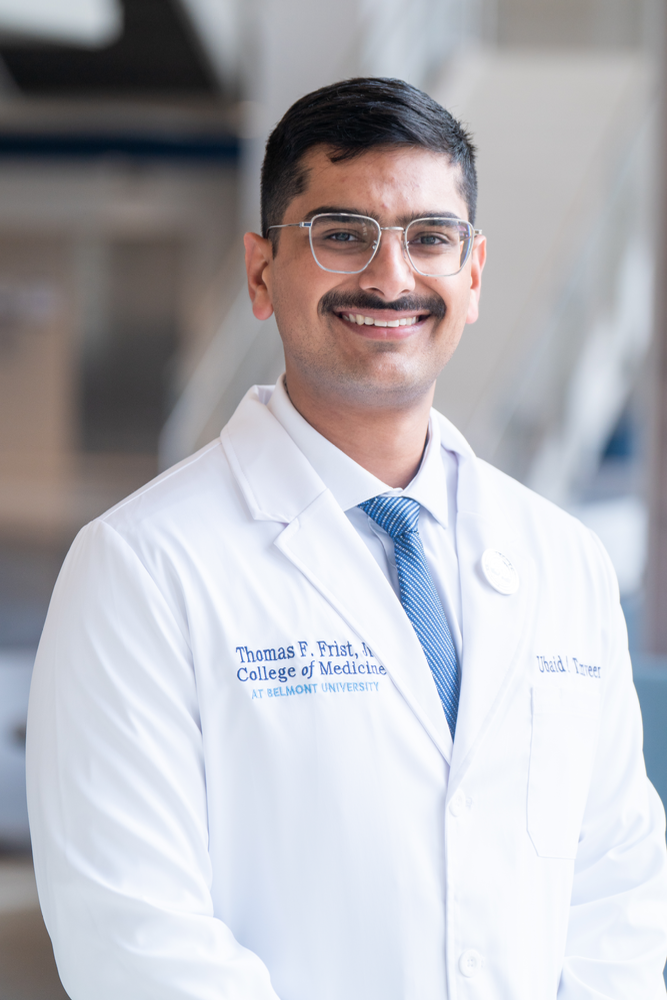 When we last talked to medical student Ubaid Tanveer, it was the fall of his first year at Belmont University’s Thomas F. Frist, Jr. College of Medicine. At the time of our most recent conversation, two years later and past the pre-clinical stage, he was fully immersed in one of the most intense preparatory periods of the program.
The dedicated phase — a time of self-guided study to prepare for the upcoming board exams — tests the limits of a student’s discipline. Tanveer’s daily routine at this point was consumed by carefully organized hours of studying, three in the morning and five after lunch.
“I don’t think I would have even remotely understood some of my current practice questions last time we spoke,” he said. “Although I’ve completed almost two years of medical school, I’m still learning, still pushing myself.”
Summer at Mount Sinai
Last summer, Tanveer was accepted into a radiation oncology research elective at Mount Sinai Hospital in New York City. This experience opened him up to a new world of oncology that he had never explored before.
Tanveer’s research responsibilities were mostly on the policy side, which taught him about political leniency in medical practice and how that affects patients. This new perspective, coupled with the days he spent shadowing the radiation oncologists, helped solidify a priority he already had — patient/physician interaction.
“I love building relationships with people in general, so that's one of the most important things I can do with a patient,” he said. “It’s such a luxury to be able to sit with them during the hardest times of their lives and get to know how they live and who they are.”
A People-First Approach
This careful attention to each patient’s personhood was instilled in Tanveer by his father, also a physician. “There were many occasions growing up when somebody in our congregation had become sick or had passed away and he would always, I mean always, find the time visit them or attend the funeral.”
From being brought along on these trips, Tanveer gleaned formative lessons on the intersection of faith and medicine.
“There are so many verses about visiting the sick and caring for those in need that I see exemplified in the field of medicine,” he said. “That’s something that my dad really stressed when reading the Quran.”
There’s a practical wisdom to the physician who knows their patients well. Before starting at Belmont, Tanveer worked for a medical oncologist in Memphis who mostly served patients from low socioeconomic backgrounds.
“There were so many times when a patient would open up about their private lives and being privileged with that information helped us better treat them,” he remembered. “Being in need is a variable that makes it very difficult to navigate a cancer diagnosis, and it was through getting to know patients’ stories that we were able to figure out treatment routines that would work for them.”
Keeping it all Together
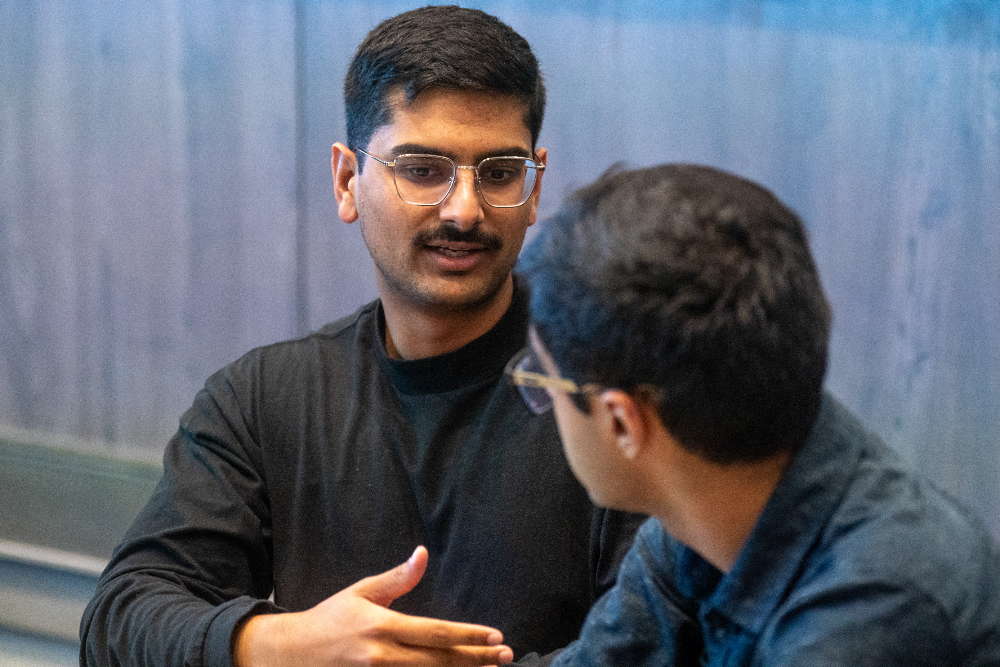 With clerkships looming, Tanveer stood ready to take on a whole new set of time commitments. What does this mean for someone like him — whose life is already full of friends, responsibilities on the executive committee board of the mosque, cooking and video games?
“With a clerkship you can expect to be at the hospital around 40 hours a week, and then you’ll still have to study another 40 hours,” he said. “So one of my goals is finding a balance that answers, ‘How can I still serve my community while being in such a busy time?’”
For him, this wisdom comes from people who have gone before and understand what this time is like. “I’ve built a good rapport with my mentors in New York and Memphis, who are great sources of career advice. I almost have more faith mentors than I can even count, like the Imam who leads our mosque and other community members. I have a lot of friends at the mosque who have gone through this phase too and have learned how to balance it all.”
One set of mentors, however, rises above the rest:
“My parents are the emotional backbone of my world,” he said. “My dad's always there, always reminding me that this road isn't easy, and sometimes you might not perform the way you thought you were going to, but at the end of the day you'll become what you want to be as long as you put the work in.”
With these words echoing in his ears, Tanveer stepped boldly towards the board exams and, with them, the next chapter of his journey at Belmont.
Learn More
Discover medicine at Belmont