
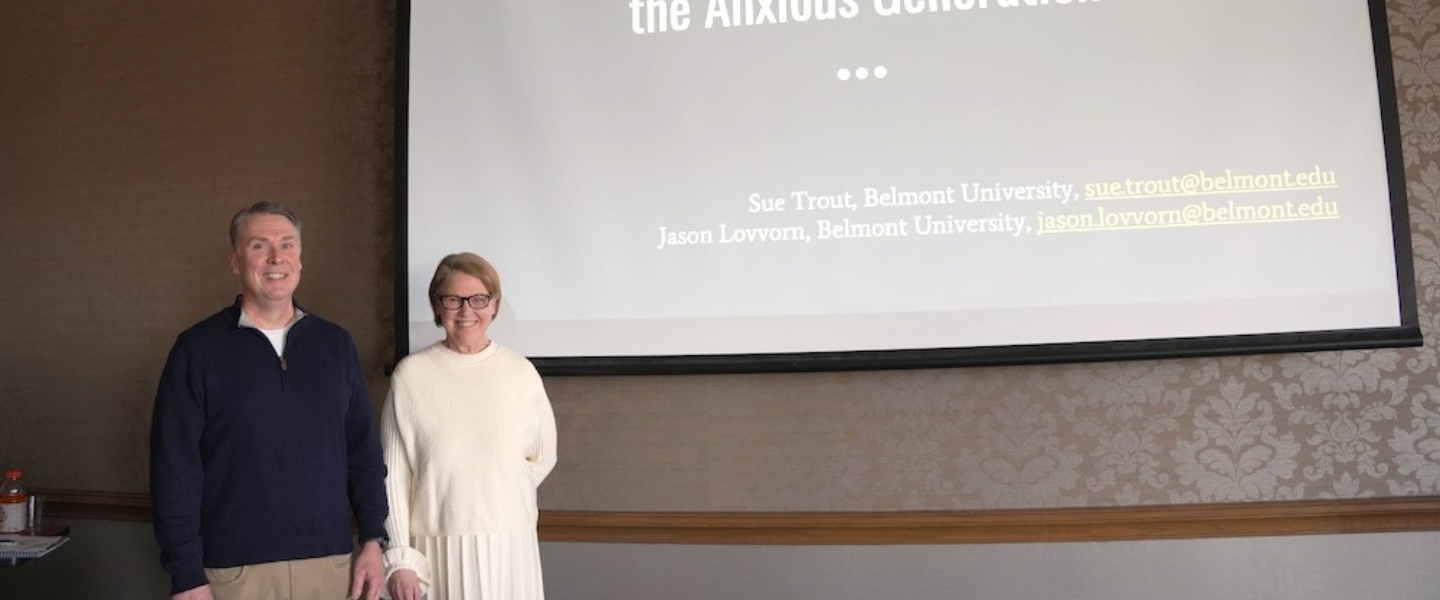
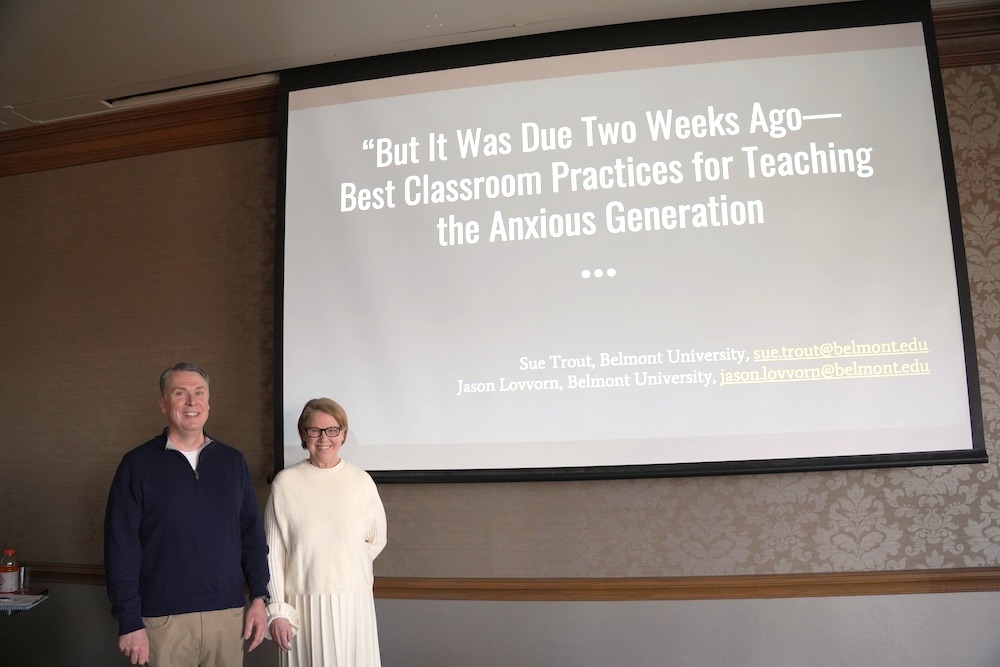
Best Classroom Practices for Teaching the 'Anxious Generation’ explores evolving needs of Gen Z students, how faculty can respond
For over a decade, two English professors, Jason Lovvorn and Sue Trout, have collaborated to explore the scholarship of teaching and learning, seeking to understand what makes education effective and responsive to students’ evolving needs. Their work is supported by Belmont University’s Teaching Center, which equips faculty with resources and encouragement to innovate in the classroom.
A research-informed approach to teaching
“The Teaching Center introduces faculty to the scholarship of teaching and learning by providing informal venues for them to explore and experiment,” said Dr. Jayme Yeo, the center’s director. “Faculty then share their insights with colleagues and students. Students benefit from the skillful practice of teacher-scholars immersed in the literature on learning.”
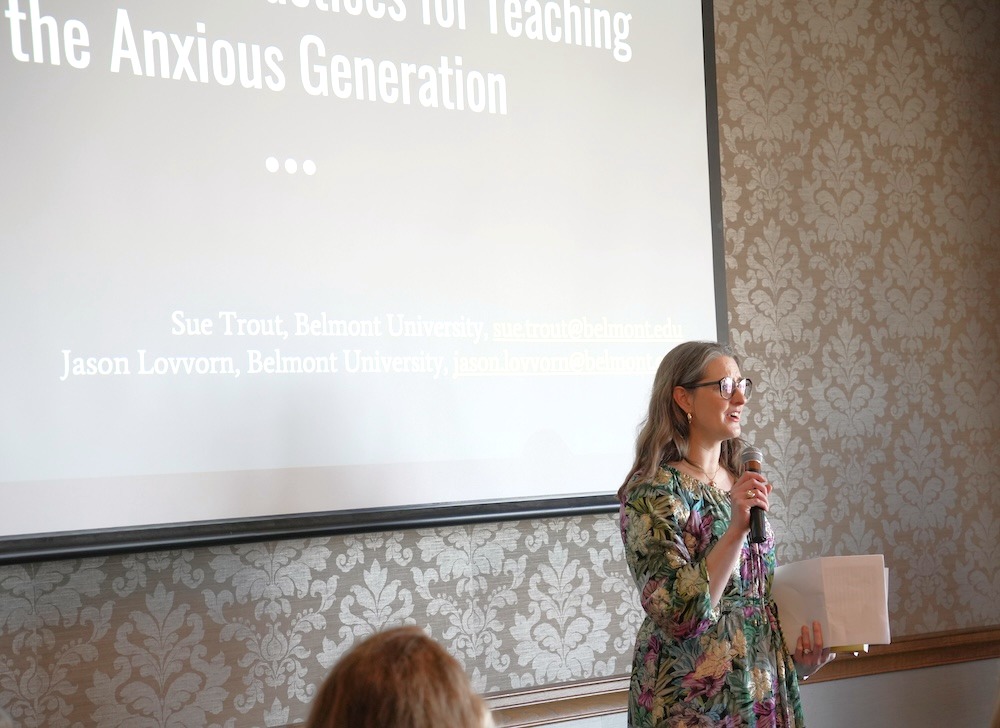
For Lovvorn and Trout, that culture has opened doors to share their work beyond Belmont, including presenting at the Lilly Conference for Teaching, on topics ranging from incorporating pop culture to navigating civic discourse in the classroom.
“Our ideas come from what we see in our own classrooms,” said Trout.
Studying the 'anxious generation'
Their latest project, “Best Classroom Practices for Teaching the Anxious Generation” builds on what they've observed in the post-COVID classroom. The project seeks to understand the evolving needs of Gen Z students and how faculty can better respond.
“Being attuned to students is so important,” Lovvorn explained. “There’s often a discrepancy between faculty perceptions of students’ needs and their actual experiences; we want our research to help bridge that gap.”
That commitment to listening has shaped both their research and teaching. Alongside reviewing national scholarship on student well-being, Lovvorn and Trout gathered direct feedback from students through qualitative surveys.
“We wanted to know: Is what the research says actually what the students are feeling?” Trout said. “Sometimes it is. Sometimes it isn’t.”
Their findings led to practical changes in their classrooms, from redesigning assignments to creating more distraction-free learning environments. In her literature classes, Trout poses a simple request: “Can we just be together for 50 minutes?” – an invitation that has been met with overwhelming student buy-in.
Learning together: a university-wide commitment
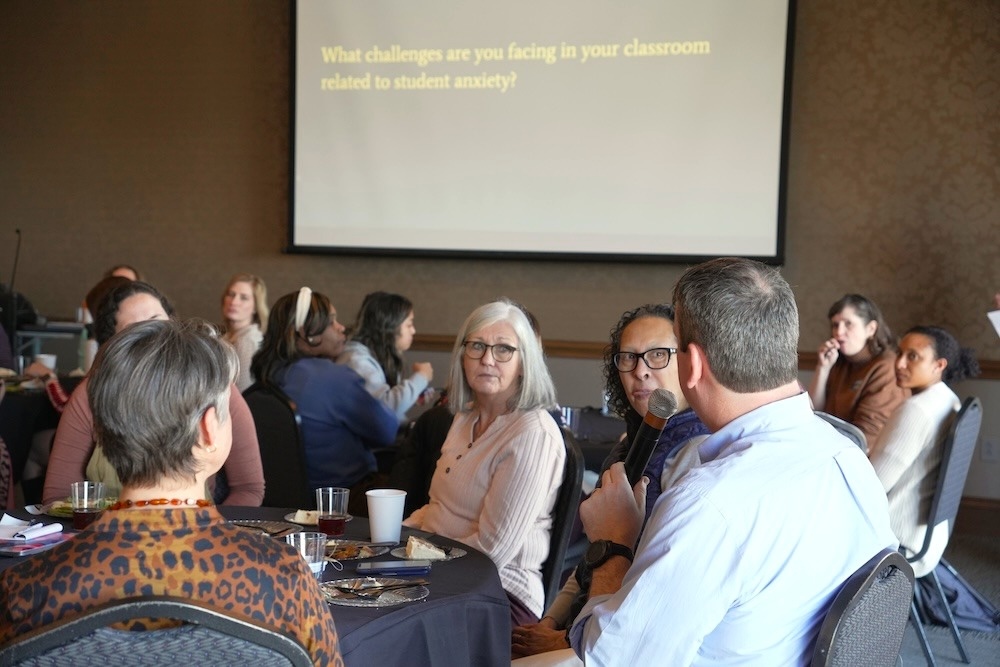
Their impact of their research extends beyond their own classrooms. Recently, Lovvorn and Trout shared their findings with Belmont faculty during a Teaching Center “Lunch and Learn” session, inviting colleagues to reflect on their experiences working with Gen Z students. The conversation revealed similar shifts across disciplines.
This kind of exchange reflects the Teaching Center's long-standing role in fostering a culture where thoughtful teaching is continually refined. Through book groups, conference travel support and open dialogue, it has created a community of teacher-scholars dedicated to growing together.
“Belmont has a strong culture of learning,” Yeo said. “Faculty care deeply about their students and often see themselves as co-learners in the classroom. They’re not just delivering content; they’re exploring what it means to learn alongside their students.”
Lovvorn and Trout embody that spirit. Their decade-long research partnership built on curiosity and creativity reflects Belmont’s broader commitment to formative education.
“Jason and Sue both demonstrate what it means to learn together: with each other and with students,” Yeo added. “That spirit of collaboration is such a powerful model for our community.”
As classrooms continue to evolve, their work offers a steady reminder: effective teaching isn’t static – it's responsive, relational and rooted in listening.
Learn More
Explore the Teaching Center