
Nursing alumnus credits Belmont's hands-on approach with laying the groundwork for a career transforming patient care at the University of Virginia Health System
When a hospital patient receives better care — faster interventions, fewer complications, a more coordinated team at the bedside — that improvement rarely happens by accident. More often, it traces back to someone working behind the scenes to redesign the systems that make good care possible.
At the University of Virginia Health System, that someone is Belmont alumnus Scott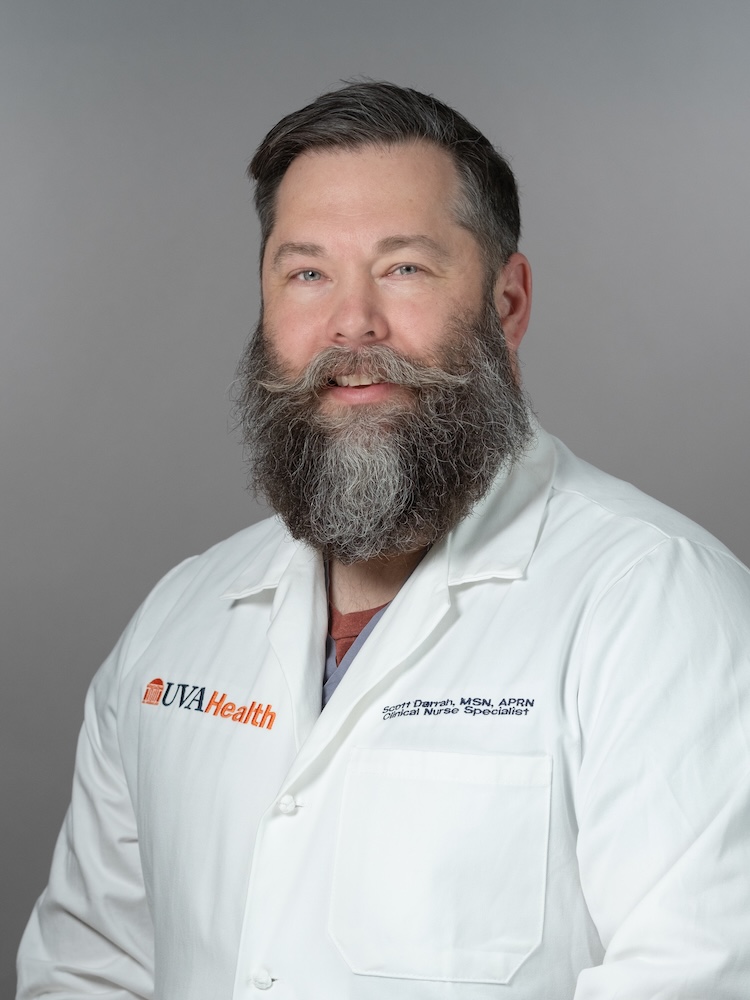 Darrah (BSN ‘09). Darrah serves as the clinical nurse specialist for seven inpatient medicine units at UVA Health, where he oversees clinical practice, quality improvement and patient safety across acute general medicine.
It’s the kind of work that improves outcomes for individual patients while also reducing nurse burnout, strengthening institutional culture and raising the standard of care for every person who walks through the door.
His CNS team has earned national recognition for advancing the clinical nurse specialist role to that of a fully practicing licensed independent practitioner, a model reshaping how health systems leverage advanced practice nurses.
“I realized that as a clinical nurse specialist, I could change the way the system works. I can make the entire health system my patient," said Darrah.
In practice, that means building frameworks that elevate nursing care across the board — from developing onboarding pathways that set new nurses up for early success, to designing sepsis alert systems that use electronic health records to flag at-risk patients before a crisis escalates.
“My thinking was that augmenting the health care platform and systems approach changes the lives of everyone using the system instead of deeply caring for a handful of individual patients at one time,” said Darrah.
In addition to these responsibilities, he also holds the vice presidency of UVA's Advanced Practice Providers Council, contributes to the health system's Mortality Coalition Sepsis team and played a critical role helming multiple COVID units during the pandemic.
An Unconventional Start
Darrah didn't follow a traditional path into nursing. He transferred to Belmont from Tennessee State University in his mid-20s, a nontraditional student working 50 hours a week in retail while in school. He was ready for something that felt more purposeful.
"I felt like my work wasn’t adding value to the world around me, and I was ready for a change," Darrah said.
At Belmont, he found a program that was both welcoming and demanding. Faculty set a high bar and expected their students to meet it, not just clinically, but professionally.
"They're not only growing your clinical aptitude, but how you conduct yourself as a potential leader," Darrah said. "You're going to pass the tests. You're set up for success. But it's bigger than that."
Sim Labs, Mentors and a Career-Defining Practicum
For a student juggling a full-time work schedule, Belmont's simulation labs proved especially valuable. While many of his peers gained clinical exposure through health care jobs, Darrah leveraged the program's high-fidelity simulations to build confidence and gain experience.
But it was a single faculty member who changed his trajectory. Dr. Lucyellen Dahlgren, who taught while still practicing as a clinician, led the neuroscience ICU practicum at Vanderbilt and showed Darrah that nursing could be more than a career. 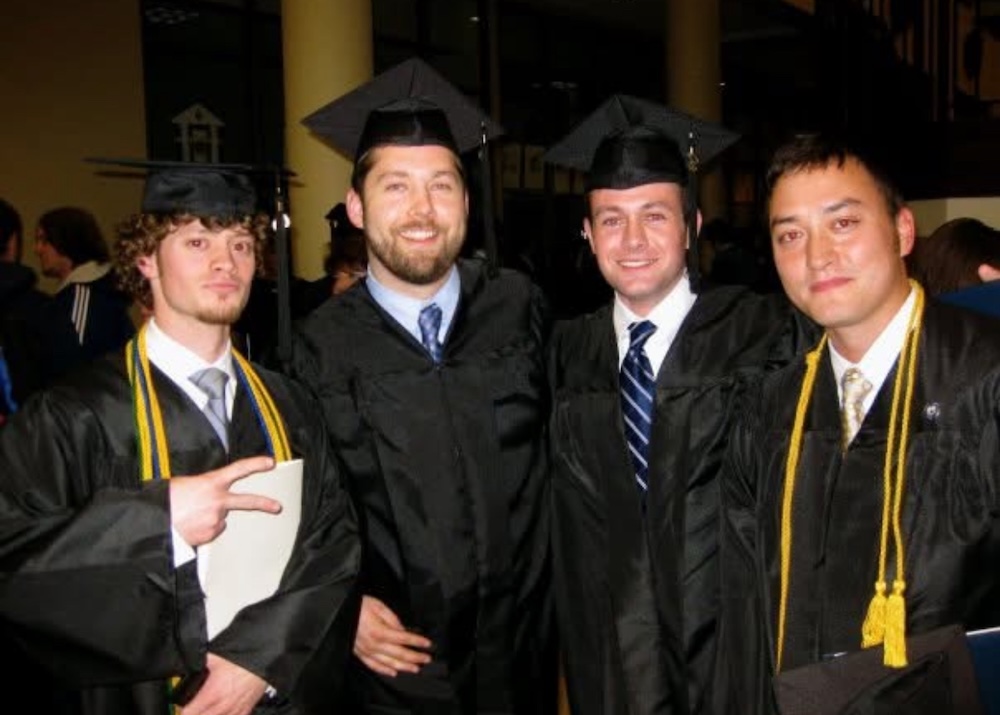
"She modeled that this can be a life, not just a job you do," Darrah said. "She was making a difference in real time."
Dahlgren's practicum anchored Darrah's clinical identity and gave him the confidence to aim high. After graduating in winter 2009, he took a bedside position in UVA's Medical ICU and never looked back.
From the Bedside to the Big Picture
Darrah spent more than five years as a bedside nurse at UVA, gaining experience as a charge nurse, precepting new graduates and serving on committees at the unit and system level. When he enrolled in graduate school, he initially pursued a nurse practitioner track — then made a deliberate pivot after realizing he wanted to work at a larger scale.
"About a year into my nurse practitioner program, I realized I didn't want to be a nurse for a smaller volume of patients," Darrah said. "I could zoom out and really change the way the system works. Everybody wins."
That systems-level thinking — the instinct to ask how care can be better for everyone — is something Darrah traces directly to Belmont. It's the same philosophy now reflected in the College of Nursing's Doctor of Nursing Practice program, which prepares graduates to lead at every level of the profession.
Advice for Today's Nursing Students
For current Belmont students, his advice centers on the city itself: lean into it.
"Your patients are going to come from all walks of life," Darrah said. "Go out of your way to embrace that while you're in college. The diversity of experience you gain here prepares you for the real world in ways a textbook never could."
Nearly two decades removed from Belmont, Darrah remains grateful for the foundation that set his career in motion.
"All of this is possible with the foundation and rigor from Belmont's educational approach," Darrah said. “It got me where I am today.”