

Law, Security and Justice in the Digital Age: Redefining Enforcement and Accountability
Belmont’s College of Law welcomed members of the legal profession to the annual Belmont Law Journal Symposium, March 27. This year’s theme, “Law, Security and Justice in the Digital Age: Redefining Enforcement and Accountability,” provided a forum for experts, leading voices and practitioners to examine the growing role of digital tools in the criminal justice system.
“The symposium attracts a wide range of legal professionals in Nashville who are interested in these legal issues,” said Ellen Black, associate professor of law and symposium advisor.
Leadership through the Law Journal
 Planning a symposium is no small task, especially for law students with an already demanding workload. It requires months of coordination and careful decision-making, but the effort pays off.
From securing speakers to managing event logistics, Law Journal members build meaningful connections in the legal community while gaining hands-on experience organizing a large-scale event.
“Belmont Law Journal students are representative of what makes the College of Law so special,” Black said. “They are willing to put forth tremendous effort to making the symposium a success and making an impact in the legal community.”
Examining Technology’s Legal Application
The lineup of keynote speakers and panelists consisted of a wide variety of legal professionals, including criminal defense attorneys, prosecutors, judges, special agents and academics.
Their diverse perspectives on the technological changes shaping the legal field sparked active participation and engaging discussion throughout the day.
“As law students preparing to enter the legal field, we wanted to create a space to explore how the law can adapt thoughtfully while preserving the principles of fairness and justice that define our system,” said Isabella Leandri (3L), executive symposium editor.
Keynote Speakers
The presentations of each keynote speaker raised thought-provoking concerns while sharing key insights from extensive research and relevant legal precedents.
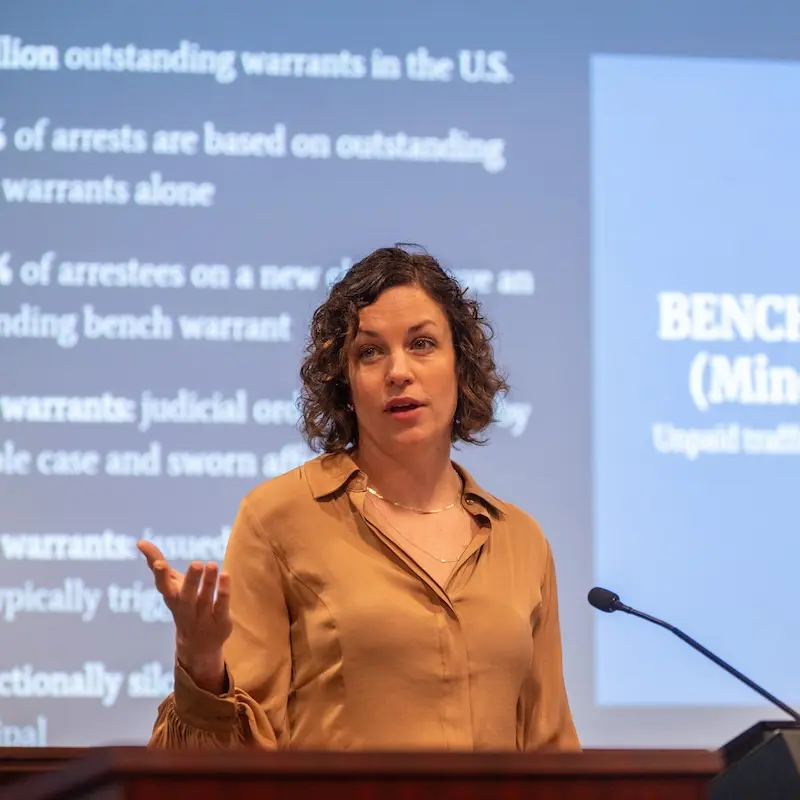
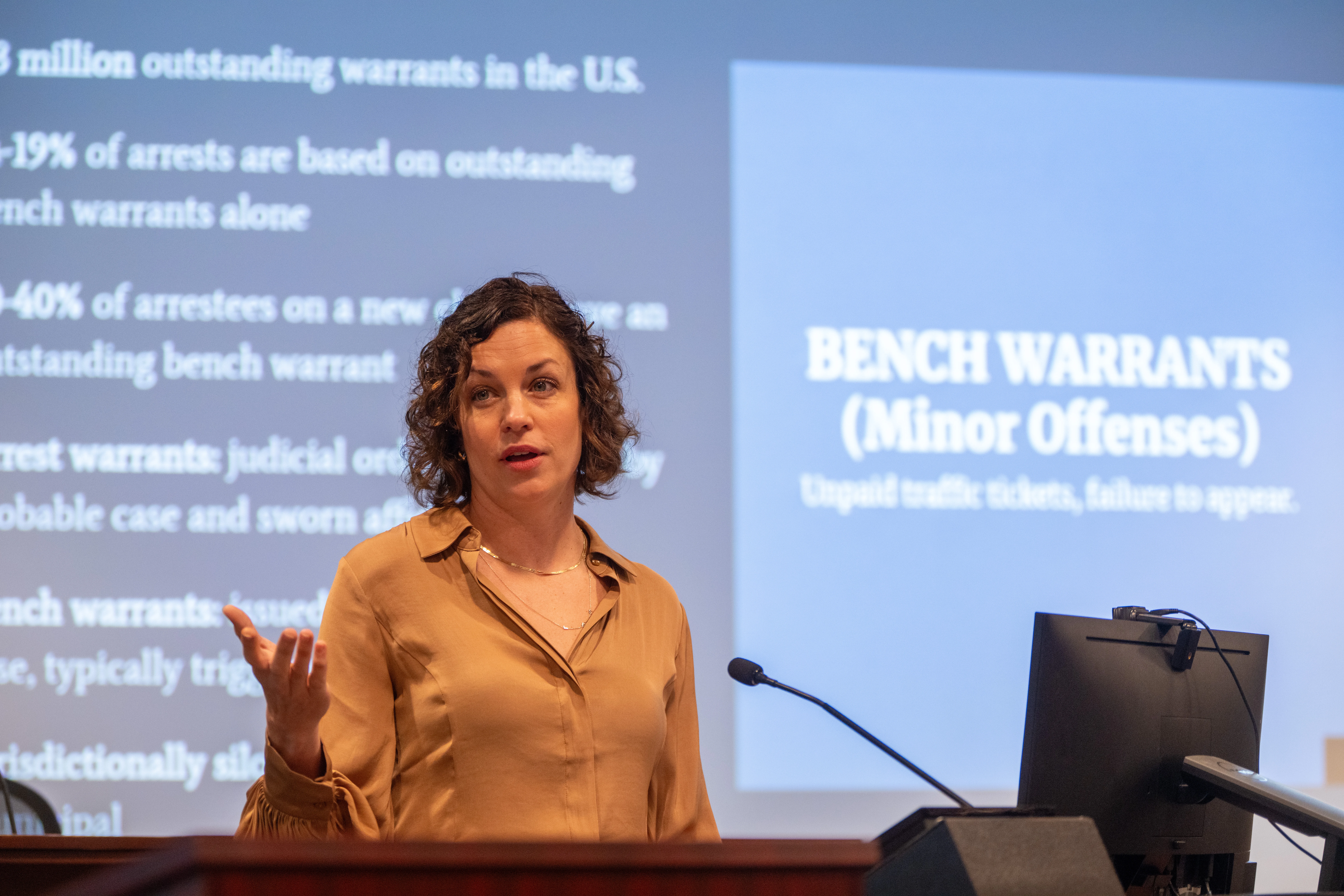
Sarah Lageson, a social scientist, lawyer and associate professor at Northeastern University, opened the symposium with her presentation, “Big Data, Bad Warrants: Rethinking Accountability for Electronic Warrant Errors in the Digital Age.”
David Thaw, a professor at the University of Pittsburgh with joint appointments in law and computing and information, brought a multidisciplinary perspective to his keynote, “Impersonating Volition: The Limits of AI Criminality.”
Identifying Consequences
“We've done empirical analysis and for people in our studies we see error rates of 60- 90%. So almost everything that's coming back as criminal background checks has some area that is either a false positive or false negative. They miss things. They misreport things, and it has tremendous consequences for how people can operate in the world.” - Sarah Lageson
Panel Discussions

The conversation continued through the lively debate of two panel discussions. Panelists interacted with symposium attendees, addressing the tension between effective law enforcement, constitutional protections and the challenge of applying legal frameworks to modern digital realities.
The Fourth Amendment and the Technological Frontier
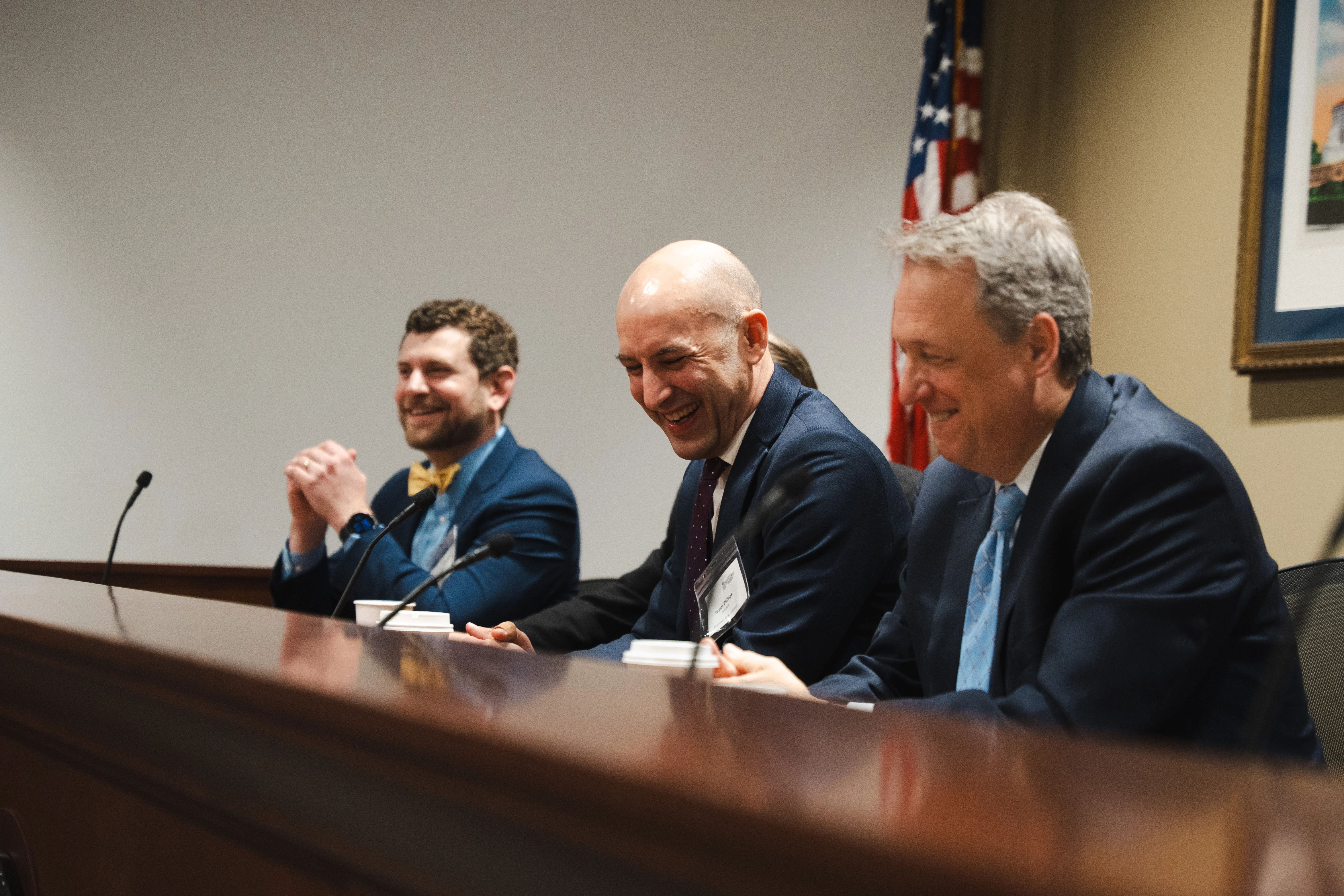
This first panel of the day panel explored how rapidly evolving technology — particularly digital data and surveillance tools — have transformed criminal investigations while creating a growing disconnect between public expectations of privacy and current legal standards. Panelist included:
- Taylor Phillips, assistant attorney at the United States Attorney’s Office
- Christopher Slobogin, Milton Underwood Chair at Vanderbilt University Law School
- Judge Jim Todd, Davidson County Criminal Court judge
- Ben Raybin, criminal defense and civil rights law at Raybin & Weissman
- Steve Crump, Executive Director of the Tennessee District Attorneys General Conference
- Rob McKinney, Nashville criminal defense attorney
The Role of Artificial Intelligence in Modern Criminal Justice
The closing panel focused on AI’s impact on lawyering and policing. The discussion also covered AI's use in fraud, deepfakes and the potential for AI to be used by criminals, underscoring the need for robust legal and ethical frameworks. Panelist included:
- Bill Ramsey, complex civil and criminal litigation
- Supervisory Special Agent Stevens, supervisor of the FBI’s cyber squad in Nashville
- Lieutenant Colonel Morgan Ryan Brown, National Guard Special Operations battalion leader
- Josh Brand, Nashville criminal defense

Ability vs Responsibility
“For the purpose of integrity and confidence in the system, it is important that prosecutors take the narrowest view of ability and the most expansive view of responsibility when it comes to taking electronic evidence.” -Steve Crump
Law in a Digital Age
The symposium underscored the importance of preparing for a legal system that is rapidly evolving alongside technology.
From electronic warrants to AI-driven investigations, technology continues to reshape how law is enforced.
“The Symposium adds a dynamic, practical dimension to the Belmont Law Journal experience,” Leandri said. “Knowing that the event creates a space for important conversations about the future of law and justice makes the entire experience especially meaningful.”
The full day of conversation, learning and collaboration offered space to examine today’s legal landscape through the lens of emerging digital tools. In doing so, the symposium reflected the same conversations unfolding daily in courtrooms, law firms and legislatures across the country, giving students and practitioners the opportunity to engage directly with questions that will shape the future of the legal field.


Explore more