
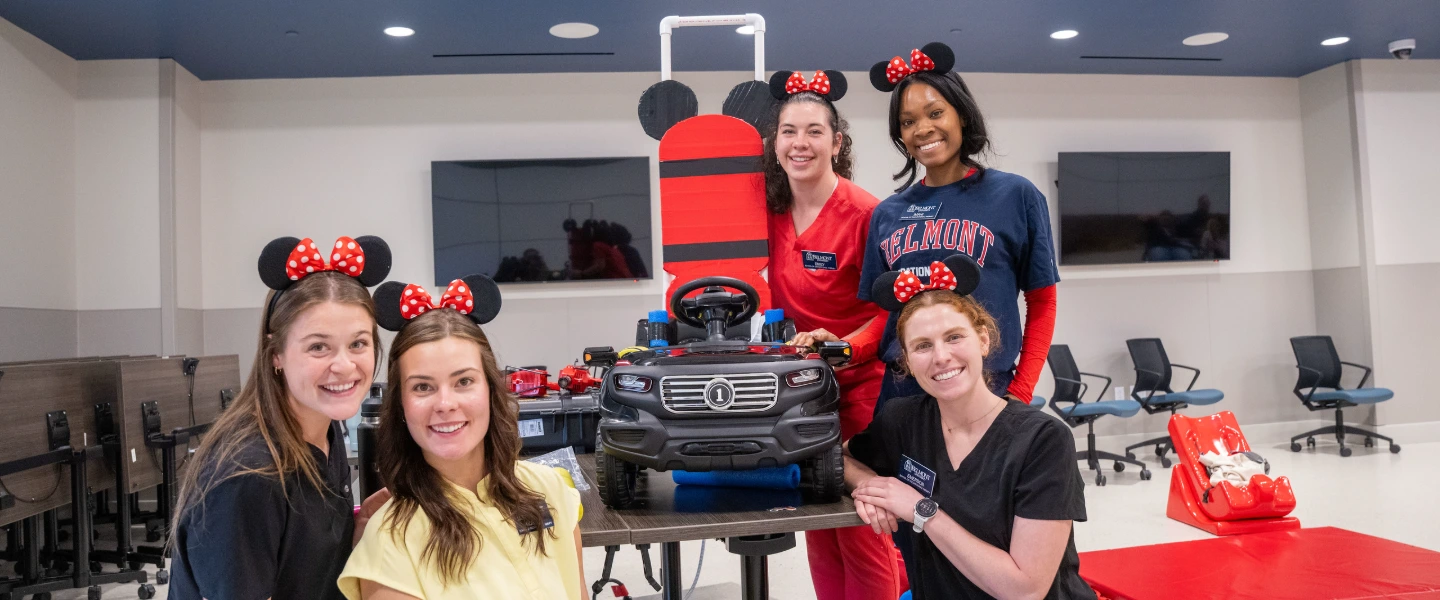
Occupational therapy students and community partners provide customized mobility aids to record number of families
Go Baby Go gives children new ways to move and explore the world through adapted ride-on cars that double as therapeutic outlets. Students add features to each car that encourage children to reach, grab, sit up, push and pull — building strength and independence through the power of play.
“I’m so proud that my team was able to bring so much joy to a family,” said Ashtyn South, second-year occupational therapy student. “We all came into the program with such diverse skills and interests, but in a team structure, everyone brings out the best in each other. It’s so fun to put that energy to use for even more families than last year.”
On both the local and national level, Go Baby Go also champions relationships between families, local therapy providers and adaptive technology companies, strengthening vital support networks for children affected by mobility differences.
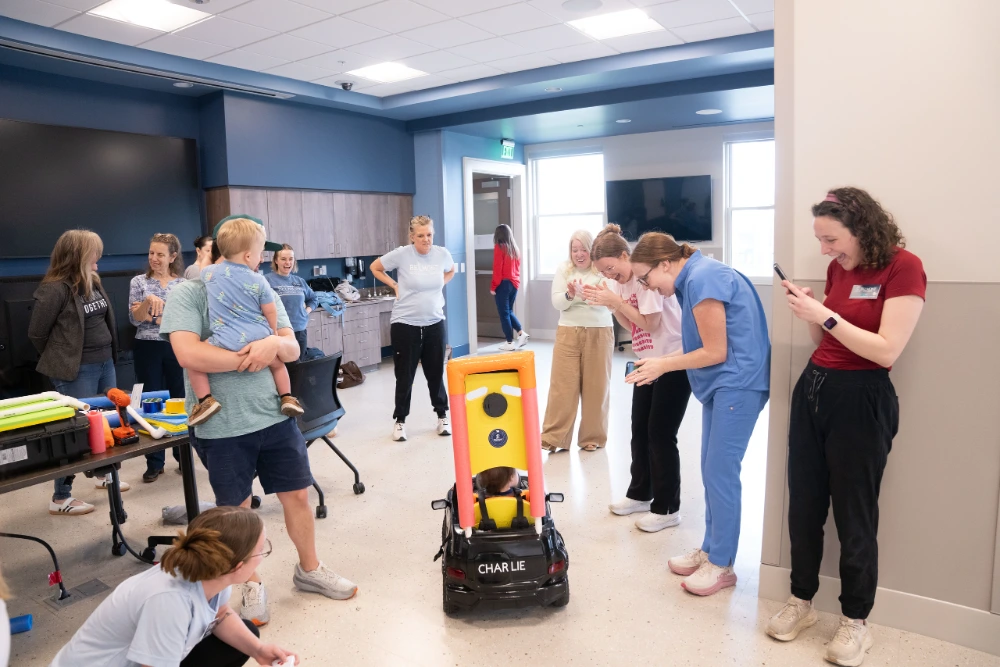
Community Coming Together
Belmont has hosted Go Baby Go annually since 2013 and held this year’s event in the Center for Interprofessional Engagement and Simulation this year. With the new space came other developments — for the first time, adaptive technology suppliers were present to assist every team in building the cars, bringing classroom learning to life for participating second-year occupational therapy students.
“Involving adaptive technology suppliers with every team of students was one of the most meaningful parts of the event,” shared Missy Bryan, director of the Master of Science in Occupational Therapy program. “I teach about how therapists and suppliers interact on interprofessional teams, but here, students get to experience firsthand the knowledge and skills that suppliers bring. That helps students better understand their own role when working with assistive technology.”
Second-year OTD students are assigned teams before being introduced to participating families over Zoom. They complete a clinical assessment of each child’s needs and determine what modifications the cars will need. After sending their reports to engineering students at Vanderbilt University, teams receive instructions on how the cars must be built.
As a part of their curriculum, students also participate in workshops where they learn skills such as electrical wiring — knowledge they will use later in hospital and other clinical settings when navigating adaptive technology.
“I wanted to come to Belmont for occupational therapy because I knew I’d get the chance to participate in Go Baby Go,” shared second-year occupational therapy student Antoney Labuschange. “It’s my dream to have a career working with adaptive technology and there’s no better place to practice that than with Belmont and Go Baby Go. Getting to help these sweet kids is such an inspiration and motivation for my future goals.”
This year’s expanded outreach was made possible, in part, thanks to increased support from community partners. Suppliers from local complex rehabilitation companies such as Numotion, Reliable Medical and National Seating and Mobility attended the event to assist teams in making modifications and to ensure all work was built to last.
Hands-On Learning with Purpose
From the first initial Zoom meeting to the moment families go home with their cars, every step of Go Baby Go is a learning experience unlike any other. Because students don’t get to meet the children in person beforehand, they must come to the event prepared to seamlessly pivot if plans need adjusting.
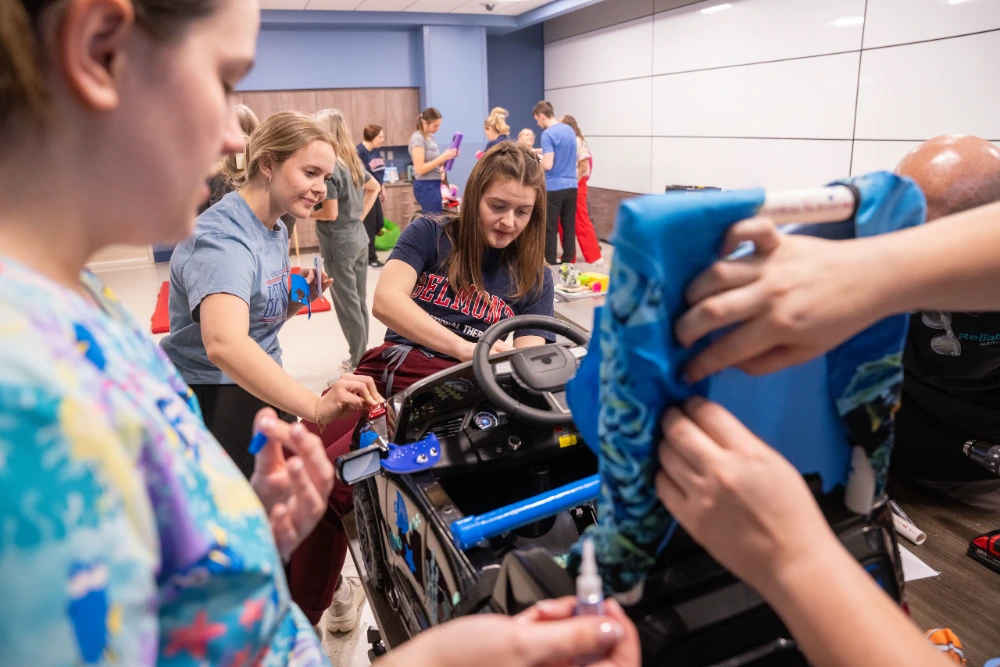
“I am incredibly proud of how every team has shown up ready to work hard and be flexible,” said Occupational Therapy Fieldwork Coordinator and College of Pharmacy and Health Sciences Professor Dr. Cynthia Hickman. “This group of students has shown exceptional commitment to high-quality care, which is difficult to do while thinking on your feet. This event is the culmination of many weeks of hard work, and I think the success speaks for itself.”
To help with student mentorship and support, several third-year occupational therapy capstone students partnered with faculty members to offer guidance as teams modified their cars and made on-the-spot adjustments. Being able to observe younger students develop new skills at such a large scale allowed capstone students to reflect on how their own experiences in the program have benefitted their overall education.
“Participating in Go Baby Go sharpened my analytical skills in ways I previously never thought possible,” shared third-year occupational therapy student Lily Simmons. “Everything these students learn here will advance their practice in valuable ways, and getting to see meaningful outcomes from that work for more families than ever before will be a memory they always keep with them.”
Learn More
Learn more about the programs in this story