
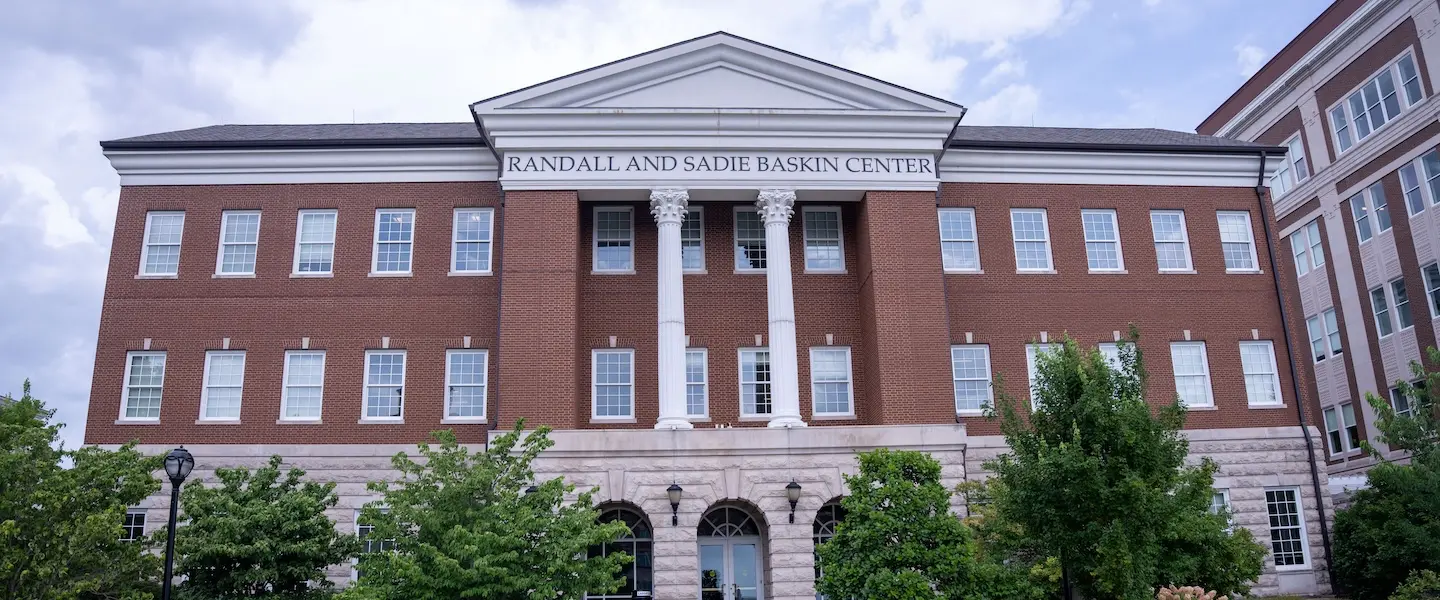
 Two factors influenced rising second-year law student Dalton Sherrod to attend Belmont University’s College of Law: its location and its size. Nashville’s opportunity-rich healthcare, entertainment and business sectors offered abundant professional opportunities, while Belmont's selective and intentionally personalized learning environment promised a close-knit academic experience.
While those factors brought him to Belmont, one thing in particular reassured him that he made the right choice.
“The community is really what sold me,” he shared. “At Belmont, mentorship was introduced very early on. The program paired every 1L with an attorney mentor. The school was very intentional about the entire thing. That investment is a real part of why I've felt supported here.”
Belmont College of Law’s emphasis on mentorship helped transform Sherrod’s first year of law school from being an overwhelming transition into an exciting season full of growth, networking and opportunity.
“The mentorship program was a steadying force through all of it,” Sherrod said. “There is something specifically reassuring about hearing from someone who's actually been through the same year and came out on the other side.”
Finding Guidance During the First Year of Law School
While Belmont College of Law is a strong competitor throughout the legal academic community — consistently achieving top passage rates for the in-state and out-of-state Bar exams — law students experience shared sense of camaraderie rather than competition that promotes academic excellence while building a supportive community.
“Success in law school is not something our students have to pursue alone,” said Alix Rogers, assistant dean for career and professional development at the College of Law. “Our students benefit from both horizontal mentoring through peer mentors and vertical mentoring through our attorney mentor program. The program helps students build relationships that often last well beyond law school and contributes to the collegial, supportive environment that is a hallmark of the Belmont Law experience.”
Belmont College of Law is home to a chapter of the American Inns of Court, a networking organization for members of Middle Tennessee’s Bar and bench. One to two students are matched with a practicing legal professional throughout the first year of their law school experience.
Last year, Sherrod and a fellow law student were matched with alumnus Alex Schramkowski and first connected at the Inns of Court.
“The three of us turned out to be a great match,” he said. “From that first meeting, Alex was engaging and genuinely invested. It was obvious he wanted to see us succeed.”
Sherrod gained insight from his mentor about the differences between studying law and actually practicing it. He says that guidance from his mentor has helped him feel prepared and excited about the next stages of his legal education instead of being intimidated by the future.
“It means a lot,” Sherrod said. “Professors teach you the law, but a mentor who's sat in the same seat shows you that the path is survivable and worth it. When Alex told us something, we believed it, because he's proof of it. That connection takes a lot of the fear out of the unknown and makes the profession feel like something I'm joining rather than just studying.”
Mentorship Beyond the Classroom
Sherrod is a prime example of how cultivating mentor relationships can lead to opportunities. This summer, he is working as law clerk at Tune Entrekin & White PC (TEW) in Nashville, a position that he says he couldn’t have gotten without his mentor. Having previously clerked at TEW, Sherrod’s mentor introduced him to the firm which opened the door for an interview.
At TEW, Sherrod has worked alongside practicing attorneys and gained experience in criminal defense work and property and municipal litigation.
“I don't think I'd have had that opportunity without him vouching for me the way he did,” Sherrod said. “The clerkship has been everything I hoped for. I'm not just getting to observe the attorneys; I'm doing real legal writing that gets used, which is exactly the experience I wanted out of 1L summer.”
In addition to matching 1Ls with legal professionals, Belmont’s peer mentoring program further helps to cultivate connections between students in meaningful ways that extend beyond the classroom. First-year law students are paired with upperclassman in their second and third year who offer support and guidance on ways to thrive in law school from their own experiences.
Sherrod was also mentored by an upperclassman as a 1L, and he intends to pay it forward to the law students who come behind him.
“1L year is hard in ways that are difficult to explain to anyone who hasn't lived it, which is why having someone a year or two ahead matters so much,” he said. “They remember it very well. I got a lot from my mentors, and I would like to pass it on. I also think that helping someone else work through something you've solved is one of the best ways to see how far you've come.”
While academic rigor is an essential part of legal education, the relationships he built through Belmont College of Law mentoring programs have made the experience more manageable and meaningful.
“The biggest value has been having an experienced voice to turn to,” he reflected. “That perspective always puts it all in proportion. It's also given me a model for the kind of lawyer I want to be.”
Interested in law?
Learn more about Belmont College of Law.