
Students, City Leaders and Public History Intersect at Belmont
Nashville’s civic story came into focus at Belmont this fall through a series of events that linked public history, city leadership and student scholarship.
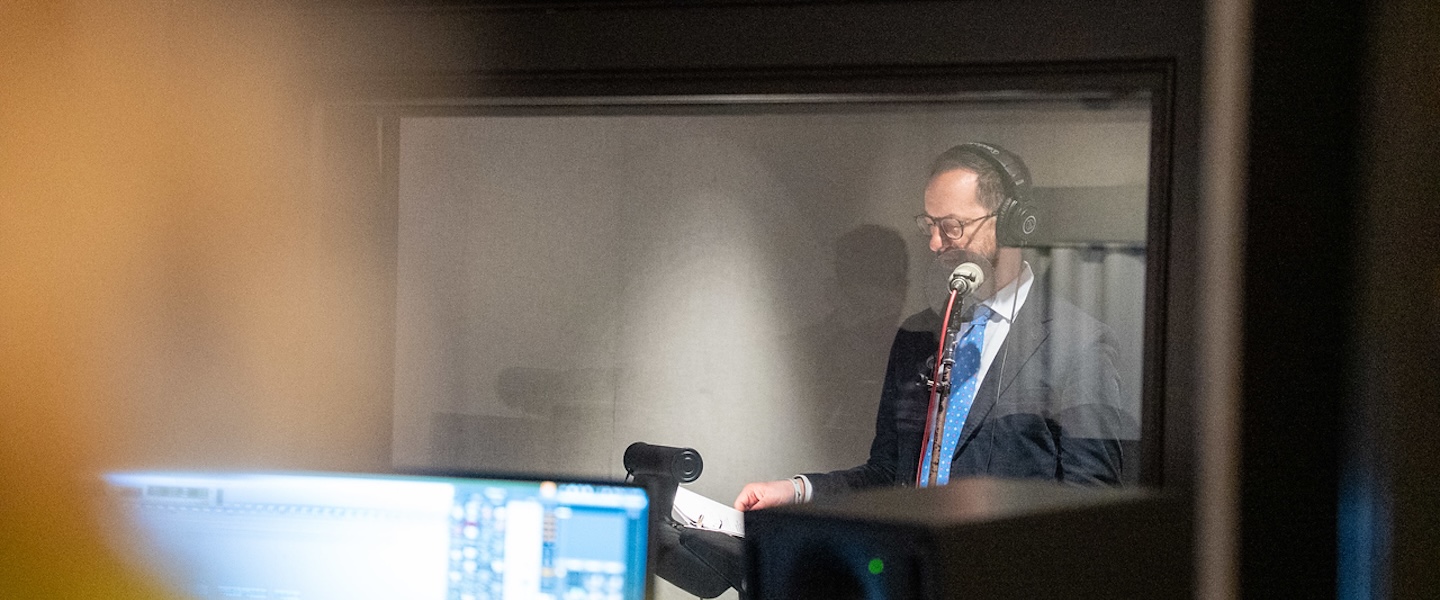
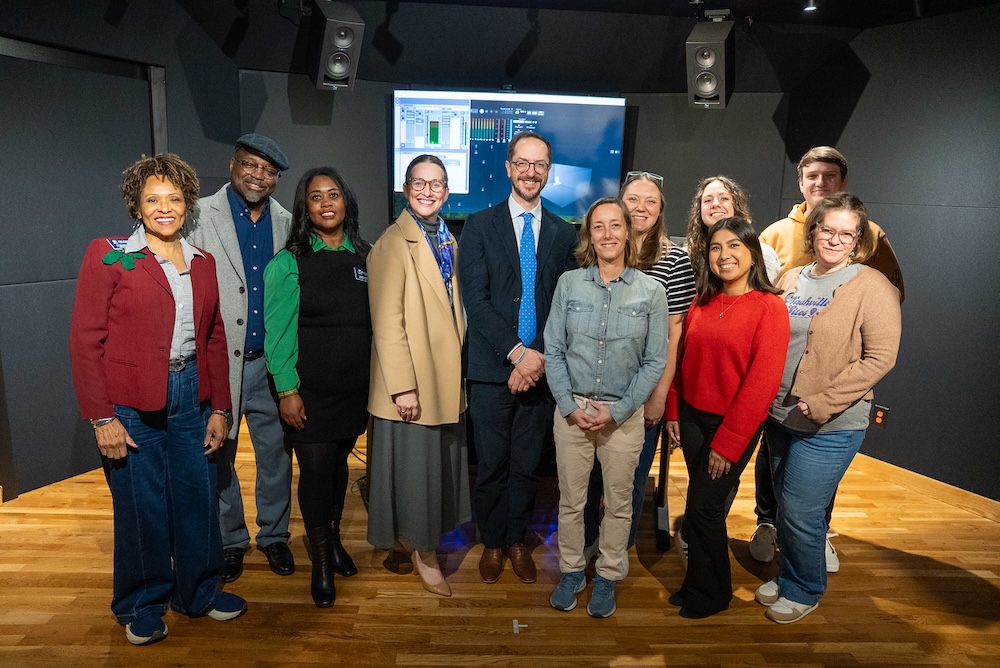
In Belmont’s recording studios, Mayor Freddie O’Connell and Vice Mayor Angie Henderson recorded narration for a new “City Hall and Public Square” walking tour for Nashville Sites, the public history platform founded by Belmont faculty member Dr. Mary Ellen Pethel.
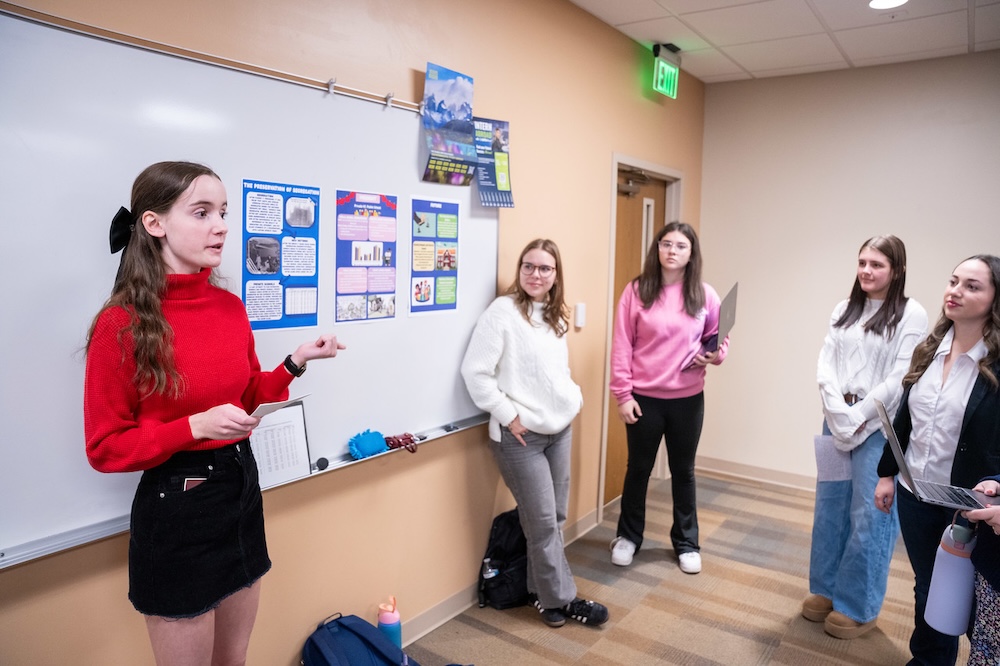
That same day, students in Pethel’s Global Honors course, Nashville Sites and Civil Rights, presented original research during an interactive poster session examining how Nashville’s past continues to shape its present and future.
The two projects reflected how learning at Belmont extends beyond the classroom — inviting students to engage in history as scholars, and also as participants in the life of the city.
Telling Nashville’s Story
The new “City Hall and Public Square” tour will offer residents and visitors an inside look at one of Nashville’s most visible civic spaces. Developed by a collaborative team of historians, graduate students and interns, the tour explores how the building’s history reflects the city’s evolving democratic life, from its architectural design to its role in public decision making.
The team plans to add a Spanish language and Arabic language translation for the tour by the end of January. The Spanish version was translated and narrated by Belmont Honors student Daniela Barranco Cornejo, and the Arabic version will be audio edited by Belmont Honors student Roua Mohamed and narrated by her mother.
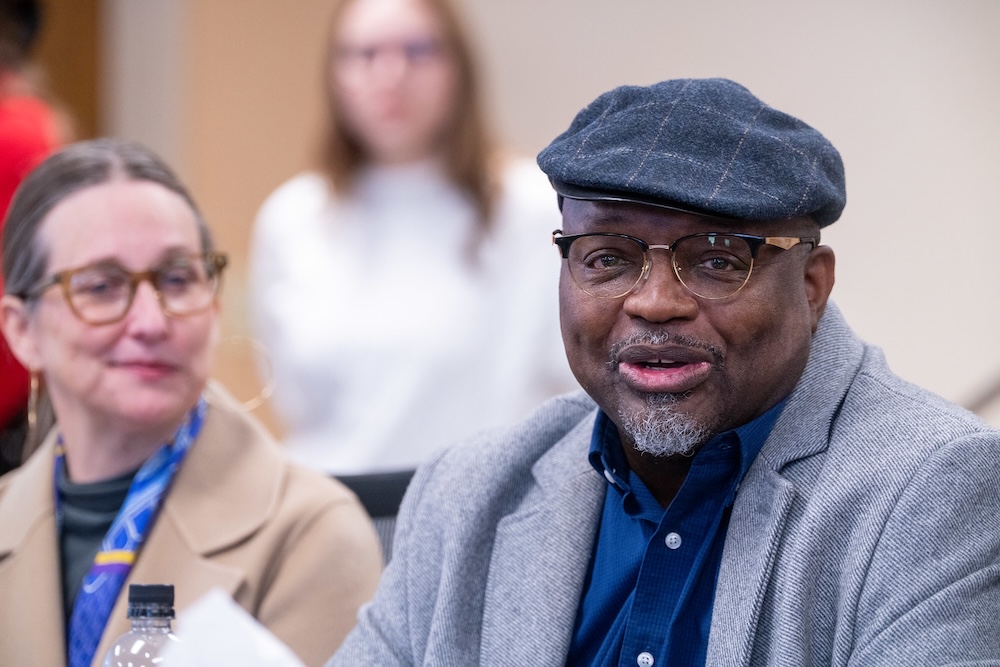
Dr. Learotha Williams Jr., a scholar of civil war & reconstruction, public and African American history at Tennessee State University, said the tour exemplifies what makes Nashville Sites distinctive.
“We’ve looked around, and we haven’t found another city doing something quite like this,” Williams said. “It’s a mix of established scholarship and deep community engagement — and, most importantly, it’s accessible.”
Williams also spearheads the North Nashville Heritage Project, an initiative focused on deepening public understanding of North Nashville’s history, including Jefferson Street and its enduring relationship to the broader Nashville community. For him, accessibility is not simply a feature of Nashville Sites, but its defining purpose.
“If you feel like walking, you can walk,” Williams said. “If not, it’s accessible through your computer or other devices. That matters, because it redefines what public education can look like.”
Education Beyond the Classroom
For Williams, the reach of public history far exceeds the limits of a traditional classroom.
“Over the course of a day, these tours interact with more people than I might teach in an entire year,” he said. “Even if only a fraction of the people in Nashville stop and engage with a tour by scanning a public QR code, that’s more outreach in a day than I could do in a decade.”
That philosophy is shared by Pethel, whose teaching and scholarship consistently blur the lines between academic study and lived experience. She co-teaches the Global Honors course “Nashville Sites and Civil Rights” with Dr. Peter Kuryla, a class that challenges students to examine local issues through primary sources, public scholarship and community engagement.
“Students were given a pocket Constitution the first week of class, and we were off,” Kuryla said.
The course’s 37 students benefited from the complementary expertise of two faculty members. Kuryla, also a historian, recently helped lead the creation of Belmont’s new public policy major.
Following the new walking tour recording session, students gathered for an interactive poster session designed around conversation rather than presentation. Rotating through the room, students both presented their work and engaged with their peers’ research, mirroring the conversational and collaborative nature of public history itself.
“These students represent all different majors from every college. And yet, they come into this room, they learn together, they collaborate,” Pethel said, introducing guests to the presentations. “And now they’re going to tell you how they’re going to fix the world.”
Student Research Rooted in Nashville
Student projects examined Nashville through a past–present–future lens, connecting historical context to contemporary conditions and potential policy solutions. One group explored the rise of private schools and school choice in Nashville, tracing the issue from segregation-era inequities through zoning practices and funding structures that continue to shape access to education today.
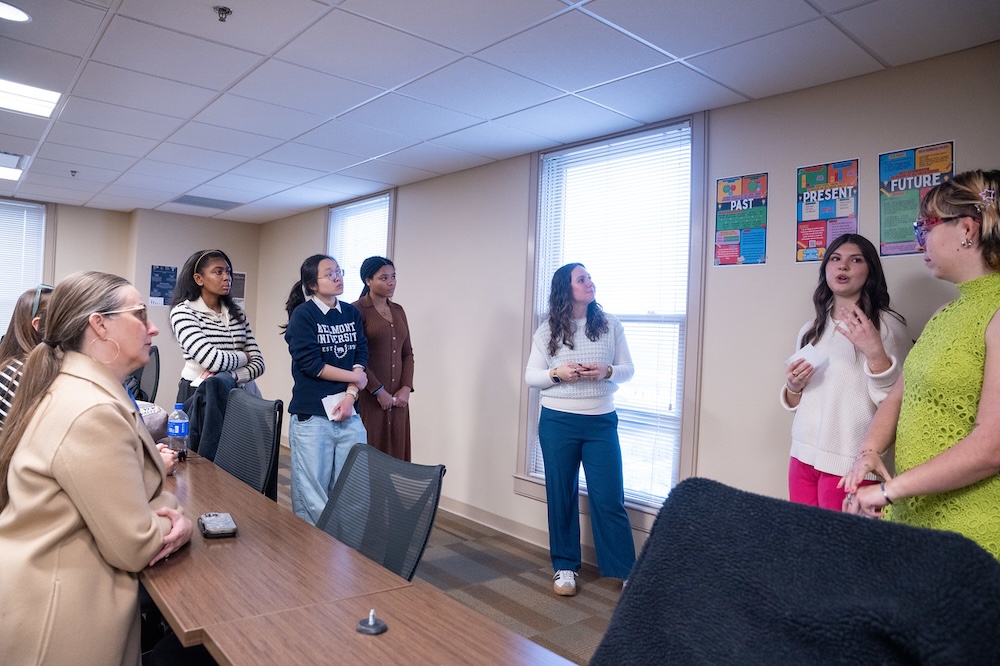
Other projects investigated topics such as flooding, landfills, corporate power, infrastructure development and the lasting effects of redlining — emphasizing how decisions made decades ago still influence neighborhood demographics, economic opportunity and access to resources.
For many students, the research reshaped their understanding of the city they call home.
“I thought I knew Nashville because I’ve lived here my whole life — until this class,” one student reflected. “I had absolutely no idea how much the Civil Rights Movement shaped the city.”
Another student described discovering the compounding nature of injustice.
“I knew there was racism, but I didn’t realize how intertwined the economic side is,” the student said. “Once you see how those systems connect, you can’t unsee it.”
History with Shared Ownership
Williams emphasized that Nashville Sites is built alongside, not just about, the communities it represents, ensuring that public history reflects lived experience rather than imposing an outside narrative.
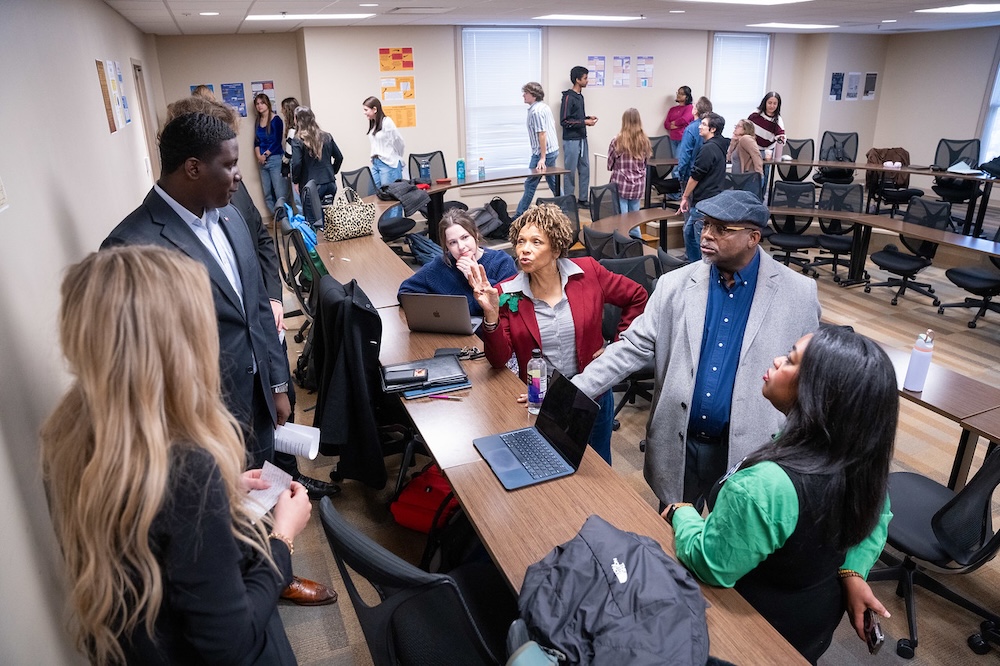
“These tours are special because communities can claim ownership of them,” he said. “They tell stories about real people and real places, and it’s critical that we’re sensitive to how those communities define themselves.”
As Nashville Sites continues to expand — now approaching 45 walking and driving tours across the city — the partnership between Belmont, civic leaders and local scholars remains grounded in that shared responsibility.
For students, particularly those in Belmont’s Honors program, the day offered a tangible example of what it means to learn by engaging with history, with community and with the city itself.
At Belmont, Nashville is not simply the footer of the campus address. It itself is a classroom, a collaborator and a living story — one students are learning to understand by living it.
Learn More
Engage with Belmont's Programs