

Thomas W. Beasley Center for Free Enterprise invests in students, fully funding three student trips
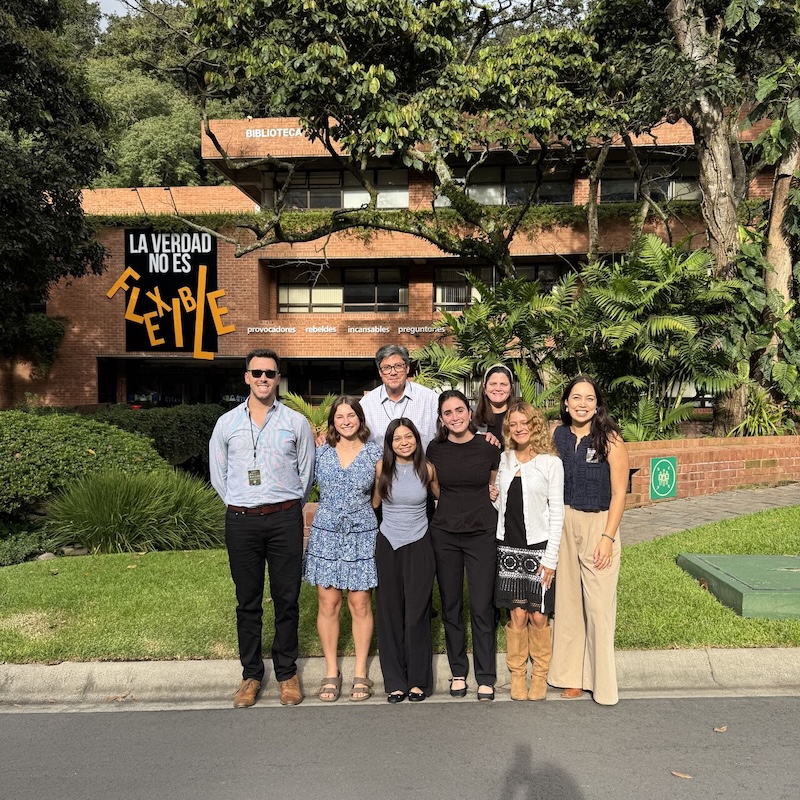 This semester, four students traveled to Guatemala to participate in the Catalytic Capital Summit, a two-day international gathering focused on impact investing, catalytic capital and the role of business in driving social change across emerging markets.
Organized by the Transformational Business Network (TBN) Americas in partnership with Belmont and Universidad Francisco Marroquín (UFM), the summit brought together entrepreneurs, family office leaders, fund managers and business professionals from across Central America — including Guatemala, El Salvador, Costa Rica and Panama.
More Than a Business Lesson
Even before she landed on Guatemalan soil, junior global leadership studies and economics student Avery Edelbrock realized the trip would offer more than insight into business capital: it would serve as a perspective-shifting experience as well.
“People were taken aback when I told them I was going to Guatemala for a business trip rather than a mission trip,” she said. “It was cool to go experience it for myself then come back and, in a small way, help rewrite the cultural narrative we often have about Guatemala.”
Three students received support through the Thomas W. Beasley Center for Free Enterprise endowment, reflecting the University’s commitment to experiential learning in entrepreneurship and social innovation. Accompanied by the Jack C. Massey chair of entrepreneurship José González, the students participated in summit sessions, assisted with logistics, engaged directly with attendees and visited local social enterprises to see catalytic capital at work.
Learning Impact Investing Where It Happens
For Finley White, a sophomore majoring in social entrepreneurship, the experience brought classroom concepts to life. Through sessions focused on patient capital and catalytic investment, White gained a clearer understanding of how these models differ from traditional venture capital especially in countries where informal economies dominate and access to early-stage funding is limited.
“Something like $500 can be life-changing for a small business owner in Guatemala,” White said. “Learning how patient capital works — waiting longer for returns because the impact is bigger — really shifted how I think about business and investment.”
Cross-Cultural Collaboration and Professional Growth
For senior legal studies major Kaylee Alyssa Flores, the summit was also a deeply personal experience. As a first-generation American with roots in Honduras and El Salvador, Flores found herself bridging cultures and languages in professional settings where Spanish was the primary language.
“I don’t really have the opportunity to speak Spanish much at Belmont,” Flores said. “Being able to use Spanish in a professional environment challenged me in the best way. It felt different from what I’m used to at school — more like being around my family, where everyone speaks Spanish.”
Flores connected with entrepreneurs and nonprofit leaders working with youth and underserved communities throughout Latin America, drawing direct connections between her academic focus on social justice and real-world impact strategies.
Seeing Social Enterprise Up Close
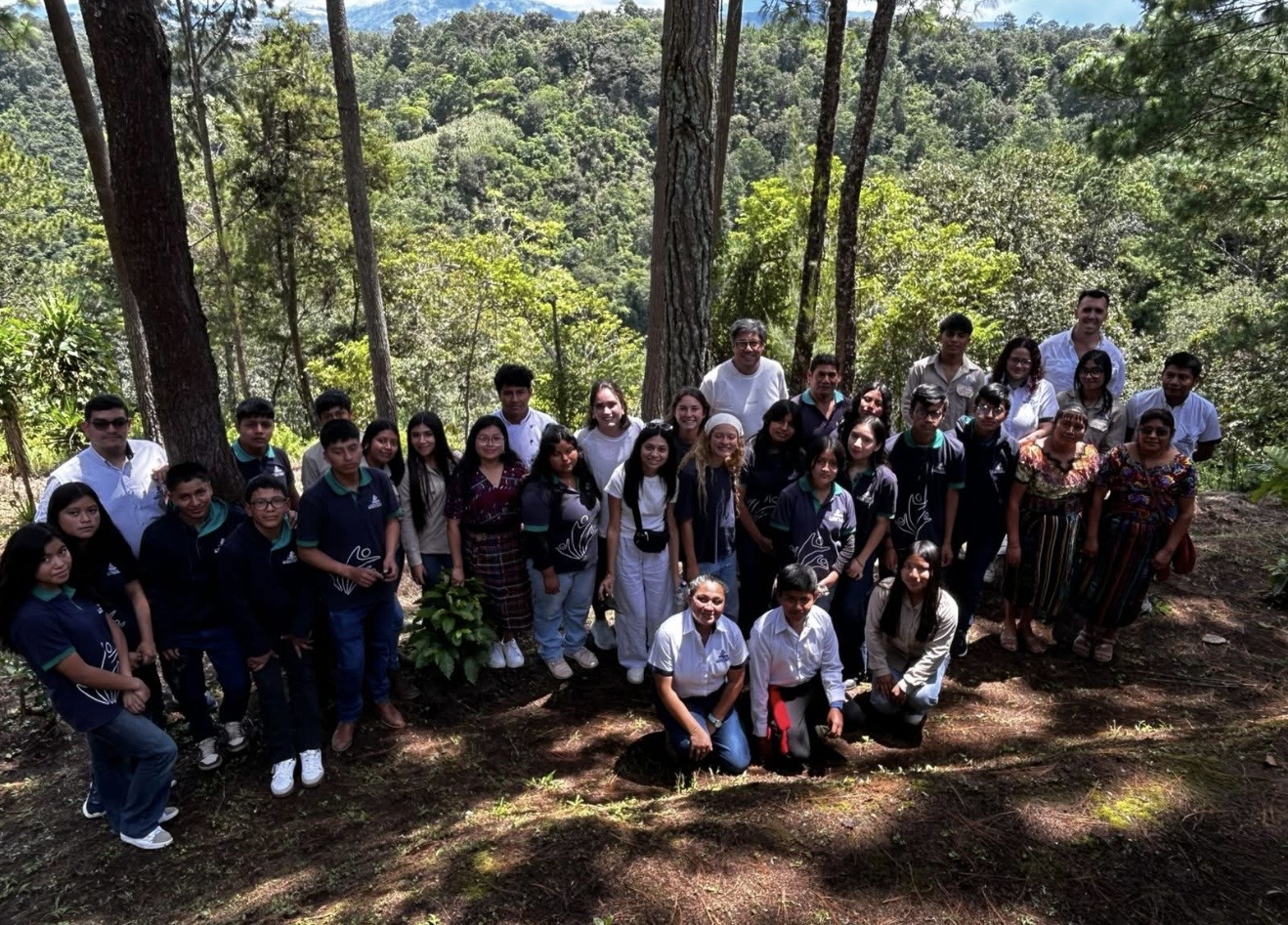
Before the summit, the group spent two days in Antigua visiting local nonprofits and social enterprises, including schools serving low-income communities and organizations using business models to address systemic challenges. Junior social entrepreneurship major Victoria Gonzalez was in New York in the Belmont East program, and the experience was a powerful reminder of why she chose her field of study.
“This semester, I haven’t had the chance to be involved with nonprofits or people doing on-the-ground work,” she said. “It was great to talk to people who are passionate about helping others. It reinforced my desire to help others, especially people from my countries and Latin America.”
One visit sparked a concrete next step. After meeting leaders connected to an entrepreneurship school supporting small business owners across Latin America, the Belmont students committed to an ongoing follow-up project: serving as mentors for entrepreneurs supported through Serve Hope International’s Emprende initiative.
“They really encouraged us to get involved and reminded us that even though we are students we have something other people need to hear,” Gonzalez said. “Other people have helped entrepreneurs in amazing ways without having a business background. It’s more about sharing your personal insights.”
Through virtual coaching, students will offer guidance, problem-solving support and encouragement to entrepreneurs seeking to grow sustainable businesses.
Preparation in Practice
Across the summit, students engaged with diverse stakeholders — including seasoned investors and social entrepreneurs — building confidence in navigating conversations across cultural, generational and professional boundaries.
The trip exemplifies Belmont’s emphasis on experiential education, placing students in real-world environments where theory, practice and purpose intersect.
“I had never been to a business conference, especially an international one. Belmont really prepared me to fully experience this trip and use everything I’ve been learning,” Flores said. “If it hadn’t been for Belmont, I would have never gotten this opportunity and a million other opportunities I’ve been given at the University.”
Learn more about the program in this story