

Inaugural health care design studio brings together architecture, nursing and global partners to address real-world challenges
Belmont's inaugural Architecture Studio for Healthcare brought together students from architecture and nursing to tackle real-world health care challenges in Kenya and India, demonstrating how interdisciplinary collaboration can address global health disparities through thoughtful design.
 The fourth-year architecture students in ARC 4025, led by Dr. Fernando Lima, spent the fall semester working alongside Doctor of Nursing Practice (DNP) students to develop two projects: the BabyCare Box for communities in Nairobi, Kenya, and design proposals for a 20-bed Mother Teresa Hospital in Bengaluru, India.
"This experience included many firsts for me: my first time working in a group for an architectural project, my first health care design studio, my first international design project and my first time collaborating with another discipline," said Reese Cobb, a fourth-year architecture student who participated in both projects.
Addressing Global Health Challenges Through Design
The BabyCare Box project, developed in partnership with Olivelink Healthcare, addresses critical challenges facing families in Nairobi's informal settlements where limited access to clean water, sanitation and safe sleeping environments threatens infant health.
Students designed a lightweight, hygienic box that provides a safe sleeping space for newborns, along with a Community Education Kiosk to strengthen relationships between mothers and health care workers.
For the Mother Teresa Hospital project, students partnered with Bangalore Baptist Hospital to envision a health care facility serving underserved rural communities on the outskirts of Bengaluru. The designs incorporated outpatient and inpatient care, diagnostic spaces, flexible community areas and sustainable features including passive cooling and daylighting strategies, with options for future vertical expansion.
The interdisciplinary approach proved essential to the projects' success. Victoria Allen, the DNP student who partnered with Cobb and fellow architecture student Natalie Kaminski on the BabyCare Box, provided necessary insight into health care practices, terminology, workflows and safety considerations.
"Victoria was a great source of knowledge who equipped us with the tools to create an influential design," Cobb said. "The collaboration between architecture and nursing was highly appreciated."
Building Professional Networks and Real-World Skills
The studio benefited from extensive engagement with Nashville's professional architecture community. Representatives from firms including ESa, Barge Design Solutions and Gresham Smith provided regular feedback throughout the semester, with more than 20 professionals participating as reviewers. 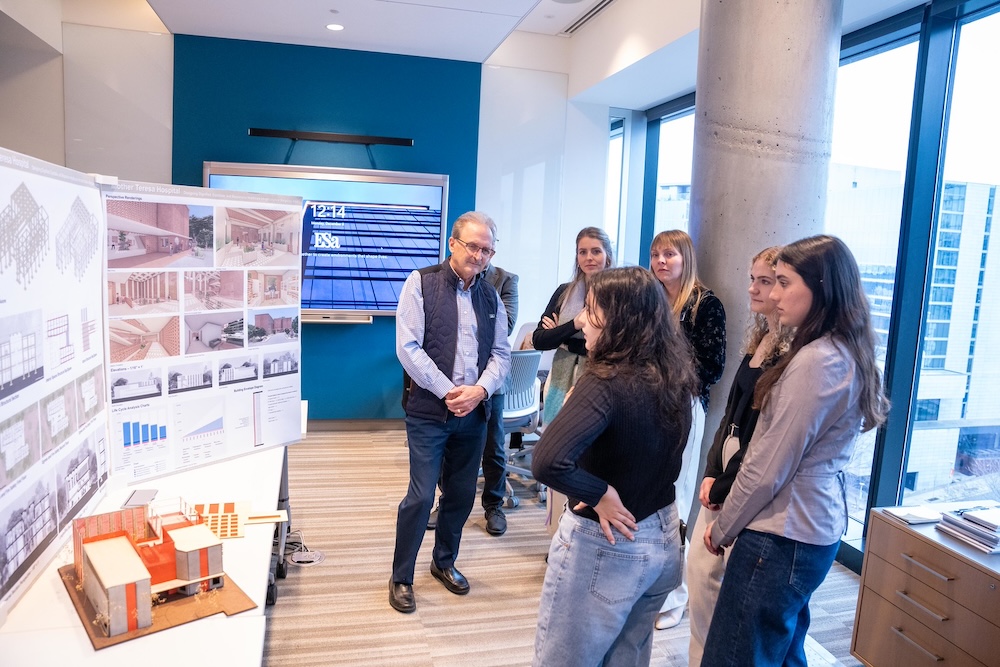
One piece of feedback particularly resonated with students: the importance of "designing from the patient's perspective."
"Early in the process, reviewers encouraged us to walk through the design as if we were a family member, a caregiver or a nurse," Cobb explained. "This shift in mindset influenced everything from circulation strategies to daylighting, material choices and spatial hierarchy."
Dr. Lori Baker, whose team at Belmont Global helped facilitate international partnerships, emphasized the deeper significance of this collaborative model.
"These projects are more than academic exercises; they are early steps in forming leaders who understand how design and health care must work hand in hand to transform systems and improve lives," Baker said. "By connecting Belmont students to global partners and real-world challenges, we cultivate professionals capable of designing with humility, listening deeply and innovating responsibly."
Navigating Cultural Contexts and Design Challenges
Understanding the cultural contexts of their designs presented unique challenges. For the Mother Teresa Hospital project, students received a site analysis from Terrance Carey, a fifth-year student who traveled to Bengaluru, and attended a lecture by Dr. Shelby Garner, executive director for Global Health Innovation at Belmont, who shared firsthand experience working in the region.
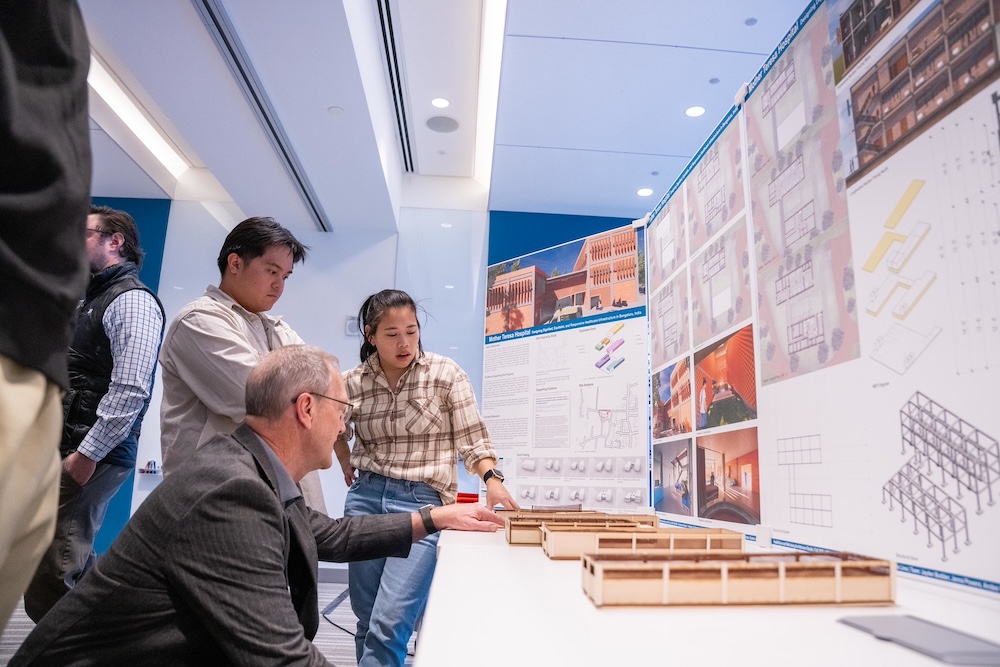 "It was difficult at times to ensure our solutions were culturally appropriate, feasible and genuinely responsive to real community needs," Cobb said. "The challenge ultimately strengthened my appreciation for culturally informed design and the importance of interdisciplinary voices."
The projects exemplify Belmont Global's approach to international engagement, which Baker describes as bringing together "diverse disciplines, perspectives, and lived experiences to co-create solutions that advance human flourishing."
"The BabyCare Box embodies the potential of interdisciplinary innovation to support maternal and child health through culturally responsive and family-centered design," Baker noted. "Likewise, the collaborative re-imagination of the Mother Teresa Hospital demonstrates how architecture and nursing students can work together to envision healing environments that strengthen access, dignity and quality of care for vulnerable populations."
Looking Forward
Students showcased their work at the Fourth-Year Healthcare Design Final Exhibit, Dec. 8.
For Cobb, the full experience crystallized an important professional philosophy: "I realized how important it is to keep people at the center of every decision, and how much stronger a project becomes when you listen to different perspectives," she said.
Organizers hope to continue examining how architecture can promote dignity and healing in communities worldwide through final exhibits and more interdisciplinary initiatives.
"I'm proud of the work my classmates and I produced," Cobb said, "I hope the exhibit reflects both our learning and our commitment to designing impact."
Learn more about architecture and design at Belmont