

In Nashville | What You'll Learn | Program Details | Outcomes | Career Possibilities | Testimonials | FAQ
Start Here. Go Anywhere with a Public Health Degree.

Earn your Bachelor of Public Health (BSPH) degree at Belmont University in Nashville, Tennessee, a leading public health program in Tennessee.
Through this undergraduate public health program, you’ll study disease prevention, health policy and community wellness while learning from experienced faculty who care about your success. You’ll also gain hands-on experience through a 400-hour internship tailored to your goals.
By graduation, you’ll be ready to advance to graduate school or begin a meaningful career improving health outcomes in your community and beyond.
Who This Is For?
Public health draws four kinds of students at Belmont. There is the pre-health student headed for medical school, PA school or nursing, who wants a science foundation that also explains why patients get sick in the first place. There is the community-impact student, drawn to health equity, outreach and the work of keeping whole populations well. There is the data-and-policy student, more interested in epidemiology, biostatistics and how legislation changes health outcomes. And there is the double major, pairing public health with international politics, philosophy or a second science using the 21 elective hours the degree leaves open.
If you want a health career but do not want to spend four years exclusively in a lab, this is the major that keeps both doors open.
Request Information
Public Health Programs in Tennessee: Study in the Heart of Nashville
Experience one of the nation’s top healthcare hubs while pursuing your public health degree at Belmont. As one of the leading public health programs in Tennessee, Belmont connects classroom learning with real-world experience right in the center of Nashville.
- Home to 500+ healthcare organizations, including HCA Healthcare, Vanderbilt University Medical Center and Community Health Systems, offering opportunities for internships and careers.
- Collaborate with the Tennessee Department of Health, Metro Public Health Department and local nonprofits to apply your classroom knowledge in real-world settings.
- Gain exposure to diverse communities across the Nashville metro area, urban, suburban and rural, to understand the complex factors shaping population health.
- Engage in professional growth through statewide and national events such as the Tennessee Public Health Association (TPHA) Conference.
Support & Opportunities Beyond the Classroom
At Belmont, we’re committed to your success in the classroom, in your community and in your career. As a student in the public health program, you’ll receive personalized guidance, mentorship and hands-on opportunities designed to help you thrive in one of the fastest-growing health fields. Students benefit from:
- Career development support through Belmont’s Office of Career & Professional Development, including resume workshops, job fairs and networking events.
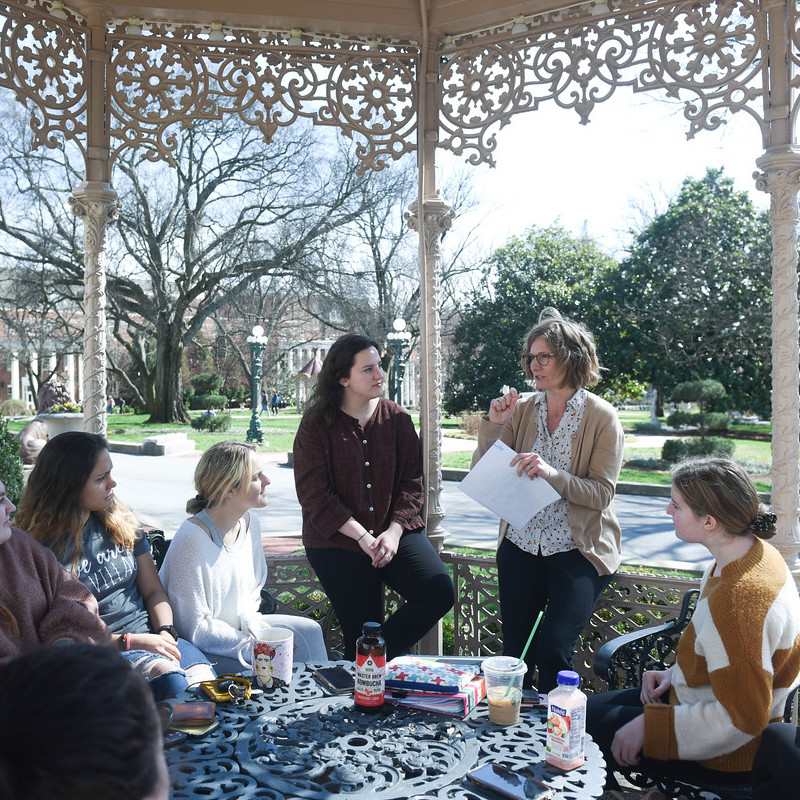
- Mentorship from faculty and guest lecturers with extensive public health experience, offering real-world insight into today’s most pressing health challenges.
- Professional engagement opportunities such as field trips to public health organizations and attendance at the TPHA Conference, where students often present their research and connect with professionals statewide.
What You'll Learn
As a public health major at Belmont, you’ll build a strong scientific foundation through courses in biology, chemistry and environmental health, paired with specialized public health courses in global health, epidemiology, health policy and biostatistics.
You’ll examine the social and environmental factors that influence population health and explore how policy, prevention and education shape healthier communities.
You’ll also have the flexibility to choose up to 21 hours of electives across Belmont’s curriculum, allowing you to study subjects like international politics, philosophy or additional sciences to prepare for graduate study or medical school.
Program Details
Curious about your coursework? View requirements for this degree in the course catalog.
The BSPH is a 128 credit hour degree combining a science core, the public health major and 21 hours of electives.
Public health coursework includes:
- Population Health
- Scientific Inquiry
- Current Issues in Public Health
- Program Planning and Evaluation
- Epidemiology
- Global Health
- Health Policy
- Biostatistics
- Environmental Health
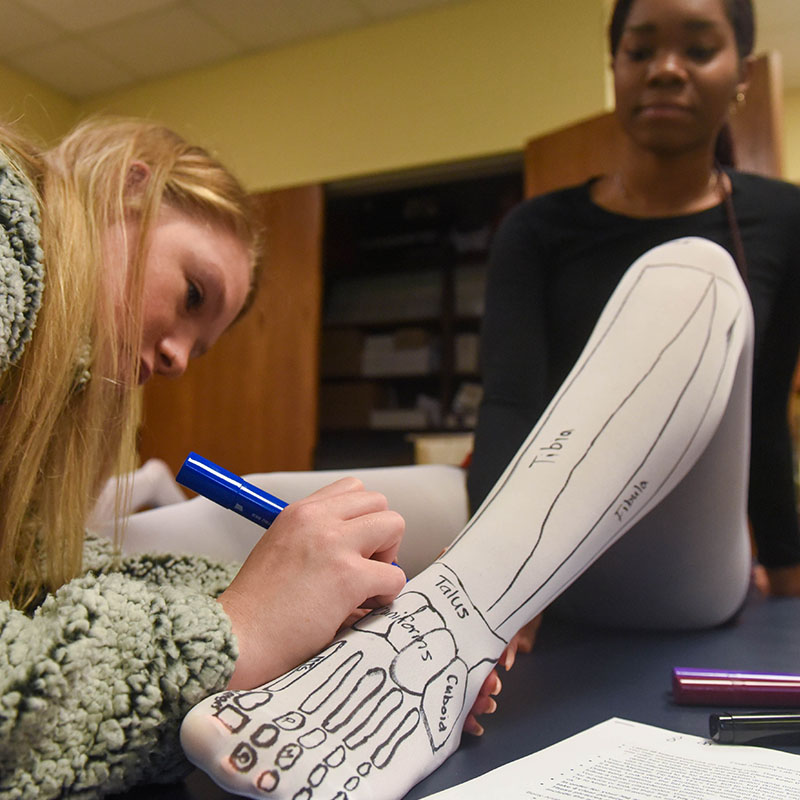
In Belmont’s public health program, you have the opportunity to get involved and explore your passions beyond the classroom.
- Travel abroad to work with practicing professionals, learn about cultural differences and explore the impact of health policies on individuals and communities.
- Join the Public Health Student Association and get to know classmates who share your interests.
- Voice your opinions in monthly meetings of the Public Health Book Club.
- Hear from distinguished guest speakers as part of the Coffee and Careers Series.
First-year and transfer students apply through Belmont’s admissions website using the Belmont Application, the Common Application or Apply Coalition with SCOIR. Applicants submit official transcripts, a school counselor recommendation or school report and a $50 application fee. Belmont is test optional, so you may submit ACT or SAT scores if you would like them considered.
Belmont offers scholarships, grants, loans and work-study opportunities to help you finance your education. Complete the FAFSA by Belmont’s Feb. 15 priority deadline to be considered for the most aid.
Belmont University is accredited by the Southern Association of Colleges and Schools Commission on Colleges (SACSCOC).
Outcomes & Alumni Success
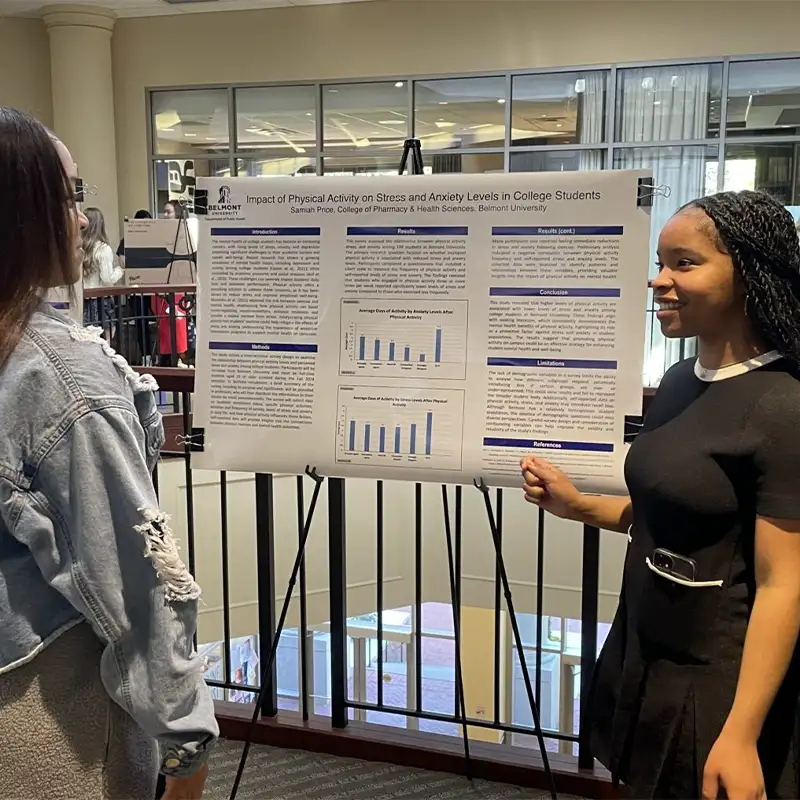
Graduates of Belmont’s Department of Public Health are making an impact in healthcare and public health settings across the country.
Alumni have secured roles as epidemiologists with state health departments, consultants for healthcare organizations and analysts in nonprofit and policy sectors.
Many public health majors pursue the pre-health track and have continued into medical school, physician assistant programs and accelerated MSN programs.
Whether entering the workforce or continuing their education, our graduates are equipped with the skills and experience to improve health outcomes and advance public health initiatives.
Career Preparation and Professional Support in Public Health
At Belmont University, we’re committed to your success — in the classroom, in your community and in your career. As a student in our Bachelor of Public Health program, you’ll receive personalized guidance, mentorship and hands-on opportunities designed to help you thrive in one of the fastest-growing health fields.
Students in Belmont’s public health degree program benefit from:
-
Career development support through Belmont’s Office of Career & Professional Development (OCPD), including resume workshops, job fairs and networking events.
-
Mentorship from faculty and guest lecturers with extensive public health experience, offering real-world insights into today’s most pressing health challenges.
-
Professional engagement opportunities such as field trips to public health organizations and attendance at the Tennessee Public Health Association (TPHA) Conference, where students often present their research and connect with professionals statewide.
-
A department led by faculty with deep connections to the Tennessee public health community — including a department chair who is a former TPHA President.
Through these experiences, you’ll graduate from Belmont’s public health program in Tennessee ready to step confidently into graduate school or a meaningful public health career.
Within six months of graduation, 98% of College of Pharmacy & Health Sciences graduates are employed, continuing their education or serving in the military, and 96% of employed graduates hold positions aligned with their short- or long-term career goals. Both figures are college-wide, Class of 2025.
Learn more about Career & Professional Development at Belmont
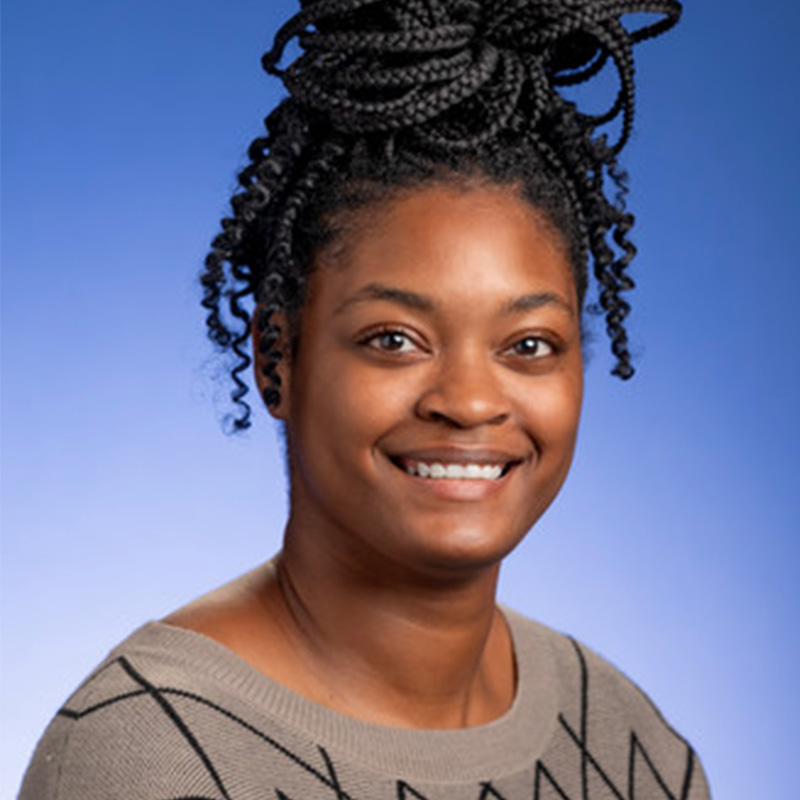
Octavia Forrest
Public Health
Fellow | Tennessee Department of Health
The public health department at Belmont is one of the best communities I could have ever asked for. From mentor-mentee relationships to community-building activities, this program helped me gain an immense amount of knowledge and secure several credible positions, both during and after undergrad. As an intern and now a fellow with the Tennessee Department of Health, I have consistently used concepts and skills learned in Population Health, Scientific Inquiry, Current Issues, Program Planning and Evaluation and Epidemiology.”

Aly Powers
Public Health
M.D./M.P.H. student, East Tennessee State University
“Belmont equipped me with invaluable public health skills to promote health for all as a future physician. My public health education, research and field experience at Belmont unveiled my passion for the intersection of public health and medicine to reduce health inequities through personalized care. This foundation has enabled me to address the broad sociocultural contexts impacting individual and population health in my medical career.”

Tanner Smalling
Public Health Major
M.P.H. student, Rollins School of Public Health, Emory University
“The public health curriculum prepared me to excel academically at the undergraduate and graduate levels. The faculty pushed me to reach out and get an internship created at Vanderbilt University Medical Center’s Infectious Disease Division, and helped me conduct important research. The program gave me knowledge, skills and lifelong mentorship.”

Claire Stephens
Public Health Major with Pre-Health Emphasis
“I have known that I wanted to be a physician assistant for a long time but had hesitations about majoring in biology or chemistry. I knew Belmont’s public health department would equip me with the skills to be a population health-focused practitioner who could truly listen to and understand patients. Studying public health has been the greatest way I have prepared for PA school.”

Alex Hamm
Public Health Major with Pre-Health Emphasis
“Being a public health major has given me incredible opportunities to explore diverse fields within public health, engage in meaningful research and give back to the community. The supportive faculty genuinely care about each student’s success, both academically and personally. Through hands-on experiences and coursework, I have discovered my passions and developed skills that will help me make a real impact."
Public Health Career Possibilities
A public health degree opens careers across healthcare, government, nonprofits and research. Belmont graduates work in state and metro health departments, hospitals, consulting firms and advocacy organizations, and many go on to graduate study in medicine, nursing or health administration.
Manages healthcare organizations, ensuring effective operations and quality patient care.
Conducts research on disease patterns, outbreaks and public health trends.
Evaluates health policies, programs and data to inform decision-making.
Works with hospitals, insurance companies and organizations to improve healthcare delivery.
Analyzes and advocates for policies that promote public health initiatives.
Monitors environmental factors affecting public health and safety.
Designs and implements educational programs to promote health and wellness.
Learn from Experienced Faculty
The Department of Public Health offers students the opportunity to learn from faculty with extensive experience in epidemiology, community and behavioral health, biostatistics and public health policy.
The faculty in the public health program bring backgrounds in governmental public health, military health research and nonprofit leadership, equipping students with both academic knowledge and real-world application.
With expertise in areas such as infectious disease surveillance, health disparities and program evaluation, our faculty ensure students are prepared to tackle today’s most pressing public health challenges.

Emmanuel Akowuah
Email: emmanuel.akowuah@belmont.edu
Office Location: JCM 437

Laurie Gavilo-Lane
Email: laurie.gavilolane@belmont.edu
Office Location: Jack C. Massey Center 439
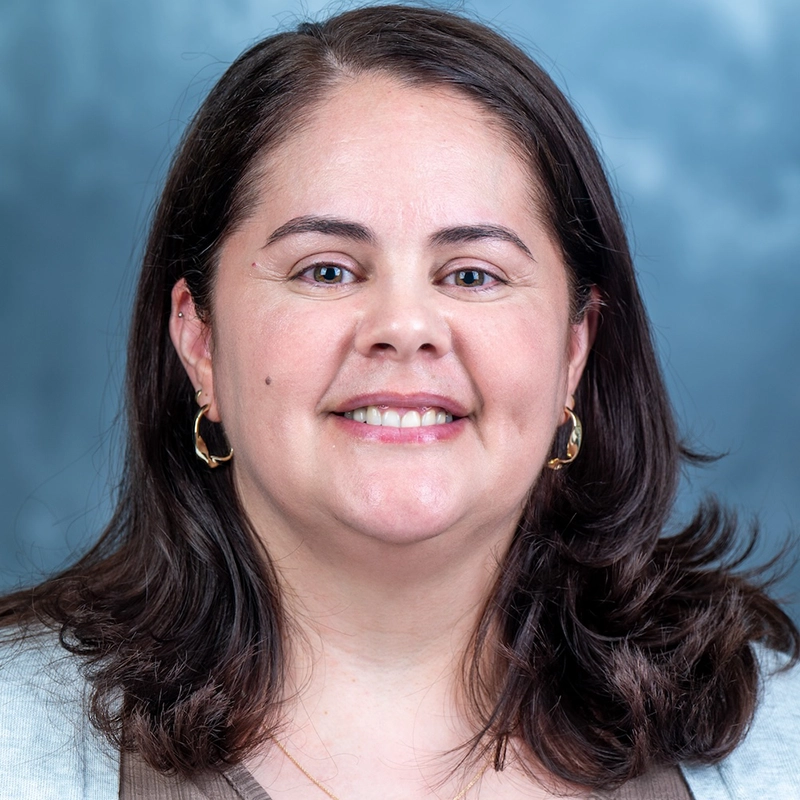
Frecia Gonzalez
Office Location: JMC 450

Marquinta Harvey
Email: marquinta.harvey@belmont.edu
Office Location: FCOM 6104
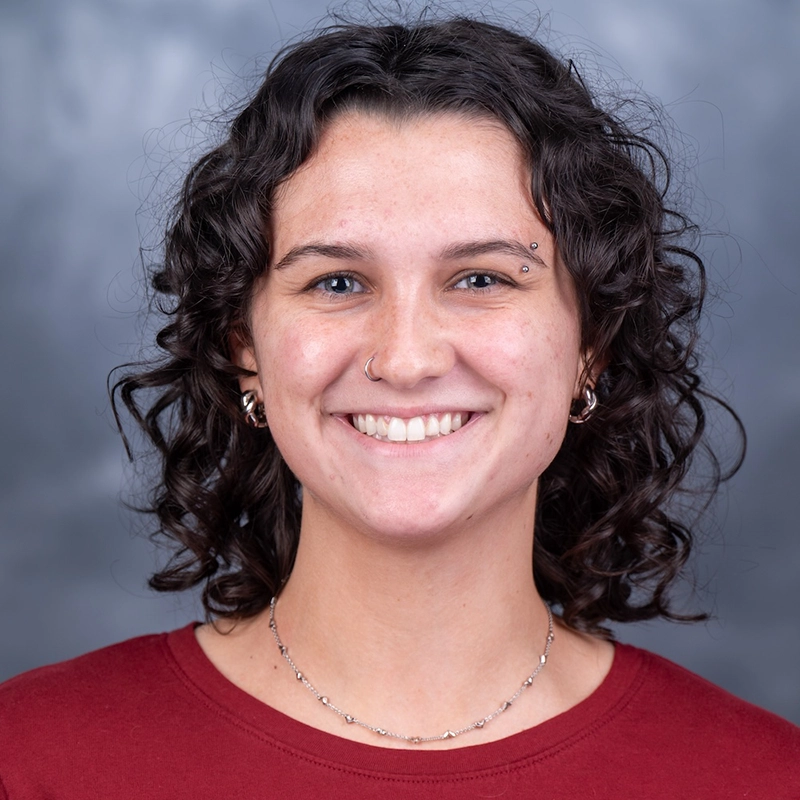
Halle Smith
Email: halle.smith@belmont.edu
Office Location: JMC 440
A public health degree prepares you for careers in healthcare, government agencies, nonprofits and research institutions. Graduates work as epidemiologists, health educators, policy analysts and healthcare consultants, and many pursue advanced degrees in medicine, nursing, public health or health administration.
There are many, including internships, service-learning projects and research. The program also offers field trips to public health agencies, guest lectures from nationally recognized experts and opportunities to attend professional conferences like the Tennessee Public Health Association (TPHA) Conference, where students can network and present their work.
Yes. Many students follow a pre-health track and continue into medical school and PA programs, and others pursue MPH degrees. The curriculum provides a strong foundation in population health, healthcare systems and disease prevention, which makes students competitive applicants for advanced degrees.
If you are passionate about direct patient care in clinical settings like hospitals and clinics, nursing may be the better fit. If you are interested in preventing disease, improving community health and shaping health policy, public health offers a broader approach that affects populations rather than individual patients. Some public health graduates go on to accelerated nursing programs or careers in healthcare administration, blending both fields. Faculty advisors can help you weigh the two.
First-year and transfer students apply through Belmont’s admissions website using the Belmont Application, the Common Application or Apply Coalition with SCOIR. You will also submit official transcripts, a school counselor recommendation or school report and a $50 application fee. Belmont is test-optional, so ACT or SAT scores are welcome but not required.
Learn more about applying as a First-Year Student
Yes. Belmont offers scholarships, grants, loans and work-study opportunities. Complete the FAFSA by Belmont’s Feb. 15 priority deadline to maximize your potential aid.
Learn more about First-Year Tuition & Financial Aid
Related Programs
Contact Us
College of Pharmacy & Health Sciences
Linda Arce
Senior Admissions Coordinator
615.460.5193
Email Linda
Schedule a Call
Halle Smith
Program Assistant for Social Work and Public Health
615.460.6401
Email Hallie
Plan Your Visit
There's no better way to experience Belmont than by visiting campus. Whether you attend an admissions event, take a student-led campus tour or explore Nashville while you're here, a visit helps you picture yourself as part of the Belmont community.